Macbeth
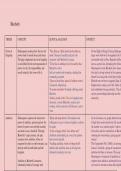
THEME CONCEPT QUOTE & ANALYSIS CONTEXT
Power & Shakespeare portrays how the lust for ‘This Duncan /Hath borne his faculties so - Divine Right of Kings: During Shakespe
Kingship power leads to moral decay and chaos. meek’ Duncan’s humility and just rule kings were believed to be appointed by G
The play emphasizes that true kingship contrasts with Macbeth’s tyranny answerable only to Him. Regicide (killing
is not defined by the mere possession of ‘To be thus is nothing, but to be safely thus.’ seen as a grave sin, disrupting the divine
power, but by the responsibility and Macbeth’s rule is - Shakespeare wrote Macbeth after James
moral integrity that come with it. built on murder and deception, making him who had a strong interest in the superna
constantly paranoid. himself as a king with a God-given right
‘Upon my head they placed a fruitless crown.’ - Macbeth was written to appease King Ja
Unnatural, illegitimacy - England was coming out of the Tudor dy
‘O nation miserable’ Scotland suffering under had established strong authority. The pla
Macbeth anxiety surrounding leadership and the s
‘lustful, greedy, false’ Malcolm kingship tests monarchy.
character, reveals Malcolm’s caution and
wisdom, which contrast with Duncan’s naïve
trust
Ambition Shakespeare explores the destructive ‘Black and deep desires’ Foreshadows his - In the Jacobean era, people believed star
power of ambition, portraying how the willingness to go to extreme lengths to achieve of light that could control fate. By macbe
desire for power can override morality his goals the murder on a starless night, it shows
and lead to one's downfall. Through ‘Is this a dagger which I see before me?’ divine fate and the introduction of Macbe
Macbeth’s tragic journey, the play Ambition materializing in a way that pushes choosing his own destiny, going against
examines how ambition, when not him toward regicide. natural
tempered by ethics or self-restraint, can ‘Vaulting ambition, which o’erleaps itself’ - The Gunpowder Plot (1605): An attemp
destroy both the individual and the Admits that ambition alone is driving him, James I, involved a group of conspirators
kingdom. ultimately leading to his ruin ambition led them to treason. This may h
Shakespeare's treatment of ambition in M
Ambition is Macbeth's hamartia explores how ambition, unchecked by mo
(ultimately leads to his tragic end) can result in extreme actions like regicid
, misleading prophecies lead to macbeth's
downfall
‘O valiant cousin!’ Duncan sees Macbeth as a
loyal subject, unaware that Macbeth will soon
betray him.
‘There’s no art to find the mind’s construction
in the face.’ You can’t judge someone’s
intentions by their appearance Duncan
‘False face must hide what the false heart doth
know’ macbeth, final decision to murder
duncan is made
Gender Shakespeare explores the tension ‘Worthy gentleman!’ - In Jacobean England, strict gender roles
between traditional gender roles and the ‘When you durst do it, then you were a man’ with men seen as rational, powerful, and
characters' desires for power, exposing Masculinity is linked to bravery and violence, while women were expected to be submis
how rigid ideas of masculinity and reinforcing toxic gender roles and passive.
femininity can lead to personal and ‘I dare do all that may become a man/Who - The witches are portrayed as neither full
moral conflict. dares do more is none’ questions whether male, playing on the theme of gender am
masculinity is about strength and ambition or play. This challenges the fixed roles assig
morality and self-control. women, suggesting that power is not inh
‘Be innocent of the knowledge, dearest chuck’ gender.
Macbeth is taking charge and distancing her
from his schemes
‘You should be women, / And yet your beards
forbid me to interpret / That you are so.’
Power and cruelty associated with masculinity,
showing rigid gender expectations
Guilt, Shakespeare delves into the corrosive ‘Will all great Neptune’s ocean wash this blood - Guilt was seen not just as a legal issue b
innocence & effects of guilt, showing how Macbeth / Clean from my hand?’ Blood symbolizes burden that would torment the soul.
Paranoia and Lady Macbeth’s psychological permanent guilt - The Christian worldview emphasized the
deterioration unfolds as their guilt over ‘Macbeth does murder sleep’ Duncan sleeps eternal damnation for those who commit
regicide and treason turns into paranoia. peacefully, while Macbeth will never rest again - The belief that the consequences of sin c
Their once-innocent selves are ‘Out, damned spot! Out, I say!’ overwhelming supernatural or psychological torment
overtaken by the crushing weight of guilt, contrasting - Shakespeare could have been alluding to
THEME CONCEPT QUOTE & ANALYSIS CONTEXT
Power & Shakespeare portrays how the lust for ‘This Duncan /Hath borne his faculties so - Divine Right of Kings: During Shakespe
Kingship power leads to moral decay and chaos. meek’ Duncan’s humility and just rule kings were believed to be appointed by G
The play emphasizes that true kingship contrasts with Macbeth’s tyranny answerable only to Him. Regicide (killing
is not defined by the mere possession of ‘To be thus is nothing, but to be safely thus.’ seen as a grave sin, disrupting the divine
power, but by the responsibility and Macbeth’s rule is - Shakespeare wrote Macbeth after James
moral integrity that come with it. built on murder and deception, making him who had a strong interest in the superna
constantly paranoid. himself as a king with a God-given right
‘Upon my head they placed a fruitless crown.’ - Macbeth was written to appease King Ja
Unnatural, illegitimacy - England was coming out of the Tudor dy
‘O nation miserable’ Scotland suffering under had established strong authority. The pla
Macbeth anxiety surrounding leadership and the s
‘lustful, greedy, false’ Malcolm kingship tests monarchy.
character, reveals Malcolm’s caution and
wisdom, which contrast with Duncan’s naïve
trust
Ambition Shakespeare explores the destructive ‘Black and deep desires’ Foreshadows his - In the Jacobean era, people believed star
power of ambition, portraying how the willingness to go to extreme lengths to achieve of light that could control fate. By macbe
desire for power can override morality his goals the murder on a starless night, it shows
and lead to one's downfall. Through ‘Is this a dagger which I see before me?’ divine fate and the introduction of Macbe
Macbeth’s tragic journey, the play Ambition materializing in a way that pushes choosing his own destiny, going against
examines how ambition, when not him toward regicide. natural
tempered by ethics or self-restraint, can ‘Vaulting ambition, which o’erleaps itself’ - The Gunpowder Plot (1605): An attemp
destroy both the individual and the Admits that ambition alone is driving him, James I, involved a group of conspirators
kingdom. ultimately leading to his ruin ambition led them to treason. This may h
Shakespeare's treatment of ambition in M
Ambition is Macbeth's hamartia explores how ambition, unchecked by mo
(ultimately leads to his tragic end) can result in extreme actions like regicid
, misleading prophecies lead to macbeth's
downfall
‘O valiant cousin!’ Duncan sees Macbeth as a
loyal subject, unaware that Macbeth will soon
betray him.
‘There’s no art to find the mind’s construction
in the face.’ You can’t judge someone’s
intentions by their appearance Duncan
‘False face must hide what the false heart doth
know’ macbeth, final decision to murder
duncan is made
Gender Shakespeare explores the tension ‘Worthy gentleman!’ - In Jacobean England, strict gender roles
between traditional gender roles and the ‘When you durst do it, then you were a man’ with men seen as rational, powerful, and
characters' desires for power, exposing Masculinity is linked to bravery and violence, while women were expected to be submis
how rigid ideas of masculinity and reinforcing toxic gender roles and passive.
femininity can lead to personal and ‘I dare do all that may become a man/Who - The witches are portrayed as neither full
moral conflict. dares do more is none’ questions whether male, playing on the theme of gender am
masculinity is about strength and ambition or play. This challenges the fixed roles assig
morality and self-control. women, suggesting that power is not inh
‘Be innocent of the knowledge, dearest chuck’ gender.
Macbeth is taking charge and distancing her
from his schemes
‘You should be women, / And yet your beards
forbid me to interpret / That you are so.’
Power and cruelty associated with masculinity,
showing rigid gender expectations
Guilt, Shakespeare delves into the corrosive ‘Will all great Neptune’s ocean wash this blood - Guilt was seen not just as a legal issue b
innocence & effects of guilt, showing how Macbeth / Clean from my hand?’ Blood symbolizes burden that would torment the soul.
Paranoia and Lady Macbeth’s psychological permanent guilt - The Christian worldview emphasized the
deterioration unfolds as their guilt over ‘Macbeth does murder sleep’ Duncan sleeps eternal damnation for those who commit
regicide and treason turns into paranoia. peacefully, while Macbeth will never rest again - The belief that the consequences of sin c
Their once-innocent selves are ‘Out, damned spot! Out, I say!’ overwhelming supernatural or psychological torment
overtaken by the crushing weight of guilt, contrasting - Shakespeare could have been alluding to