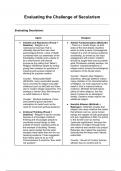
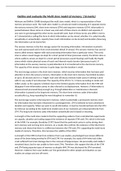
Evaluating the Challenge of Secularism
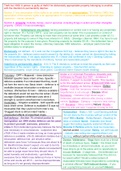
Evaluating Secularism:
Agree Disagree
● Infantile and Repressive (Freud + ● Atheist Fundamentalism (McGrath)
Dawkins) - Religion is an - There is a ‘lunatic fringe’ on both
‘obsessional neurosis’ that is sides of the God debate. Dawkins
ultimately derived from two main wants to write a piece of propaganda
psychological forces, a fear of death instead of a work of serious academic
(combined with our awareness of the scholarship, as shown by his inept
inevitability of death) and a desire to engagement with Luther. Children
be a child forever with eternal should be taught fairly and accurately
innocence (by calling God ‘father’). what Christianity actually teaches, not
Religion infantilizes people by simply Dawkins’ misrepresentations of
giving them answers to questions of religion which echoes the antireligious
meaning and purpose instead of secularism of the Soviet Union.
allowing for purpose creation.
Counter : Rejects other Religions
Counter : Reasonable Belief (Dawkins), although Dawkins makes
(McGrath), many reasonable people many mistakes in his characterisation
have converted to religion long after of Religion, his main argument is that
childhood such as McGrath and Flew belief in God is irrational without
due to modern design arguments. The evidence. McGrath himself rejects
analogy to Santa Claus fails because plenty of other religions, but that
no adult believes in Santa. doesn’t make him an ideological
fanatic. Dawkins simply rejects one
Counter : Spiritual Guidance, Freud additional religion.
and Dawkins ignore important
motivations for belief such as the ● Harmful Atheism (McGrath +
need for moral and spiritual guidance Ratzinger) - McGrath accepts that
religion can cause violence but insists
● Irrational Thinking (Freud + that atheism can too, since human
Dawkins) - Religion is bad for society beings are capable of both great good
because it encourages irrational and evil, regardless of faith. He points
thinking and encourages people to to the Soviet Union as having
uncritically accept things on faith “particular significance” because the
instead of reason. Dawkins points to elimination of religion through force
the example of doubting Thomas, and violence was central to its project.
since Jesus implies that the other Ratzinger also makes this argument,
disciples were better than him for not claiming that the Nazis were ‘atheist
requiring evidence. Freud suggested extremists’.
that if there were to be an 11th
Commandment it would be “thou shalt Counter : Devoid of Content (Harris),
not question”. atheism has no content and no
, doctrine, since it is simply a failure to
Counter : Justifies Faith (McGrath), be convinced of God’s existence,
religious belief is rational, as shown therefore it can’t motivate anyone to
by the arguments for God’s existence. commit any acts ‘in the name of
Aquinas’ 5 ways, for example, aren’t atheism’. In the Soviet Union, it came
meant to be a priori proofs, but from Marx’s antireligious views, not
instead illustrations of the inner atheism.
consistency of God which justifies
faith. Counter : Political Religions (Hitchens
+ Harris), Nazism isn’t atheistic, since
Counter Counter : Burden of Proof ‘Gott mit Uns’ was inscribed on the
(Russell), just because something is belt buckles of Nazi soldiers. Stalin
internally consistent doesn’t mean it is used Russian reverence for the Tsars
actually true. For a positive claim to build a cult of personality. Hitler and
about reality, especially one which Stalin built political religions
people are expected to base their
lives around, evidence is required to ● Source of Morality (Ratzinger +
prove it is actually the case Craig) - We need religious values to
constrain our sinful nature, but under
Counter Counter : Multiple Religions the moral nihilism of atheism
(Dawkins), since there are multiple humanity’s worst tendencies are able
religions that are internally consistent, to run rampant. The atheist worldview
by McGrath’s logic it is equally as explains humanity as a ‘lost atom in a
reasonable to believe in any of them, random universe’ which might allow
but they obviously cannot all be true for evolution, but not for moral growth,
depriving us of spiritual resources.
● God of the Gaps (Dawkins) - Without God there is no basis for
Religious belief is irrational because it, objective morality, leading to a system
in large part, is a stand-in for scientific where whoever has the power to
ignorance. Historically countless enforce their personal values can do
natural phenomena have been whatever they want.
explained away by God, such as
lightning or rainbows. As scientific Counter : Resentful Morality
knowledge progresses, these gaps in (Nietzsche), the Christian mode of
our knowledge get filled in replacing morality is one of resentment. In the
the God of the Gaps. past, the strong ruled over the weak,
and the weak were jealous, but the
Counter : Strawman Fallacy weak devised a system where
(McGrath), God of the Gaps strength is condemned as evil and
arguments were increasingly weakness praised as virtue. As a
abandoned in the 20th century and society we need a transvaluation of all
modern theologians do not fall into the values to move past this slave
same trap. Dawkins is attacking a morality towards a way of living freely
strawman since these arguments are and creatively forging values
not why most believe in God, although
there are still some e.g. intelligent Counter : Lacking Atheist Crime
design movement (Harris), if religion were necessary for
morality, there should be some
Counter : Science is Limited evidence that atheists are less moral
(Polkinghorne + McGrath), Science is than believers. More secular societies
Evaluating Secularism:
Agree Disagree
● Infantile and Repressive (Freud + ● Atheist Fundamentalism (McGrath)
Dawkins) - Religion is an - There is a ‘lunatic fringe’ on both
‘obsessional neurosis’ that is sides of the God debate. Dawkins
ultimately derived from two main wants to write a piece of propaganda
psychological forces, a fear of death instead of a work of serious academic
(combined with our awareness of the scholarship, as shown by his inept
inevitability of death) and a desire to engagement with Luther. Children
be a child forever with eternal should be taught fairly and accurately
innocence (by calling God ‘father’). what Christianity actually teaches, not
Religion infantilizes people by simply Dawkins’ misrepresentations of
giving them answers to questions of religion which echoes the antireligious
meaning and purpose instead of secularism of the Soviet Union.
allowing for purpose creation.
Counter : Rejects other Religions
Counter : Reasonable Belief (Dawkins), although Dawkins makes
(McGrath), many reasonable people many mistakes in his characterisation
have converted to religion long after of Religion, his main argument is that
childhood such as McGrath and Flew belief in God is irrational without
due to modern design arguments. The evidence. McGrath himself rejects
analogy to Santa Claus fails because plenty of other religions, but that
no adult believes in Santa. doesn’t make him an ideological
fanatic. Dawkins simply rejects one
Counter : Spiritual Guidance, Freud additional religion.
and Dawkins ignore important
motivations for belief such as the ● Harmful Atheism (McGrath +
need for moral and spiritual guidance Ratzinger) - McGrath accepts that
religion can cause violence but insists
● Irrational Thinking (Freud + that atheism can too, since human
Dawkins) - Religion is bad for society beings are capable of both great good
because it encourages irrational and evil, regardless of faith. He points
thinking and encourages people to to the Soviet Union as having
uncritically accept things on faith “particular significance” because the
instead of reason. Dawkins points to elimination of religion through force
the example of doubting Thomas, and violence was central to its project.
since Jesus implies that the other Ratzinger also makes this argument,
disciples were better than him for not claiming that the Nazis were ‘atheist
requiring evidence. Freud suggested extremists’.
that if there were to be an 11th
Commandment it would be “thou shalt Counter : Devoid of Content (Harris),
not question”. atheism has no content and no
, doctrine, since it is simply a failure to
Counter : Justifies Faith (McGrath), be convinced of God’s existence,
religious belief is rational, as shown therefore it can’t motivate anyone to
by the arguments for God’s existence. commit any acts ‘in the name of
Aquinas’ 5 ways, for example, aren’t atheism’. In the Soviet Union, it came
meant to be a priori proofs, but from Marx’s antireligious views, not
instead illustrations of the inner atheism.
consistency of God which justifies
faith. Counter : Political Religions (Hitchens
+ Harris), Nazism isn’t atheistic, since
Counter Counter : Burden of Proof ‘Gott mit Uns’ was inscribed on the
(Russell), just because something is belt buckles of Nazi soldiers. Stalin
internally consistent doesn’t mean it is used Russian reverence for the Tsars
actually true. For a positive claim to build a cult of personality. Hitler and
about reality, especially one which Stalin built political religions
people are expected to base their
lives around, evidence is required to ● Source of Morality (Ratzinger +
prove it is actually the case Craig) - We need religious values to
constrain our sinful nature, but under
Counter Counter : Multiple Religions the moral nihilism of atheism
(Dawkins), since there are multiple humanity’s worst tendencies are able
religions that are internally consistent, to run rampant. The atheist worldview
by McGrath’s logic it is equally as explains humanity as a ‘lost atom in a
reasonable to believe in any of them, random universe’ which might allow
but they obviously cannot all be true for evolution, but not for moral growth,
depriving us of spiritual resources.
● God of the Gaps (Dawkins) - Without God there is no basis for
Religious belief is irrational because it, objective morality, leading to a system
in large part, is a stand-in for scientific where whoever has the power to
ignorance. Historically countless enforce their personal values can do
natural phenomena have been whatever they want.
explained away by God, such as
lightning or rainbows. As scientific Counter : Resentful Morality
knowledge progresses, these gaps in (Nietzsche), the Christian mode of
our knowledge get filled in replacing morality is one of resentment. In the
the God of the Gaps. past, the strong ruled over the weak,
and the weak were jealous, but the
Counter : Strawman Fallacy weak devised a system where
(McGrath), God of the Gaps strength is condemned as evil and
arguments were increasingly weakness praised as virtue. As a
abandoned in the 20th century and society we need a transvaluation of all
modern theologians do not fall into the values to move past this slave
same trap. Dawkins is attacking a morality towards a way of living freely
strawman since these arguments are and creatively forging values
not why most believe in God, although
there are still some e.g. intelligent Counter : Lacking Atheist Crime
design movement (Harris), if religion were necessary for
morality, there should be some
Counter : Science is Limited evidence that atheists are less moral
(Polkinghorne + McGrath), Science is than believers. More secular societies