3.2
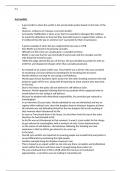
Just verdicts
- A just verdict is when the verdict is fair and provides justice based on the facts of the
case.
- However, evidence isn’t always a concrete decider.
- Jury Equity/ Nullification is when a jury feel it is essential to disregard the evidence
to acquit the defendant as they feel they had valid means to support their actions, or
it’s believed that the law or sentence isn’t warranted for their circumstance.
- A prime example of when the jury neglected the law was in 1998.
- Alan Blythe was found to be growing cannabis.
- Offenders of this crime are usually given a custodial sentence.
- Blythe’s case was that his was terminally ill and in pain and the cannabis was the
only thing that eased her pain.
- While the judge advised the jury of the law, the jury decided to punish him with an
£100 fine and dropped all charges other than cannabis possession.
- An example of an unjust verdict was, Tony Martin was a farmer who was convicted
of murdering a 16-year-old boy by shooting him for breaking into his home.
- Martins defence was that he was acting in self-defence.
- Martins gun licence had been taken away from him after shooting someone who had
picked an apple off his tree, along with threatening to shoot anyone who steps foot
on his land.
- Due to his history the police did not believe his self-defence claim.
- However, Martin appealed claiming that he has paranoia which supported why he
would believe he was acting in self-defence.
- Because he pleaded with diminished responsibility, his conviction got reduced to
manslaughter.
- In an interview 20 years later, Martin admitted he was not diminished and has no
regrets while making it very clear that burglars deserve whatever happens to them.
- He certainly was not defending himself as the two burglars did not do anything at
that moment which threatened his life.
- As soon as Tony heard them in his house, he shot them from the top of the stairs
therefore he had intended to kill.
- As his life was not threatened at that moment, it wasn’t a just verdict for his charge
to get reduced to manslaughter with a sentence of only 3 years imprisonment,
- on the means of self-defence. His behaviour following the shooting was also
suspicious in that he hid his gun almost to try cover up.
- In the brief…
- Overall, just verdicts are important in ensuring people are treated fairly and justice is
served efficiently by sentencing the right people.
- Another example being the Stephen Lawrence case.
- This is classed as an unjust verdict as not only was there corruption and institutional
racism within the force and there wasn’t enough being done earlier on.
- The case continued from 1993 to 2018 while the trial was not conducted
appropriately, a conviction was set making it somewhat just.
Just verdicts
- A just verdict is when the verdict is fair and provides justice based on the facts of the
case.
- However, evidence isn’t always a concrete decider.
- Jury Equity/ Nullification is when a jury feel it is essential to disregard the evidence
to acquit the defendant as they feel they had valid means to support their actions, or
it’s believed that the law or sentence isn’t warranted for their circumstance.
- A prime example of when the jury neglected the law was in 1998.
- Alan Blythe was found to be growing cannabis.
- Offenders of this crime are usually given a custodial sentence.
- Blythe’s case was that his was terminally ill and in pain and the cannabis was the
only thing that eased her pain.
- While the judge advised the jury of the law, the jury decided to punish him with an
£100 fine and dropped all charges other than cannabis possession.
- An example of an unjust verdict was, Tony Martin was a farmer who was convicted
of murdering a 16-year-old boy by shooting him for breaking into his home.
- Martins defence was that he was acting in self-defence.
- Martins gun licence had been taken away from him after shooting someone who had
picked an apple off his tree, along with threatening to shoot anyone who steps foot
on his land.
- Due to his history the police did not believe his self-defence claim.
- However, Martin appealed claiming that he has paranoia which supported why he
would believe he was acting in self-defence.
- Because he pleaded with diminished responsibility, his conviction got reduced to
manslaughter.
- In an interview 20 years later, Martin admitted he was not diminished and has no
regrets while making it very clear that burglars deserve whatever happens to them.
- He certainly was not defending himself as the two burglars did not do anything at
that moment which threatened his life.
- As soon as Tony heard them in his house, he shot them from the top of the stairs
therefore he had intended to kill.
- As his life was not threatened at that moment, it wasn’t a just verdict for his charge
to get reduced to manslaughter with a sentence of only 3 years imprisonment,
- on the means of self-defence. His behaviour following the shooting was also
suspicious in that he hid his gun almost to try cover up.
- In the brief…
- Overall, just verdicts are important in ensuring people are treated fairly and justice is
served efficiently by sentencing the right people.
- Another example being the Stephen Lawrence case.
- This is classed as an unjust verdict as not only was there corruption and institutional
racism within the force and there wasn’t enough being done earlier on.
- The case continued from 1993 to 2018 while the trial was not conducted
appropriately, a conviction was set making it somewhat just.