
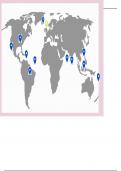
,- 6m storm surges Hurricane Katrina more like hurricane
- 280 km/h tortilla
- 1836 dead
- 80% of area flooded
- Criticised by FEMA for slow response
- Invested in improved levee system The hurricane caused an estimated $125 billion
worth of damage. The category five hurricane is
the joint eight strongest ever recorded, with
sustained winds of 175 mph (280 km/h). The
hurricane began as a very low-pressure system
over the Atlantic Ocean. The system
strengthened, forming a hurricane that moved
west, approaching the Florida coast on the
evening of the 25th August 2005. It made landfall
on Florida and Louisiana, particularly the city of
New Orleans and surrounding areas, in August
2005, causing catastrophic damage from central
Florida to eastern Texas
, Chances Peak eruption, Soufrière Hills, Montserrat, 1997
Plates involved: South American plate subducting beneath the Caribbean plate
Type of volcano: Composite
Important events leading up to the eruption:
•Previous violent eruptions created dome shape with viscous, silica-rich lava and pyroclastic flows
•1995 eruption of ash and dust prompted immediate response – monitoring of seismic activity, gasses and changes in the volcano’s
shape began
•It was discovered the volcano was dormant, not extinct as previously thought
•August 1995 – residents in the South of the island evacuated to churches and halls in the North
•April 1996 – Entire population of Plymouth, the capital city, was forced to evacuate
Main hazards:
•Dome of volcano collapsed, creating pyroclastic flows, ash, lahars, and volcanic bombs / tephra
Other significant information and impacts:
•The South of the island, included Plymouth, was buried by the ash and pyroclastic flows
•Fires from the pyroclastic flows killed 19 people
•A number of burn and inhalation injuries
•2/3 of all houses either buried or flattened
•The airport was completely destroyed by the main pyroclastic flow
•Farmland, vegetation and ¾ of all other infrastructure destroyed
•More than ½ of the 11,000 population was evacuated to Antigua, the USA and the UK
- 280 km/h tortilla
- 1836 dead
- 80% of area flooded
- Criticised by FEMA for slow response
- Invested in improved levee system The hurricane caused an estimated $125 billion
worth of damage. The category five hurricane is
the joint eight strongest ever recorded, with
sustained winds of 175 mph (280 km/h). The
hurricane began as a very low-pressure system
over the Atlantic Ocean. The system
strengthened, forming a hurricane that moved
west, approaching the Florida coast on the
evening of the 25th August 2005. It made landfall
on Florida and Louisiana, particularly the city of
New Orleans and surrounding areas, in August
2005, causing catastrophic damage from central
Florida to eastern Texas
, Chances Peak eruption, Soufrière Hills, Montserrat, 1997
Plates involved: South American plate subducting beneath the Caribbean plate
Type of volcano: Composite
Important events leading up to the eruption:
•Previous violent eruptions created dome shape with viscous, silica-rich lava and pyroclastic flows
•1995 eruption of ash and dust prompted immediate response – monitoring of seismic activity, gasses and changes in the volcano’s
shape began
•It was discovered the volcano was dormant, not extinct as previously thought
•August 1995 – residents in the South of the island evacuated to churches and halls in the North
•April 1996 – Entire population of Plymouth, the capital city, was forced to evacuate
Main hazards:
•Dome of volcano collapsed, creating pyroclastic flows, ash, lahars, and volcanic bombs / tephra
Other significant information and impacts:
•The South of the island, included Plymouth, was buried by the ash and pyroclastic flows
•Fires from the pyroclastic flows killed 19 people
•A number of burn and inhalation injuries
•2/3 of all houses either buried or flattened
•The airport was completely destroyed by the main pyroclastic flow
•Farmland, vegetation and ¾ of all other infrastructure destroyed
•More than ½ of the 11,000 population was evacuated to Antigua, the USA and the UK


