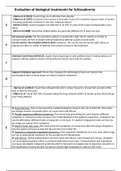
Evaluation of biological treatments for Schizophrenia
- Adams et al (2013): Found drugs more effective than placebo
- Gilbert et al (1995): Conducted meta-analysis of 66 studies. Found 53% of patients relapsed within 10 months
of stopping medication compared to 16% who continued taking it.
S - Herbert (2012): Found clozapine was effective in 30-50% of cases where typical antipsychotics have
failed.
- Kahn et al (2008): Found that antipsychotics are generally effective for at least one year
Can prevent suicide: Can be used when patient is considered a high risk for suicide as it helps to
increase mood. 30-50% of people with schizophrenia attempt suicide at some point.
Can be used to calm hospital patients down: However, this can be seen as human rights abuse as
P patients are often in a state of delirium and cannot consent to the treatment.
Chemical Cosh (Moncrieff 2013): Argues that using drugs to calm patients down is human abuse as it
happens without patient consent and benefits the doctor more than the patient.
I
Supports biological approach: Shows that changing the physiological state can improve the
psychological state as these drugs can help to improve symptoms.
A
- Harrow et al (2014): Found that antipsychotics don’t reduce frequency of psychotic episodes other
than in the first few years.
- Gilbert et al: Found that 16% of people taking the drug relapsed within 10 month period. Shows drugs
C aren’t fully effective
✘ Drug tolerance: This can be caused by a patient taking the drug for the rest of their life. This means
the dosage must be increased which can cause more side effects.
✘ People experience different symptoms: This means that prescribing the same drug for different
symptoms is a flawed practise, because it isn’t individualised to the patient’s experience. Symptoms can
also be affected by different levels of dopamine in the brain. If a patient’s dopamine levels are too low,
the drugs can worsen their symptoms.
✘ Doesn’t treat root cause: This means that the symptoms can come back after the drug is stopped or
E that the patient will have to take the drug for the rest of their life.
✘ Depends on dopamine hypothesis being true: If the dopamine hypothesis isn’t true, then these drugs
are not an appropriate treatment for the symptoms of schizophrenia.
✘ Side effects: Typical antipsychotics can have many side effects, some being more serious. Clozapine
can cause agranulocytosis which is a lowered white blood cell count. Chlorpromazine and risperidone
can cause neuroleptic malignant syndrome which is fatal and can happen due to dopamine receptors in
the hypothalamus being blocked. Symptoms include high temperature, delirium and coma
- Adams et al (2013): Found drugs more effective than placebo
- Gilbert et al (1995): Conducted meta-analysis of 66 studies. Found 53% of patients relapsed within 10 months
of stopping medication compared to 16% who continued taking it.
S - Herbert (2012): Found clozapine was effective in 30-50% of cases where typical antipsychotics have
failed.
- Kahn et al (2008): Found that antipsychotics are generally effective for at least one year
Can prevent suicide: Can be used when patient is considered a high risk for suicide as it helps to
increase mood. 30-50% of people with schizophrenia attempt suicide at some point.
Can be used to calm hospital patients down: However, this can be seen as human rights abuse as
P patients are often in a state of delirium and cannot consent to the treatment.
Chemical Cosh (Moncrieff 2013): Argues that using drugs to calm patients down is human abuse as it
happens without patient consent and benefits the doctor more than the patient.
I
Supports biological approach: Shows that changing the physiological state can improve the
psychological state as these drugs can help to improve symptoms.
A
- Harrow et al (2014): Found that antipsychotics don’t reduce frequency of psychotic episodes other
than in the first few years.
- Gilbert et al: Found that 16% of people taking the drug relapsed within 10 month period. Shows drugs
C aren’t fully effective
✘ Drug tolerance: This can be caused by a patient taking the drug for the rest of their life. This means
the dosage must be increased which can cause more side effects.
✘ People experience different symptoms: This means that prescribing the same drug for different
symptoms is a flawed practise, because it isn’t individualised to the patient’s experience. Symptoms can
also be affected by different levels of dopamine in the brain. If a patient’s dopamine levels are too low,
the drugs can worsen their symptoms.
✘ Doesn’t treat root cause: This means that the symptoms can come back after the drug is stopped or
E that the patient will have to take the drug for the rest of their life.
✘ Depends on dopamine hypothesis being true: If the dopamine hypothesis isn’t true, then these drugs
are not an appropriate treatment for the symptoms of schizophrenia.
✘ Side effects: Typical antipsychotics can have many side effects, some being more serious. Clozapine
can cause agranulocytosis which is a lowered white blood cell count. Chlorpromazine and risperidone
can cause neuroleptic malignant syndrome which is fatal and can happen due to dopamine receptors in
the hypothalamus being blocked. Symptoms include high temperature, delirium and coma