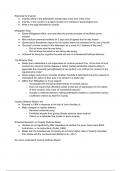
Rationale for Insanity
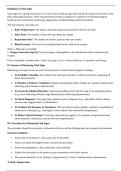
● Insanity refers to the defendant's mental state at the time of the crime
● Insanity, in this context, is a legal concept not a medical or psychological one
● What is the legal standard for insanity
M'Naghten Rule:
● Daniel M'Naghten(1843)- shot and killed the private secretary of the British prime
minister
● Nine medical examiners testified for 2 days and all agreed that he was insane
● Sentenced to Boradmoor Asylum for the Insane where he remained for the rest of his life
● "Excuses" criminal conduct if the defendant, as a result of a "disease of the mind",
○ Did not know what he was doing
○ Did not know that what he was doing was wrong
● Criticized for being too cognitive focused and not on motivational/Volitional behavior
The Brawner Rule
● States that a defendant is not responsible for criminal conduct if he, "at the time of such
conduct as a result of mental disease or defect, [lacks] substantial capacity either to
appreciate the criminality [wrongfulness] of his conduct or to conform his conduct to the
requirements of law"
● Allows judges and juries to consider whether mentally ill defendants have the capacity to
understand the nature of their acts or to behave in a lawful way
● Differs from M'Naghten in 3 key aspects
○ Incorporates the emotional determinants of criminal actions
○ Does not require that offenders exhibit a total lack of appreciation for the nature
of their conduct, only a lack of "substantial capacity"
○ Includes a volitional element, making defendant's inability to control their actions
a sufficient criterion by itself for insanity
Insanity Defense Reform Act
● Enacted in 1984 in response to the trial of John Hinckley Jr.
● Major changes to insanity defense
○ Removes volitional prong
○ Prohibited experts from giving ultimate opinions about insanity
○ Places on a defendant the burden to prove insanity
Empirical Research on Insanity Defense Rules
● Verdicts do not significantly differ regardless of whether the jurors have heard IDRA
instructions, or no instructions (Finkel, 1989)
● States with the broadest test of insanity do not show higher rates of insanity acquittals
than states with the narrowest test (Melton et al., 2017)
Do Jurors understand Insanity Defense Rules?
● Insanity refers to the defendant's mental state at the time of the crime
● Insanity, in this context, is a legal concept not a medical or psychological one
● What is the legal standard for insanity
M'Naghten Rule:
● Daniel M'Naghten(1843)- shot and killed the private secretary of the British prime
minister
● Nine medical examiners testified for 2 days and all agreed that he was insane
● Sentenced to Boradmoor Asylum for the Insane where he remained for the rest of his life
● "Excuses" criminal conduct if the defendant, as a result of a "disease of the mind",
○ Did not know what he was doing
○ Did not know that what he was doing was wrong
● Criticized for being too cognitive focused and not on motivational/Volitional behavior
The Brawner Rule
● States that a defendant is not responsible for criminal conduct if he, "at the time of such
conduct as a result of mental disease or defect, [lacks] substantial capacity either to
appreciate the criminality [wrongfulness] of his conduct or to conform his conduct to the
requirements of law"
● Allows judges and juries to consider whether mentally ill defendants have the capacity to
understand the nature of their acts or to behave in a lawful way
● Differs from M'Naghten in 3 key aspects
○ Incorporates the emotional determinants of criminal actions
○ Does not require that offenders exhibit a total lack of appreciation for the nature
of their conduct, only a lack of "substantial capacity"
○ Includes a volitional element, making defendant's inability to control their actions
a sufficient criterion by itself for insanity
Insanity Defense Reform Act
● Enacted in 1984 in response to the trial of John Hinckley Jr.
● Major changes to insanity defense
○ Removes volitional prong
○ Prohibited experts from giving ultimate opinions about insanity
○ Places on a defendant the burden to prove insanity
Empirical Research on Insanity Defense Rules
● Verdicts do not significantly differ regardless of whether the jurors have heard IDRA
instructions, or no instructions (Finkel, 1989)
● States with the broadest test of insanity do not show higher rates of insanity acquittals
than states with the narrowest test (Melton et al., 2017)
Do Jurors understand Insanity Defense Rules?