*DISCLAIMER* footnotes not present due to formatting error
Marty Rubin wrote, ‘Mirages enchant us up to the very moment we die of thirst.’ In
light of this view, compare and contrast the ways in which illusion and reality are
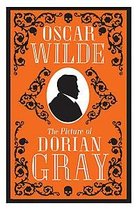
presented in ‘A Doll’s House’ by Henrik Ibsen and ‘The Picture of Dorian Gray’ by
Oscar Wilde.
[50/50 marks]
An illusion in a sense is the closest thing that equates to a dream, and to live in this reverie-
like version of reality can be wonderful but subsequently unpleasant. The hopes of deviating
from the truth and fabricating a tailored world becomes vital for both Ibsen and Wilde’s
subjects, to either escape a predetermined reality or to simply ‘cure the soul’1. This essay
seeks to analyse how Henrik Ibsen and Oscar Wilde explore this contrast in A Doll’s House
and The Picture of Dorian Gray.
In each of the Victorian texts, the theme of appearance and reality is projected through the
characters and their dual-natured personas. Ibsen’s portrayal of Nora Helmer in A Doll’s
House is initially perceived as impetuous, naïve, knowing ‘little of the burdens and troubles
of life’2. Seemingly immature, Nora clings to the promise of economic prosperity and the
hopes of indulging in ‘heaps and heaps of money’3, a desire synonymous with bourgeois
respectability. However, the unexpected arrival of Mrs. Linde at the Helmer’s household not
only reveals her experience of misfortune and sorrow but uncovers more to Nora than
perceived. As they talk, we as the audience find out that Nora is the antithesis of world-wise
and rational Mrs. Linde, and that Nora had borrowed money from Krogstad to save her
husband's life. By displaying this juxtaposition in character early in the play, Ibsen not only
creates this proleptic link between money and its influence over characters but reveals how
beneath Nora’s child-like disposition, she is a woman capable of sacrifice.
Similarly, Wilde’s protagonist, Dorian Gray, lives in a false reality made of ‘ivory and rose-
leaves'4, upholding the image of perfection seen in the portrait, made by Basil Hallward, yet
bearing all qualities of sin. First introduced through his portrait in chapter one, Dorian is
‘wonderfully handsome’5, metaphorically and physically ‘unspotted from the world’6. But
under the influence of Lord Henry Wotton, a witty cynic who fills Dorian with ‘poisonous,
delightful theories’7, Dorian becomes extremely concerned with the transience of his beauty
and begins to pursue his own 'beautiful sins’8. Dorian’s acts of hedonism, symbolised by the
‘yellow book’9, not only suppress his fears of being time-bound but reveal his true and dark
nature. Ibsen and Wilde’s depiction of reality in both texts becomes a concept heavily reliant
on outward appearance and character. The idea of ’outwardly playing a respectable role while
inwardly pursuing an existence that crossed the boundaries of acceptable behavior’10, results
in life-changing consequences, for Wilde’s subject, it is death.
Marty Rubin wrote, ‘Mirages enchant us up to the very moment we die of thirst.’ In
light of this view, compare and contrast the ways in which illusion and reality are
presented in ‘A Doll’s House’ by Henrik Ibsen and ‘The Picture of Dorian Gray’ by
Oscar Wilde.
[50/50 marks]
An illusion in a sense is the closest thing that equates to a dream, and to live in this reverie-
like version of reality can be wonderful but subsequently unpleasant. The hopes of deviating
from the truth and fabricating a tailored world becomes vital for both Ibsen and Wilde’s
subjects, to either escape a predetermined reality or to simply ‘cure the soul’1. This essay
seeks to analyse how Henrik Ibsen and Oscar Wilde explore this contrast in A Doll’s House
and The Picture of Dorian Gray.
In each of the Victorian texts, the theme of appearance and reality is projected through the
characters and their dual-natured personas. Ibsen’s portrayal of Nora Helmer in A Doll’s
House is initially perceived as impetuous, naïve, knowing ‘little of the burdens and troubles
of life’2. Seemingly immature, Nora clings to the promise of economic prosperity and the
hopes of indulging in ‘heaps and heaps of money’3, a desire synonymous with bourgeois
respectability. However, the unexpected arrival of Mrs. Linde at the Helmer’s household not
only reveals her experience of misfortune and sorrow but uncovers more to Nora than
perceived. As they talk, we as the audience find out that Nora is the antithesis of world-wise
and rational Mrs. Linde, and that Nora had borrowed money from Krogstad to save her
husband's life. By displaying this juxtaposition in character early in the play, Ibsen not only
creates this proleptic link between money and its influence over characters but reveals how
beneath Nora’s child-like disposition, she is a woman capable of sacrifice.
Similarly, Wilde’s protagonist, Dorian Gray, lives in a false reality made of ‘ivory and rose-
leaves'4, upholding the image of perfection seen in the portrait, made by Basil Hallward, yet
bearing all qualities of sin. First introduced through his portrait in chapter one, Dorian is
‘wonderfully handsome’5, metaphorically and physically ‘unspotted from the world’6. But
under the influence of Lord Henry Wotton, a witty cynic who fills Dorian with ‘poisonous,
delightful theories’7, Dorian becomes extremely concerned with the transience of his beauty
and begins to pursue his own 'beautiful sins’8. Dorian’s acts of hedonism, symbolised by the
‘yellow book’9, not only suppress his fears of being time-bound but reveal his true and dark
nature. Ibsen and Wilde’s depiction of reality in both texts becomes a concept heavily reliant
on outward appearance and character. The idea of ’outwardly playing a respectable role while
inwardly pursuing an existence that crossed the boundaries of acceptable behavior’10, results
in life-changing consequences, for Wilde’s subject, it is death.