Chapter 7 Summary Questions
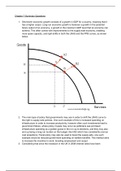
1. Short-term economic growth consists of a growth in GDP for a country, meaning that it
has a higher output. Long-run economic growth is however a growth in the potential
future output of an economy, a growth in the maximum GDP level that an economy can
achieve. This often comes with improvements to the supply-side economy, enabling
more spare capacity, and right-shifts in both the LRAS and the PPB curves, as shown
below.
2. The main type of policy that governments may use in order to shift the LRAS curve to
the right is supply-side policies. One such example of this is increased spending on
infrastructure in order to increase productivity, however often such investments lead to
government failure, where policy myopia may occur as politicians see promised
infrastructure spending as a golden goose in the run up to elections, and they may also
end up being a long-run burden on the budget, like HS2 which has consistently overrun
cost projections. Fiscal policy may also be used to boost the supply-side, one such
example would be reduced government spending on welfare benefits. This method aims
to increase the incentive to work, boosting employment and output.
3. Considering that since the recession in the UK in 2008 interest rates have been
1. Short-term economic growth consists of a growth in GDP for a country, meaning that it
has a higher output. Long-run economic growth is however a growth in the potential
future output of an economy, a growth in the maximum GDP level that an economy can
achieve. This often comes with improvements to the supply-side economy, enabling
more spare capacity, and right-shifts in both the LRAS and the PPB curves, as shown
below.
2. The main type of policy that governments may use in order to shift the LRAS curve to
the right is supply-side policies. One such example of this is increased spending on
infrastructure in order to increase productivity, however often such investments lead to
government failure, where policy myopia may occur as politicians see promised
infrastructure spending as a golden goose in the run up to elections, and they may also
end up being a long-run burden on the budget, like HS2 which has consistently overrun
cost projections. Fiscal policy may also be used to boost the supply-side, one such
example would be reduced government spending on welfare benefits. This method aims
to increase the incentive to work, boosting employment and output.
3. Considering that since the recession in the UK in 2008 interest rates have been