
GENETICS
Key Terms in Genetics
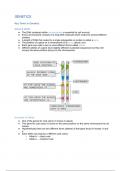
Genes & alleles
● The DNA contained within chromosomes is essential for cell survival
● Every chromosome consists of a long DNA molecule which codes for several different
proteins
● A length of DNA that codes for a single polypeptide or protein is called a gene
● The position of a gene on a chromosome is its locus (plural: loci)
● Each gene can exist in two or more different forms called alleles
● Different alleles of a gene have slightly different nucleotide sequences but they still
occupy the same position (locus) on the chromosome
Example of alleles
● One of the genes for coat colour in horses is Agouti
● This gene for coat colour is found on the same position on the same chromosome for all
horses
● Hypothetically there are two different forms (alleles) of that gene found in horses: A and
a
● Each allele can produce a different coat colour:
○ Allele A → black coat
○ Allele a → chestnut coat
,Genotype & phenotype
● The chromosomes of eukaryotic cells occur in homologous pairs (there are two copies of
each chromosome)
● As a result cells have two copies of every gene
● As there are two copies of a gene present in an individual that means there can be
different allele combinations within an individual
● The genotype of an organism refers to the alleles of a gene possessed by that individual.
The different alleles can be represented by letters
● When the two allele copies are identical in an individual they are said to be homozygous
● When the two allele copies are different in an individual they are said to be heterozygous
● The genotype of an individual affects their phenotype
● A phenotype is the observable characteristics of an organism
Example of genotype & phenotype
● Every horse has two copies of the coat colour gene in all of their cells
● A horse that has two black coat alleles A has the genotype AA and is homozygous. The
phenotype of this horse would be a black coat
● In contrast a horse that has one black coat allele A and one chestnut coat allele a would
have the genotype Aa and is heterozygous
Dominance
● Not all alleles affect the phenotype in the same way
● Some alleles are dominant: they are always expressed in the phenotype
○ This means they are expressed in both heterozygous and homozygous
individuals
● Others are recessive: they are only expressed in the phenotype if no dominant allele is
present
○ This means that it is only expressed when present in a homozygous individual
Example of dominance
● If for horses the allele A for a black coat is dominant and the allele a for a chestnut coat
is recessive the following genotypes and phenotypes occur:
○ Genotype AA → black coat
○ Genotype Aa → black coat
○ Genotype aa → chestnut coat
Codominance
● Sometimes both alleles can be expressed in the phenotype at the same time
● This is known as codominance
● When an individual is heterozygous they will express both alleles in their phenotype
● When writing the genotype for codominance the gene is symbolised as the capital letter
and the alleles are represented by different superscript letters, for example IA
, Example of codominance
● A good example of codominance can be seen in human blood types
● The gene for blood types is represented in the genotype by I and the three alleles for
human blood types are represented by A, B and O
● Allele A results in blood type A (IAIA or IAIO) and allele B results in blood type B (IBIB or
IBIO)
● If both allele A and allele B are present in a heterozygous individual they will have blood
type AB (IAIB)
● Blood type O (IOIO) is recessive to both group A and group B alleles
F1, F2 & test crosses
● When a homozygous dominant individual is crossed with a homozygous recessive
individual the offspring are called the F1 generation
○ All of the F1 generation are heterozygous
● If two individuals from the F1 generation are then crossed, the offspring they produce are
called the F2 generation
● A test cross can be used to try and deduce the genotype of an unknown individual that is
expressing a dominant phenotype
○ The individual in question is crossed with an individual that is expressing the
recessive phenotype
○ The resulting phenotypes of the offspring provide sufficient information to suggest
the genotype of the unknown individual
○ If there are any offspring expressing the recessive phenotype then the unknown
individual must have a heterozygous genotype
Linkage
● There are two types of linkage in genetics: sex linkage and autosomal linkage
● Sex linkage:
○ There are two sex chromosomes: X and Y
○ Women have two copies of the X chromosome (XX) whereas men have one X
chromosome and one shorter Y chromosome (XY)
○ Some genes are found on a region of a sex chromosome that is not present on
the other sex chromosome
○ As the inheritance of these genes is dependent on the sex of the individual they
are called sex-linked genes
○ Most often sex-linked genes are found on the longer X chromosome
○ Haemophilia is well known example of a sex-linked disease
○ Sex-linked genes are represented in the genotype by writing the alleles as
superscript next to the sex chromosome. For example a particular gene that is
found only on the X chromosome has two alleles G and g. The genotype of a
heterozygous female would be written as XGXg. A males genotype would be
written as XGY
● Autosomal linkage:
○ This occurs on the autosomes (any chromosome that isn’t a sex chromosome)
○ Two or more genes on the same chromosome do not assort independently during
meiosis
○ These genes are linked and they stay together in the original parental
combination
Key Terms in Genetics
Genes & alleles
● The DNA contained within chromosomes is essential for cell survival
● Every chromosome consists of a long DNA molecule which codes for several different
proteins
● A length of DNA that codes for a single polypeptide or protein is called a gene
● The position of a gene on a chromosome is its locus (plural: loci)
● Each gene can exist in two or more different forms called alleles
● Different alleles of a gene have slightly different nucleotide sequences but they still
occupy the same position (locus) on the chromosome
Example of alleles
● One of the genes for coat colour in horses is Agouti
● This gene for coat colour is found on the same position on the same chromosome for all
horses
● Hypothetically there are two different forms (alleles) of that gene found in horses: A and
a
● Each allele can produce a different coat colour:
○ Allele A → black coat
○ Allele a → chestnut coat
,Genotype & phenotype
● The chromosomes of eukaryotic cells occur in homologous pairs (there are two copies of
each chromosome)
● As a result cells have two copies of every gene
● As there are two copies of a gene present in an individual that means there can be
different allele combinations within an individual
● The genotype of an organism refers to the alleles of a gene possessed by that individual.
The different alleles can be represented by letters
● When the two allele copies are identical in an individual they are said to be homozygous
● When the two allele copies are different in an individual they are said to be heterozygous
● The genotype of an individual affects their phenotype
● A phenotype is the observable characteristics of an organism
Example of genotype & phenotype
● Every horse has two copies of the coat colour gene in all of their cells
● A horse that has two black coat alleles A has the genotype AA and is homozygous. The
phenotype of this horse would be a black coat
● In contrast a horse that has one black coat allele A and one chestnut coat allele a would
have the genotype Aa and is heterozygous
Dominance
● Not all alleles affect the phenotype in the same way
● Some alleles are dominant: they are always expressed in the phenotype
○ This means they are expressed in both heterozygous and homozygous
individuals
● Others are recessive: they are only expressed in the phenotype if no dominant allele is
present
○ This means that it is only expressed when present in a homozygous individual
Example of dominance
● If for horses the allele A for a black coat is dominant and the allele a for a chestnut coat
is recessive the following genotypes and phenotypes occur:
○ Genotype AA → black coat
○ Genotype Aa → black coat
○ Genotype aa → chestnut coat
Codominance
● Sometimes both alleles can be expressed in the phenotype at the same time
● This is known as codominance
● When an individual is heterozygous they will express both alleles in their phenotype
● When writing the genotype for codominance the gene is symbolised as the capital letter
and the alleles are represented by different superscript letters, for example IA
, Example of codominance
● A good example of codominance can be seen in human blood types
● The gene for blood types is represented in the genotype by I and the three alleles for
human blood types are represented by A, B and O
● Allele A results in blood type A (IAIA or IAIO) and allele B results in blood type B (IBIB or
IBIO)
● If both allele A and allele B are present in a heterozygous individual they will have blood
type AB (IAIB)
● Blood type O (IOIO) is recessive to both group A and group B alleles
F1, F2 & test crosses
● When a homozygous dominant individual is crossed with a homozygous recessive
individual the offspring are called the F1 generation
○ All of the F1 generation are heterozygous
● If two individuals from the F1 generation are then crossed, the offspring they produce are
called the F2 generation
● A test cross can be used to try and deduce the genotype of an unknown individual that is
expressing a dominant phenotype
○ The individual in question is crossed with an individual that is expressing the
recessive phenotype
○ The resulting phenotypes of the offspring provide sufficient information to suggest
the genotype of the unknown individual
○ If there are any offspring expressing the recessive phenotype then the unknown
individual must have a heterozygous genotype
Linkage
● There are two types of linkage in genetics: sex linkage and autosomal linkage
● Sex linkage:
○ There are two sex chromosomes: X and Y
○ Women have two copies of the X chromosome (XX) whereas men have one X
chromosome and one shorter Y chromosome (XY)
○ Some genes are found on a region of a sex chromosome that is not present on
the other sex chromosome
○ As the inheritance of these genes is dependent on the sex of the individual they
are called sex-linked genes
○ Most often sex-linked genes are found on the longer X chromosome
○ Haemophilia is well known example of a sex-linked disease
○ Sex-linked genes are represented in the genotype by writing the alleles as
superscript next to the sex chromosome. For example a particular gene that is
found only on the X chromosome has two alleles G and g. The genotype of a
heterozygous female would be written as XGXg. A males genotype would be
written as XGY
● Autosomal linkage:
○ This occurs on the autosomes (any chromosome that isn’t a sex chromosome)
○ Two or more genes on the same chromosome do not assort independently during
meiosis
○ These genes are linked and they stay together in the original parental
combination


