subject title check
29 analytical chemistry date
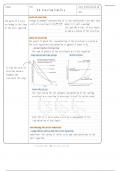
thin-layer chromatography
technique used to analyse small samples via separation
stationary phase
-a thin metal sheet coated in alumina (Al2O3) or silica (SiO2)
-the solute molecules adsorb onto the surface
-depending on the strength of interactions with the stationary
phase, the separated components will travel particular
distances through the plate
mobile phase
-flows over the stationary phase
-polar/non-polar liquid (solvent) or gas that carries components
of the compounds being investigated
Rf value
-the less polar components travel further up the TLC plate and
has a higher Rf value
-polar components are more attracted to the stationary phase
1) prepare a beaker with a small
quantity of solvent
2) on a TLC plate, draw a
horizontal line (baseline)
3) place a spot of pure
reference compound on the
left of this line, then a
spot of the sample to be analysed to the right of the baseline
4) place the TLC plate inside the beaker with solvent, making sure
that the pencil baseline is above the level of the solvent
5) as the solvent reaches the top, remove the plate and draw
another pencils line where the solvent has reached, indicating the
solvent front
Copyright 2021. 해움. All rights reserved.
, subject title check
date
gas/liquid chromatography
used for analysing gases, solids in vapour form, and volatile liquids
stationary phase
-a non-polar, long-chain, non-volatile hydrocarbon with a high
boiling point is mounted onto a solid support
-small silica particles can be packed into a glass column to
offer a large surface area
-sample gas particles travel through this phase and are able to
separate well due to the large surface area
mobile phase
-an inert carries gas (eg. helium) moves the sample molecules
through the stationary phase
retention times
-once sample molecules reach the detector, their retention times
are recorded (time taken to travel through the column)
-the retention times are recorded on a chromatogram where
each peak represents a volatile compound in the sample
-retention times are then compared with data book values to
identify unknown molecules
-longer retention time means that the component is non-polar
and they are more attracted to the non-polar liquid in the
stationary phase
-shorter retention time means that the component is polar and
they prefer to interact with the carrier gas
the area under each peak is the relative concentration
of each component
Copyright 2021. 해움. All rights reserved.
29 analytical chemistry date
thin-layer chromatography
technique used to analyse small samples via separation
stationary phase
-a thin metal sheet coated in alumina (Al2O3) or silica (SiO2)
-the solute molecules adsorb onto the surface
-depending on the strength of interactions with the stationary
phase, the separated components will travel particular
distances through the plate
mobile phase
-flows over the stationary phase
-polar/non-polar liquid (solvent) or gas that carries components
of the compounds being investigated
Rf value
-the less polar components travel further up the TLC plate and
has a higher Rf value
-polar components are more attracted to the stationary phase
1) prepare a beaker with a small
quantity of solvent
2) on a TLC plate, draw a
horizontal line (baseline)
3) place a spot of pure
reference compound on the
left of this line, then a
spot of the sample to be analysed to the right of the baseline
4) place the TLC plate inside the beaker with solvent, making sure
that the pencil baseline is above the level of the solvent
5) as the solvent reaches the top, remove the plate and draw
another pencils line where the solvent has reached, indicating the
solvent front
Copyright 2021. 해움. All rights reserved.
, subject title check
date
gas/liquid chromatography
used for analysing gases, solids in vapour form, and volatile liquids
stationary phase
-a non-polar, long-chain, non-volatile hydrocarbon with a high
boiling point is mounted onto a solid support
-small silica particles can be packed into a glass column to
offer a large surface area
-sample gas particles travel through this phase and are able to
separate well due to the large surface area
mobile phase
-an inert carries gas (eg. helium) moves the sample molecules
through the stationary phase
retention times
-once sample molecules reach the detector, their retention times
are recorded (time taken to travel through the column)
-the retention times are recorded on a chromatogram where
each peak represents a volatile compound in the sample
-retention times are then compared with data book values to
identify unknown molecules
-longer retention time means that the component is non-polar
and they are more attracted to the non-polar liquid in the
stationary phase
-shorter retention time means that the component is polar and
they prefer to interact with the carrier gas
the area under each peak is the relative concentration
of each component
Copyright 2021. 해움. All rights reserved.