OCD – Biological Approach
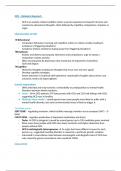
- OCD is an anxiety related condition where a person experiences frequent intrusive and
unwelcome obsessional thoughts, often followed by repetitive compulsions, impulses or
urges.
Characteristics of OCD
Behavioural
- Compulsive behaviour (carrying out repetitive actions to reduce anxiety, leading to
avoidance of triggering situations)
- Avoidance (reduce anxiety by staying away from triggering situations)
Emotional
- Anxiety and distress (accompany obsessions and compulsions, urge to repeat a
compulsion creates anxiety)
- Often accompanied by depression (low mood lack of enjoyment of activities)
- Guilt and disgust
Cognitive
- Obsessive thoughts (unpleasant thoughts that recur over and over again)
- Develop cognitive strategies.
- Aware obsession is irrational (still experience catastrophic thoughts about worse case
scenarios, tend to by hypervigilant)
Genetic explanations
- DNAs inherited and may transmit a vulnerability or predisposition to mental health
disorders between family members.
Lewis – of his OCD patients 37% had parents with OCD and 21% had siblings with OCD,
suggesting OCD runs in families.
Diathesis stress model – certain genes leave some people more likely to suffer with a
mental health disorder, but some environmental stress is likely to trigger it.
Candidate genes
SERT GENE – regulating serotonin, which facilities message transfers across synapses (5HT1 – D
beta)
COMT GENE – regulates production of dopamine (motivation and drive)
- Taylor OCD is polygenic (caused by several genes) up to 230 candidate genes involved
- Brain scans show people with OCD have lower serotonin and higher dopamine than
people without OCD.
- OCD is aetiologically heterogeneous its origin had many different causes for each
person e.g., suggested hoarding disorder is caused by a particular genetic variation
- Interested in concordance rates between monozygotic and dizygotic twins (if OCD was
only caused by genes concordance rates would be 100%)
EVALUATION
- OCD is an anxiety related condition where a person experiences frequent intrusive and
unwelcome obsessional thoughts, often followed by repetitive compulsions, impulses or
urges.
Characteristics of OCD
Behavioural
- Compulsive behaviour (carrying out repetitive actions to reduce anxiety, leading to
avoidance of triggering situations)
- Avoidance (reduce anxiety by staying away from triggering situations)
Emotional
- Anxiety and distress (accompany obsessions and compulsions, urge to repeat a
compulsion creates anxiety)
- Often accompanied by depression (low mood lack of enjoyment of activities)
- Guilt and disgust
Cognitive
- Obsessive thoughts (unpleasant thoughts that recur over and over again)
- Develop cognitive strategies.
- Aware obsession is irrational (still experience catastrophic thoughts about worse case
scenarios, tend to by hypervigilant)
Genetic explanations
- DNAs inherited and may transmit a vulnerability or predisposition to mental health
disorders between family members.
Lewis – of his OCD patients 37% had parents with OCD and 21% had siblings with OCD,
suggesting OCD runs in families.
Diathesis stress model – certain genes leave some people more likely to suffer with a
mental health disorder, but some environmental stress is likely to trigger it.
Candidate genes
SERT GENE – regulating serotonin, which facilities message transfers across synapses (5HT1 – D
beta)
COMT GENE – regulates production of dopamine (motivation and drive)
- Taylor OCD is polygenic (caused by several genes) up to 230 candidate genes involved
- Brain scans show people with OCD have lower serotonin and higher dopamine than
people without OCD.
- OCD is aetiologically heterogeneous its origin had many different causes for each
person e.g., suggested hoarding disorder is caused by a particular genetic variation
- Interested in concordance rates between monozygotic and dizygotic twins (if OCD was
only caused by genes concordance rates would be 100%)
EVALUATION