Unseen Extract Essay
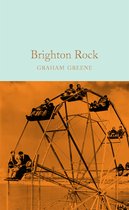
Brighton Rock - Graham Greene
https://www.penguin.co.uk/articles/find-your-next-read/extracts/2016/
nov/brighton-rock-by-graham-greene/
This extract from 'Brighton Rock' is classic Crime Fiction; with the
elements of remorse and motive intrinsic to the plot in relation to the two
murders committed by the criminal. In addition, Greene creates an
extremely dangerous and dark setting by the 'cliffs', which simultaneously
increases tension and acts as a perfect backdrop to the crimes we become
aware of.
Immediately, Greene's first of two focalisers appears to show
remorse for the crimes he has executed, as he considers a 'time' where he
can 'repent of this'. Importantly, this offers the character a chance of some
redemption in the minds of the reader, and henceforth allows for the
restoration of order (to an extent), which is essential in all sub-genres of
Crime Fiction. Greene also gives us a strong insight into the mental state of
the murderer with his flippant tone in 'Even if death came suddenly' - the
conditional here really emphasises the way the criminal's life has been
ruined by the murders he has committed, as he no longer fears death and
perhaps, we could argue that he welcomes death as a way of punishing
himself for what he's done.
Nevertheless, the character's inherent weakness is still evident, for
although he recognises he deserves to die, he still fears his inevitable entry
into 'hell', which he regards as 'something he could not trust'.
Subsequently, our sympathy for him is certainly limited, as after what he's
done we expect him to be resigned to this form of punishment. Despite
this, it's clear that he regrets the point where his life was changed
irrevocably (after the first murder), with a somewhat dreamy tone
regarding his 'glimpse of heaven' as if it was 'only a crack between the
Brighton walls...'; Greene's use of ellipsis here is incredibly effective in
conveying the criminal's clear ruefulness of the unforgivable sins he has
committed, because it's so strong that 'heaven' is now something like a
distant utopia in which he has no place.
Greene creates a forebodingly ominous atmosphere with the
'sea...beating at the undercliff drive, a darkness and deep sound'. This
turbulent backdrop, though quite unique when we consider the traditional
alleyway setting (in Crime Fiction) in a city's seedy neighbourhood, is
extremely powerful as the 'darkness and deep sound' induces a sense that
crimes can take place without detection. The criminal himself makes
reference to this with the inclusion of his own previous quote (presumably
before he committed murder) of 'They won't hear us in the country'.
Clearly, this has proved to be false with his unstable mindset suggesting
his capture is imminent, so not only is the inclusion of this quote very
Brighton Rock - Graham Greene
https://www.penguin.co.uk/articles/find-your-next-read/extracts/2016/
nov/brighton-rock-by-graham-greene/
This extract from 'Brighton Rock' is classic Crime Fiction; with the
elements of remorse and motive intrinsic to the plot in relation to the two
murders committed by the criminal. In addition, Greene creates an
extremely dangerous and dark setting by the 'cliffs', which simultaneously
increases tension and acts as a perfect backdrop to the crimes we become
aware of.
Immediately, Greene's first of two focalisers appears to show
remorse for the crimes he has executed, as he considers a 'time' where he
can 'repent of this'. Importantly, this offers the character a chance of some
redemption in the minds of the reader, and henceforth allows for the
restoration of order (to an extent), which is essential in all sub-genres of
Crime Fiction. Greene also gives us a strong insight into the mental state of
the murderer with his flippant tone in 'Even if death came suddenly' - the
conditional here really emphasises the way the criminal's life has been
ruined by the murders he has committed, as he no longer fears death and
perhaps, we could argue that he welcomes death as a way of punishing
himself for what he's done.
Nevertheless, the character's inherent weakness is still evident, for
although he recognises he deserves to die, he still fears his inevitable entry
into 'hell', which he regards as 'something he could not trust'.
Subsequently, our sympathy for him is certainly limited, as after what he's
done we expect him to be resigned to this form of punishment. Despite
this, it's clear that he regrets the point where his life was changed
irrevocably (after the first murder), with a somewhat dreamy tone
regarding his 'glimpse of heaven' as if it was 'only a crack between the
Brighton walls...'; Greene's use of ellipsis here is incredibly effective in
conveying the criminal's clear ruefulness of the unforgivable sins he has
committed, because it's so strong that 'heaven' is now something like a
distant utopia in which he has no place.
Greene creates a forebodingly ominous atmosphere with the
'sea...beating at the undercliff drive, a darkness and deep sound'. This
turbulent backdrop, though quite unique when we consider the traditional
alleyway setting (in Crime Fiction) in a city's seedy neighbourhood, is
extremely powerful as the 'darkness and deep sound' induces a sense that
crimes can take place without detection. The criminal himself makes
reference to this with the inclusion of his own previous quote (presumably
before he committed murder) of 'They won't hear us in the country'.
Clearly, this has proved to be false with his unstable mindset suggesting
his capture is imminent, so not only is the inclusion of this quote very