Conformity
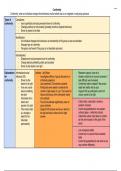
Conformity: when an individual changes their behaviour and/or beliefs due to an imagined or real group pressure
Types of Compliance:
conformity - most superficial and least permanent level of conformity
- Changes publicly but not privately (privately reverts to original behaviour)
- Driven by desire to be liked
Identification:
- An individual changes their behaviour as membership of the group is seen as desirable
- Stronger type of conformity
- Temporary (will revert if the group is not desirable anymore)
Internalisation:
- Deepest and most permanent level of conformity
- Change behaviour/beliefs publicly and privately
- Driven by the desire to be right
Explanations Informational social Jenness - Jelly Bean - Research support: lucas et al
for influence (ISI) - Investigates effects of group discussion on - Greater conformity to incorrect answers if
conformity - Driven by the individual judgement task difficulty was increased
desire to be right - Lab experiment, 36 american students - Conformity rates increased if the person
- If we are unsure - Participants were asked to estimate the rated their maths skill as poor
about something, number of jelly beans in a jar. Then asked to - Supports ISI as participants conform if
we seek discuss with group, then individually made unsure, wants to be right
information from 2nd estimate
others and - Found 2nd estimate significantly closer to - Culture bias: conducted in america
assume it is right group estimate (western cultures)
- This means there - Supports ISI because we have a desire to - Cannot be generalised to non-western
is a change in be right and look to others for the right cultures (japan - collectivist culture)
belief for the answer - Collectivist culture more likely to conform
individual as they are focused on the good of the
permanently group
- Low ecological validity
- Carried out in a lab and had unrealistic
tasks
- Cannot be generalised to real world as we
may conform differently
, Normative social Asch - Line study - Lab experiment, controlled environment
influence (ISI) - Aim: see if participants would be pressured - Characteristics easy to regulate (age,
- Driven by the to follow opinion of majority group gender)
desire to be liked - Sample: Lab experiment, 123 american - No extraneous variable, increase rate of
- Conform publicly, males internal validity
doesn’t accept - Hypothesis: ps will conform to confederates
privately and give same answer as others even if they - Culture and gender bias
- Changes know they are wrong - Set in america (western culture) + only men
behaviour to be - IV: answer given by confederates were tested not women
accepted leading - DV: participants answer - Results cannot be generalised to everyone,
to compliance - Procedure: ps shown two cards with lines, as it is not representative
ps were asked to match lines to the standard
line - Lab experiment - artificial tasks
Confederates gave right answers at start - Participants knew they were part of an
then started giving wrong answers experiment this can lead to demand
- Findings: naive ps gave wrong answers characteristics
36.8% of the time - Ps can change their judgements based off
Post interview found majority conformed clues given by researchers
publicly, not privately - This could help or hinder the experiment so
- Conclusion: participants conformed, this lowers the internal validity of the
supports NSI because they conformed experiment
publicly not privately (wanted to be liked )
Variables Group size: - Conformity increased with group size, only
affecting - Conformity rates increase as the size of the majority group increases to a point, and levelled out when majority
conformity - Conformity does not increase after 3 confederates was greater than 3
Unanimity: - When a confederates said right answer
- Complete agreement from a group of people about an answer conformity dropped to 5.5%
- When confederate said another wrong
answer conformity dropped to 9%
Task difficulty: - Conformity increased as ps assumed the
- Conformity increases as a task gets harder because we lose confidence majority is more likely to be right
in our ability so we are more likely to conform
Conformity: when an individual changes their behaviour and/or beliefs due to an imagined or real group pressure
Types of Compliance:
conformity - most superficial and least permanent level of conformity
- Changes publicly but not privately (privately reverts to original behaviour)
- Driven by desire to be liked
Identification:
- An individual changes their behaviour as membership of the group is seen as desirable
- Stronger type of conformity
- Temporary (will revert if the group is not desirable anymore)
Internalisation:
- Deepest and most permanent level of conformity
- Change behaviour/beliefs publicly and privately
- Driven by the desire to be right
Explanations Informational social Jenness - Jelly Bean - Research support: lucas et al
for influence (ISI) - Investigates effects of group discussion on - Greater conformity to incorrect answers if
conformity - Driven by the individual judgement task difficulty was increased
desire to be right - Lab experiment, 36 american students - Conformity rates increased if the person
- If we are unsure - Participants were asked to estimate the rated their maths skill as poor
about something, number of jelly beans in a jar. Then asked to - Supports ISI as participants conform if
we seek discuss with group, then individually made unsure, wants to be right
information from 2nd estimate
others and - Found 2nd estimate significantly closer to - Culture bias: conducted in america
assume it is right group estimate (western cultures)
- This means there - Supports ISI because we have a desire to - Cannot be generalised to non-western
is a change in be right and look to others for the right cultures (japan - collectivist culture)
belief for the answer - Collectivist culture more likely to conform
individual as they are focused on the good of the
permanently group
- Low ecological validity
- Carried out in a lab and had unrealistic
tasks
- Cannot be generalised to real world as we
may conform differently
, Normative social Asch - Line study - Lab experiment, controlled environment
influence (ISI) - Aim: see if participants would be pressured - Characteristics easy to regulate (age,
- Driven by the to follow opinion of majority group gender)
desire to be liked - Sample: Lab experiment, 123 american - No extraneous variable, increase rate of
- Conform publicly, males internal validity
doesn’t accept - Hypothesis: ps will conform to confederates
privately and give same answer as others even if they - Culture and gender bias
- Changes know they are wrong - Set in america (western culture) + only men
behaviour to be - IV: answer given by confederates were tested not women
accepted leading - DV: participants answer - Results cannot be generalised to everyone,
to compliance - Procedure: ps shown two cards with lines, as it is not representative
ps were asked to match lines to the standard
line - Lab experiment - artificial tasks
Confederates gave right answers at start - Participants knew they were part of an
then started giving wrong answers experiment this can lead to demand
- Findings: naive ps gave wrong answers characteristics
36.8% of the time - Ps can change their judgements based off
Post interview found majority conformed clues given by researchers
publicly, not privately - This could help or hinder the experiment so
- Conclusion: participants conformed, this lowers the internal validity of the
supports NSI because they conformed experiment
publicly not privately (wanted to be liked )
Variables Group size: - Conformity increased with group size, only
affecting - Conformity rates increase as the size of the majority group increases to a point, and levelled out when majority
conformity - Conformity does not increase after 3 confederates was greater than 3
Unanimity: - When a confederates said right answer
- Complete agreement from a group of people about an answer conformity dropped to 5.5%
- When confederate said another wrong
answer conformity dropped to 9%
Task difficulty: - Conformity increased as ps assumed the
- Conformity increases as a task gets harder because we lose confidence majority is more likely to be right
in our ability so we are more likely to conform