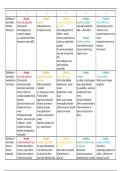
1 2 3 4 5
Definitions of Strength Strength Limitation Limitation Limitation
abnormality: Real-world applications Objective Unusual characteristics can Benefits vs problems Cultural differences
Statistical Clinical practice Mathematical nature be positive Social stigma attached to Some behaviours may be
infrequency Formal diagnosis and No opinion so no bias Abnormally good level of labels – not beneficial common in some
severity of symptoms intellect – positive countries/cultures but not in
e.g. assessment tool: Beck’s Common characteristics can Strength others
depression inventory (BDI) be bad e.g. mental health Benefits vs problems Immigrants may be seen as
problems Some benefit from being abnormal
One end of psychological classed as abnormal e.g. Not universal
spectrum not necessarily support services
bad
Never sufficient as sole
basis for defining
abnormality
Definitions of Strength Limitation Limitation Strength Limitation
abnormality: Real-world application Cultural and situational Human rights abuses Flexibility Temporal validity
deviation from Clinical practice relativism Risk of unfair labelling Less likely to classify people What is normal changes
social norms Antisocial personality Different standards of Nymphomania – control using a single definition temporally
disorder key characteristic: ‘normality’ women E.g. paraphilias – used to be
failure to conform to e.g. hearing voices normal Drapetomania – control deviations from social
culturally acceptable ethical in some cultures slaves norms
behaviour Aggressive and deceitful DSM-5 used to consider Now only classified (by
Signs of the disorder are all behaviour in context of homosexuality a disorder DSM-5) as mental disorders
deviations from social family more socially Justify removal of unwanted if they involve harm or
norms unacceptable than in persons from society distress to that person or
Schizotypal personality context of corporate deal- others
disorder – norms play a part making
in diagnosis – ‘strange’ Depends on situation and
characterises thinking, age – range of factors
behaviour and appearance
Helps patient
Definitions of Strength Strength Limitation Limitation Strength
abnormality: Sensible threshold for help Behaviour is observable Discrimination and social Failure to function may not Experience of patient
failure to Mental health problems Can seek professional help control be abnormal They have to
function common, many continue or be referred by others Easy to label non-standard Bereavement acknowledges experience of
adequately despite severe symptoms Can be seen by others lifestyle choices as Labels may cause future patient – suffering or not
Treatment and services around the individual useful abnormal problems but just a reaction behaviour has to be
, targeted to those who need if incapable of helping Hard to differentiate to difficult circumstances irrational or dangerous and
them most themselves between deviating from No less real when cause it experience severe personal
social norms and failure to clear distress
function adequately May need help to adjust to
e.g. favouring high-risk circumstances
leisure activities
unfairly labelled, freedom of
choice restricted
Definitions of Strength Limitation Limitation Limitation Limitation
abnormality: Comprehensive definition May be culture-bound Very high standards Subjective Situational relativism
deviation from Jahoda’s criteria: Some are contextually Very few attain all criteria Perception of ourselves is May not enjoy their job
ideal mental distinguishes mental health located in USA and Europe Disheartening to have subjective – how can we Children cannot be
health from mental disorder e.g. self-actualisation – self- impossible standards to live determine whether this is independent
Covers reasons why we indulgent in much of world up to accurate or not Self-actualisation – difficult
might seek help Variation within Europe on Coping with stress is to achieve, may not do so at
Universal - mental health personal independence – Strength undefinable this point in time
discussed meaningfully with more in Germany, less in Very high standards Realistic view of the world May go through stressful
range of professionals who Italy Might be of practical value periods due to life
have different theoretical What defines success in to understand and improve circumstances
views work, social and love-lives own mental health
Checklist to assess ourselves differs between cultures
The cognitive Strength Strength Limitation Limitation
approach to Research support Real-world application Partial explanation Cause and effect
explaining Clark and Beck – reviewed Screening and treatment for Some aspects of depression May be effect and not cause
depression: cognitive vulnerability – depression not explained well by faulty
Beck’s more common in depressed Cohen et al. – assessing cognitions
negative triad people and preceded the cognitive vulnerability so e.g. extreme anger,
depression can screen people and hallucinations and delusions
Cohen et al. – tracked 473 identify and monitor those
adolescents, showing at risk
cognitive vulnerability CBT – works by altering
predicted later depression cognitions (that make
people vulnerable) and
making people more
resilient to negative life
events
The cognitive Strength Strength Limitation Limitation Limitation
approach to Real-world application Able to test empirically Reactive and endogenous Ethical issues Realistic negative cognitions
Definitions of Strength Strength Limitation Limitation Limitation
abnormality: Real-world applications Objective Unusual characteristics can Benefits vs problems Cultural differences
Statistical Clinical practice Mathematical nature be positive Social stigma attached to Some behaviours may be
infrequency Formal diagnosis and No opinion so no bias Abnormally good level of labels – not beneficial common in some
severity of symptoms intellect – positive countries/cultures but not in
e.g. assessment tool: Beck’s Common characteristics can Strength others
depression inventory (BDI) be bad e.g. mental health Benefits vs problems Immigrants may be seen as
problems Some benefit from being abnormal
One end of psychological classed as abnormal e.g. Not universal
spectrum not necessarily support services
bad
Never sufficient as sole
basis for defining
abnormality
Definitions of Strength Limitation Limitation Strength Limitation
abnormality: Real-world application Cultural and situational Human rights abuses Flexibility Temporal validity
deviation from Clinical practice relativism Risk of unfair labelling Less likely to classify people What is normal changes
social norms Antisocial personality Different standards of Nymphomania – control using a single definition temporally
disorder key characteristic: ‘normality’ women E.g. paraphilias – used to be
failure to conform to e.g. hearing voices normal Drapetomania – control deviations from social
culturally acceptable ethical in some cultures slaves norms
behaviour Aggressive and deceitful DSM-5 used to consider Now only classified (by
Signs of the disorder are all behaviour in context of homosexuality a disorder DSM-5) as mental disorders
deviations from social family more socially Justify removal of unwanted if they involve harm or
norms unacceptable than in persons from society distress to that person or
Schizotypal personality context of corporate deal- others
disorder – norms play a part making
in diagnosis – ‘strange’ Depends on situation and
characterises thinking, age – range of factors
behaviour and appearance
Helps patient
Definitions of Strength Strength Limitation Limitation Strength
abnormality: Sensible threshold for help Behaviour is observable Discrimination and social Failure to function may not Experience of patient
failure to Mental health problems Can seek professional help control be abnormal They have to
function common, many continue or be referred by others Easy to label non-standard Bereavement acknowledges experience of
adequately despite severe symptoms Can be seen by others lifestyle choices as Labels may cause future patient – suffering or not
Treatment and services around the individual useful abnormal problems but just a reaction behaviour has to be
, targeted to those who need if incapable of helping Hard to differentiate to difficult circumstances irrational or dangerous and
them most themselves between deviating from No less real when cause it experience severe personal
social norms and failure to clear distress
function adequately May need help to adjust to
e.g. favouring high-risk circumstances
leisure activities
unfairly labelled, freedom of
choice restricted
Definitions of Strength Limitation Limitation Limitation Limitation
abnormality: Comprehensive definition May be culture-bound Very high standards Subjective Situational relativism
deviation from Jahoda’s criteria: Some are contextually Very few attain all criteria Perception of ourselves is May not enjoy their job
ideal mental distinguishes mental health located in USA and Europe Disheartening to have subjective – how can we Children cannot be
health from mental disorder e.g. self-actualisation – self- impossible standards to live determine whether this is independent
Covers reasons why we indulgent in much of world up to accurate or not Self-actualisation – difficult
might seek help Variation within Europe on Coping with stress is to achieve, may not do so at
Universal - mental health personal independence – Strength undefinable this point in time
discussed meaningfully with more in Germany, less in Very high standards Realistic view of the world May go through stressful
range of professionals who Italy Might be of practical value periods due to life
have different theoretical What defines success in to understand and improve circumstances
views work, social and love-lives own mental health
Checklist to assess ourselves differs between cultures
The cognitive Strength Strength Limitation Limitation
approach to Research support Real-world application Partial explanation Cause and effect
explaining Clark and Beck – reviewed Screening and treatment for Some aspects of depression May be effect and not cause
depression: cognitive vulnerability – depression not explained well by faulty
Beck’s more common in depressed Cohen et al. – assessing cognitions
negative triad people and preceded the cognitive vulnerability so e.g. extreme anger,
depression can screen people and hallucinations and delusions
Cohen et al. – tracked 473 identify and monitor those
adolescents, showing at risk
cognitive vulnerability CBT – works by altering
predicted later depression cognitions (that make
people vulnerable) and
making people more
resilient to negative life
events
The cognitive Strength Strength Limitation Limitation Limitation
approach to Real-world application Able to test empirically Reactive and endogenous Ethical issues Realistic negative cognitions