1: Augustine’s Teachings on Human Nature
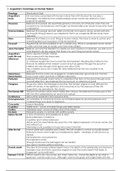
Theology The study of God
Augustine's He was more concerned with human nature than with God but he was also a
study theologian. He believed that understanding human nature was related to God's
purpose for people
Rousseau Believed that people are essentially generous and only act otherwise when they are
caused to by circumstances. He thought we should rediscover nature to become more
cooperative
Thomas Hobbes Believed that people are born selfish and brutish and need a strong central authority.
He thought through reason we understand that if we cooperate life becomes more
tolerable
Marx Believed that there is no such thing as human nature. We have to work to survive and
everything else is just a product of the environment
Foucault Argued that we are socialised to act a certain way. What is considered human nature
s often what the rules of society want from their citizens
Jean-Paul Satre Believes we have the freedom to create our own natures to or destinies- we start out in
total freedom. He also argues that there is no such thing as human nature
Augustine's Had a devote Catholic mother
early life and Was involved with the Manichees
influences Interested in Platonism
St. Ambrose taught him how to read the old testament. Reading Paul's letter to the
Romans he believed that wisdom could not just be gained through the pursuit of
intellect but also through God's grace and Jesus Christ
Has a mistress and a son in early life -later believed that this was a barrier to his
spirituality
Manichees/ Believed that the world was engaged in a battle between good and evil. Humans
Manichaeism have 2 souls which pull them in different directions
Platonism Believed that people could come to understand the Form of the Good through study
and self-reflection. Also believed that evil was just an absence of good
Pelagians Those who follow the theological doctrine that denied original sin and affirmed the
ability of humans to be righteous and overcome sin by the exercise of free will.
Augustine's vies prevailed in the church
The Human Will The part of human nature which makes free choices. He believed that because of the
fall, the will is weakened by sin and is now corrupt
Continence Self-control; abstention from sexual activity
Concupiscence An inclination to commit sin and an uncontrolled desire for physical pleasure and
material things as a result of original sin.
Concordia Human friendship
Cupiditas 'Selfish love' - a love of worldly things and selfish desires
Caritas "Generous love", a love of others and of the virtues
Ecclesia Heavenly society, in contrast with earthly society
Before the fall A time of harmony and obedience to God
Body/will/reason in balance
Cupiditas and Caritas balanced
Adam and Eve were friends because this is the highest expression of human nature. Sex
was without lust
Friendship is only possible for those who loved Christ first
After the fall Human pride split cupiditas and Caritas. We are unable to control our bodily desires
Rational to know what is right but weakened by desire - weakness of will is known as
akrasia
Dominated by concupiscence
Post-lapsarian world
Through God's love the damaged can be healed
We need a forceful political authority
Double death The idea that humans suffered death twice- the death of the relationship and harmony
between man and God caused by original sin and the mortal death that leads to
judgement and punishment
Romans 7:15-21 'What I want to do, I do not do, but what I hate I do...I have the desire to do what is
good but I cannot carry it out...Although I want to do good, evil is right there with me'
Theology The study of God
Augustine's He was more concerned with human nature than with God but he was also a
study theologian. He believed that understanding human nature was related to God's
purpose for people
Rousseau Believed that people are essentially generous and only act otherwise when they are
caused to by circumstances. He thought we should rediscover nature to become more
cooperative
Thomas Hobbes Believed that people are born selfish and brutish and need a strong central authority.
He thought through reason we understand that if we cooperate life becomes more
tolerable
Marx Believed that there is no such thing as human nature. We have to work to survive and
everything else is just a product of the environment
Foucault Argued that we are socialised to act a certain way. What is considered human nature
s often what the rules of society want from their citizens
Jean-Paul Satre Believes we have the freedom to create our own natures to or destinies- we start out in
total freedom. He also argues that there is no such thing as human nature
Augustine's Had a devote Catholic mother
early life and Was involved with the Manichees
influences Interested in Platonism
St. Ambrose taught him how to read the old testament. Reading Paul's letter to the
Romans he believed that wisdom could not just be gained through the pursuit of
intellect but also through God's grace and Jesus Christ
Has a mistress and a son in early life -later believed that this was a barrier to his
spirituality
Manichees/ Believed that the world was engaged in a battle between good and evil. Humans
Manichaeism have 2 souls which pull them in different directions
Platonism Believed that people could come to understand the Form of the Good through study
and self-reflection. Also believed that evil was just an absence of good
Pelagians Those who follow the theological doctrine that denied original sin and affirmed the
ability of humans to be righteous and overcome sin by the exercise of free will.
Augustine's vies prevailed in the church
The Human Will The part of human nature which makes free choices. He believed that because of the
fall, the will is weakened by sin and is now corrupt
Continence Self-control; abstention from sexual activity
Concupiscence An inclination to commit sin and an uncontrolled desire for physical pleasure and
material things as a result of original sin.
Concordia Human friendship
Cupiditas 'Selfish love' - a love of worldly things and selfish desires
Caritas "Generous love", a love of others and of the virtues
Ecclesia Heavenly society, in contrast with earthly society
Before the fall A time of harmony and obedience to God
Body/will/reason in balance
Cupiditas and Caritas balanced
Adam and Eve were friends because this is the highest expression of human nature. Sex
was without lust
Friendship is only possible for those who loved Christ first
After the fall Human pride split cupiditas and Caritas. We are unable to control our bodily desires
Rational to know what is right but weakened by desire - weakness of will is known as
akrasia
Dominated by concupiscence
Post-lapsarian world
Through God's love the damaged can be healed
We need a forceful political authority
Double death The idea that humans suffered death twice- the death of the relationship and harmony
between man and God caused by original sin and the mortal death that leads to
judgement and punishment
Romans 7:15-21 'What I want to do, I do not do, but what I hate I do...I have the desire to do what is
good but I cannot carry it out...Although I want to do good, evil is right there with me'