

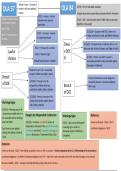
Wheat v Lacon – Occupier is
OLA 57 person/s with occupational
control
OLA 84 S(1)(8) = Only PI and death claimable.
Includes those whom exceed their permission (Revill v Newbery)
S(1)(2) = invitees – Invited
S(1)(3)(a) = extends to fixed S(1)(4) – DOC = see that other doesn’t suffer injury on premises
therefore have express
and moveable structures (Ratcliffe v McConnell))
permission.
S(2)(2) – DOC
S(1)(3)(a) = Occupier owed DOC if aware of a
Death, PI + Damage all are S(1)(2) = Licensees – Express
danger or believes it exists, and (Rhind v Astbury)
claimable. or implied permission
Owes S(1)(3)(b) = Occupier knows or believes other is in or
- S(5)(1) = Pursuant to a contract may come into vicinity of danger, and (Higgs v Foster)
Lawful a DOC
- S(2)(6) = Statutory right
Visitors Implied license (Lowery v Walker)
if: S(1)(3)(c) = Risk is one which occupier is
reasonably expected to take protection against.
(Donoghue v Folkstone)
Standard of care is of a ‘reasonable
occupier’ (White Lion Hotel v James)
Breach Premises themselves must be dangerous
S(2)(3)(a) = Occupier must be not activity (Keown v Coventry Healthcare
of DOC prepared for children to be less Breach NHS Trust)
careful than adults. (Jolley v Sutton)
of DOC
S(2)(3)(b) = Person in exercise of his
calling should protect against special
Warnings/signs
risks. (Roles v Nathan)
S(2)(4)(a) = Warning must in all
circumstances enable visitors to
Dangers by Independent Contractors Warnings/signs Defences:-
be reasonable safe to discharge
duty (use darby) S(2)(4)(b) = Occupier not liable for actions of S(1)(5) = Duty can be discharged if Volenti non fit injuria = S(1)(6) – SEE 57
independent contractor if they 1.acted reasonably a warning sign or action to
Don’t have to warn against Contributory Negligence = SEE 57
in entrusting and took 2.reasonable steps e.g. due discourage is given (Tomlinson v
obvious risks (Darby v National
diligence (Bottomley v Todmorden Cricket Club) Congleton).
Trust)
Defences:-
Volenti non fit injuria = S(2)(5) – Risks willingly accepted by visitors, no DOC on occupiers. “Voluntary Agreement by the C, in full knowledge of the circumstances”
Contributory Negligence = Law Reform (Contributory Negligence) Act 1945 – Visitor fails to take reasonable care for their own safety [Damages can be reduced].
Exclusion of Liability = S(2)(1) – Occupiers can change their duty as long as they are free to do so.
OLA 57 person/s with occupational
control
OLA 84 S(1)(8) = Only PI and death claimable.
Includes those whom exceed their permission (Revill v Newbery)
S(1)(2) = invitees – Invited
S(1)(3)(a) = extends to fixed S(1)(4) – DOC = see that other doesn’t suffer injury on premises
therefore have express
and moveable structures (Ratcliffe v McConnell))
permission.
S(2)(2) – DOC
S(1)(3)(a) = Occupier owed DOC if aware of a
Death, PI + Damage all are S(1)(2) = Licensees – Express
danger or believes it exists, and (Rhind v Astbury)
claimable. or implied permission
Owes S(1)(3)(b) = Occupier knows or believes other is in or
- S(5)(1) = Pursuant to a contract may come into vicinity of danger, and (Higgs v Foster)
Lawful a DOC
- S(2)(6) = Statutory right
Visitors Implied license (Lowery v Walker)
if: S(1)(3)(c) = Risk is one which occupier is
reasonably expected to take protection against.
(Donoghue v Folkstone)
Standard of care is of a ‘reasonable
occupier’ (White Lion Hotel v James)
Breach Premises themselves must be dangerous
S(2)(3)(a) = Occupier must be not activity (Keown v Coventry Healthcare
of DOC prepared for children to be less Breach NHS Trust)
careful than adults. (Jolley v Sutton)
of DOC
S(2)(3)(b) = Person in exercise of his
calling should protect against special
Warnings/signs
risks. (Roles v Nathan)
S(2)(4)(a) = Warning must in all
circumstances enable visitors to
Dangers by Independent Contractors Warnings/signs Defences:-
be reasonable safe to discharge
duty (use darby) S(2)(4)(b) = Occupier not liable for actions of S(1)(5) = Duty can be discharged if Volenti non fit injuria = S(1)(6) – SEE 57
independent contractor if they 1.acted reasonably a warning sign or action to
Don’t have to warn against Contributory Negligence = SEE 57
in entrusting and took 2.reasonable steps e.g. due discourage is given (Tomlinson v
obvious risks (Darby v National
diligence (Bottomley v Todmorden Cricket Club) Congleton).
Trust)
Defences:-
Volenti non fit injuria = S(2)(5) – Risks willingly accepted by visitors, no DOC on occupiers. “Voluntary Agreement by the C, in full knowledge of the circumstances”
Contributory Negligence = Law Reform (Contributory Negligence) Act 1945 – Visitor fails to take reasonable care for their own safety [Damages can be reduced].
Exclusion of Liability = S(2)(1) – Occupiers can change their duty as long as they are free to do so.


