“In the world Blake represents, there is no escape from political and social constraints.” To what
extent do you agree with this view?
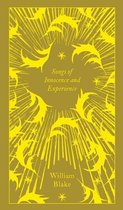
Within Blake’s ‘Songs of Experience’, the poems are closely intertwined with the political and social
constraints that were once prevalent in Blake’s time. The poet expresses his opinions on
controversial topics such as education, religion, and child labour, and yet is still able to communicate
these thoughts in lines that are filled with rhymes and symbolism.
In ‘The School-Boy’, Blake explicitly discusses the issues regarding education of children. The text
begins in a way which is rich with natural imagery – a symbol for freedom - as the speaker talks of his
love for the peaceful “summer morn”. However, the appreciative tone that carries through the first
stanza quickly comes to an end as there is a shift in language for the rest of the poem. In the second
stanza, Blake emphasises the disadvantages of the school system as it “drives all joy away”. Here,
the dynamic verb “drives” has purposely been chosen to suggest that schools are actively destroying
the joy of children and ultimately catalysing the end of childhood. As well as this, the rhetorical
question of “how can the bird that is born for joy, sit in a cage and swing” depicts schools as a
mentally restrictive environment. In this case, the “bird” is referring to children who, as presented by
Blake, are innocent beings born with a great imagination. This imagination, however, is very much
repressed by the “anxious” nature that schools present. Therefore, the continuous stream of
negative terminology that Blake peppers throughout the poem are used to express just how “cruel”
and “dreary” the education of children can be.
As well as this, the poem ‘Holy Thursday’ is clearly a strong criticism of the church’s organisation and
how it can impact innocent children. For example, the first stanza opens with the line “is this a holy
thing to see”, where the rhetorical question directly addresses the disbelief that Blake has in the
concept of religion. The poet suggests that the church’s “usurous hand” is selfish and taking
advantage of those who are vulnerable, consequently leading to the mass number of “children poor”
in the “land of poverty” that has consumed Blake’s world. This aggressive tone that Blake adopts
shifts during the third stanza where the use of anaphora focuses on raising awareness and
emphasising the scale of the problem, rather than continuing to point blame at the church. At the
end of the poem, the natural images of the shining “sun” and falling “rain” are ironic as these are
essentials to the growth of crops and yet children are still hungry. As a result, we can infer that Blake
is suggesting that the children are being unnecessarily placed in a position of “poverty” as it is an
issue that could be avoided if only the world’s resources were being distributed fairly. Therefore,
‘Holy Thursday’ is a poem filled with irony as it criticises the uncharitable nature of the church as
they fail to help these starving children even on a day which should traditionally be filled with feasts
and celebrations.
Finally, in ‘The Chimney Sweeper’, Blake uses simple quatrains throughout the poem to reflect the
sound of innocent childhood nursery rhymes; however, this is quite ironic considering the main
focus of the poem is about how child labour ruins this same innocence. At the beginning of the
poem, the reader is met with an immediate colour contrast between the “little black thing” and “the
snow” – a potential metaphor for how the once innocent child has now been corrupted due to the
exploitation by the negligent parental figures. As the speaker switches from the onlooker to the child
in stanza 2, we see just how terribly the chimney sweeper’s life is. For example, the metaphor “they
clothed me in the clothes of death” emphasise how the child is still reliant on his parents for simple
tasks such as dressing him, but they took advantage of this and sent him to work a dangerous job,
knowing that he could not protest. As a result, the child can no longer be “happy, & dance & sing” –
highlighted by the syndetic list which provides a clear contrast from his once joyful life to one that is
now filled with misery. Therefore, the bitter and resentful tone of the poem clearly sets an
extent do you agree with this view?
Within Blake’s ‘Songs of Experience’, the poems are closely intertwined with the political and social
constraints that were once prevalent in Blake’s time. The poet expresses his opinions on
controversial topics such as education, religion, and child labour, and yet is still able to communicate
these thoughts in lines that are filled with rhymes and symbolism.
In ‘The School-Boy’, Blake explicitly discusses the issues regarding education of children. The text
begins in a way which is rich with natural imagery – a symbol for freedom - as the speaker talks of his
love for the peaceful “summer morn”. However, the appreciative tone that carries through the first
stanza quickly comes to an end as there is a shift in language for the rest of the poem. In the second
stanza, Blake emphasises the disadvantages of the school system as it “drives all joy away”. Here,
the dynamic verb “drives” has purposely been chosen to suggest that schools are actively destroying
the joy of children and ultimately catalysing the end of childhood. As well as this, the rhetorical
question of “how can the bird that is born for joy, sit in a cage and swing” depicts schools as a
mentally restrictive environment. In this case, the “bird” is referring to children who, as presented by
Blake, are innocent beings born with a great imagination. This imagination, however, is very much
repressed by the “anxious” nature that schools present. Therefore, the continuous stream of
negative terminology that Blake peppers throughout the poem are used to express just how “cruel”
and “dreary” the education of children can be.
As well as this, the poem ‘Holy Thursday’ is clearly a strong criticism of the church’s organisation and
how it can impact innocent children. For example, the first stanza opens with the line “is this a holy
thing to see”, where the rhetorical question directly addresses the disbelief that Blake has in the
concept of religion. The poet suggests that the church’s “usurous hand” is selfish and taking
advantage of those who are vulnerable, consequently leading to the mass number of “children poor”
in the “land of poverty” that has consumed Blake’s world. This aggressive tone that Blake adopts
shifts during the third stanza where the use of anaphora focuses on raising awareness and
emphasising the scale of the problem, rather than continuing to point blame at the church. At the
end of the poem, the natural images of the shining “sun” and falling “rain” are ironic as these are
essentials to the growth of crops and yet children are still hungry. As a result, we can infer that Blake
is suggesting that the children are being unnecessarily placed in a position of “poverty” as it is an
issue that could be avoided if only the world’s resources were being distributed fairly. Therefore,
‘Holy Thursday’ is a poem filled with irony as it criticises the uncharitable nature of the church as
they fail to help these starving children even on a day which should traditionally be filled with feasts
and celebrations.
Finally, in ‘The Chimney Sweeper’, Blake uses simple quatrains throughout the poem to reflect the
sound of innocent childhood nursery rhymes; however, this is quite ironic considering the main
focus of the poem is about how child labour ruins this same innocence. At the beginning of the
poem, the reader is met with an immediate colour contrast between the “little black thing” and “the
snow” – a potential metaphor for how the once innocent child has now been corrupted due to the
exploitation by the negligent parental figures. As the speaker switches from the onlooker to the child
in stanza 2, we see just how terribly the chimney sweeper’s life is. For example, the metaphor “they
clothed me in the clothes of death” emphasise how the child is still reliant on his parents for simple
tasks such as dressing him, but they took advantage of this and sent him to work a dangerous job,
knowing that he could not protest. As a result, the child can no longer be “happy, & dance & sing” –
highlighted by the syndetic list which provides a clear contrast from his once joyful life to one that is
now filled with misery. Therefore, the bitter and resentful tone of the poem clearly sets an