Outline and evaluate statistical infrequency and deviation from social norms as definitions of abnormality.
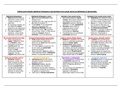
Statistical Infrequency Statistical Infrequency (cont) Deviation from social norms Deviation from social norms (cont)
● Rare behaviours that are ● Eg IQ normally distributed in bell ● Abnormality based on social ● Definitions are related to cultural
abnormal, in terms of the shaped curve. context, when person behaves in context, or historical differences in
number of times it is ● Average IQ is 100, most have 85-115, way different to how they are the same society. Implicit rules
observed. 2% have IQ of below 70 expected to behave, defined as ● Eg gay in 1 culture is abnormal,
● By analysing numbers, we ● Those below 70 are statistically abnormal. Or laws, paedophilia but not others. Was seen as
can determine which abnormal, diagnosed with ● Societies make collective abnormal in our society in past
behaviours are (ab)normal intellectual disability disorder. judgments about ‘correct’ ● Eg antisocial personality
● Behaviour that is different. ● 68% around mean, SD is spread behaviours in particular disorder, 1 symptom is failure to
● Plot against norm for around mean, those 1-2 SDs around circumstances. However… conform to normative ethical
behaviour, using normal mean are unusual, those at ● Few behaviours are considered behaviour. Psychopath is
distribution curve (bell) extremes - 2.5% are abnormal. universally abnormal abnormal as deviate from norms
Not all weird benefit from label Unusual Characteristics are positive Leads to Human Rights Abuse Social norms: culturally relative
● When someone has ● If few people display behaviour, it ● Reliance on deviation from social ● 1 person from cultural group
happy, fulfilled life, there makes behaviour statistically norms to understand systematic could label another as abnormal
is no benefit to them abnormal, but does not mean person abuse of human rights. using their standards rather than
being seen as abnormal. needs treatment. ● Drapetomania (black slaves the person’s standards.
● Low IQ people not ● IQ <130 is just as unusual as >70, escaping) or nymphomania (♀️ ● Eg hearing voices in African
distressed or out of work but isn’t seen as undesirable / sex addicts, still double standard) cultures is socially acceptable, but
would not need requiring treatment. shows how diagnosis was used in is sign of abnormality in UK.
intellectually disabled ● Means shouldn’t alone be used to social control.Classifications ● Creates issues for people from
diagnosis. Can be make diagnosis.Doesn’t distinguish seem ridiculous but psychologists one culture, living with others in
negative way others view between (un)desirable behaviour argue abuses right to be weird different cultural group.
Does not consider context Real World Application Nomothetic vs Idiographic Humanistic Approach
● Deviance related to ● Assessing patients with mental ● The development of criteria takes ● Considers person in reductionist
behaviour context, eg disorders includes comparison to a nomothetic approach by view and does not consider
bikini on beach is normal, statistical norms. identifying a list of factors through person as whole individual, with
but dinner is abnormal. ● Intellectual disability disorder which to diagnose abnormal individual values and beliefs.
● Could be eccentricity & demonstrates how statistical behaviour. ● No influence on Maslow’s
not abnormal deviation, infrequency can be used, measure ● Yet, everyone is an individual, so Hierarchy or congruity.
cannot offer complete how severe symptoms are compared perhaps an idiographic
definition of abnormality, to statistics vs social norms. approach to this area of
as related to context. ● Useful part of clinical assessment psychology might be more fruitful.
Statistical Infrequency Statistical Infrequency (cont) Deviation from social norms Deviation from social norms (cont)
● Rare behaviours that are ● Eg IQ normally distributed in bell ● Abnormality based on social ● Definitions are related to cultural
abnormal, in terms of the shaped curve. context, when person behaves in context, or historical differences in
number of times it is ● Average IQ is 100, most have 85-115, way different to how they are the same society. Implicit rules
observed. 2% have IQ of below 70 expected to behave, defined as ● Eg gay in 1 culture is abnormal,
● By analysing numbers, we ● Those below 70 are statistically abnormal. Or laws, paedophilia but not others. Was seen as
can determine which abnormal, diagnosed with ● Societies make collective abnormal in our society in past
behaviours are (ab)normal intellectual disability disorder. judgments about ‘correct’ ● Eg antisocial personality
● Behaviour that is different. ● 68% around mean, SD is spread behaviours in particular disorder, 1 symptom is failure to
● Plot against norm for around mean, those 1-2 SDs around circumstances. However… conform to normative ethical
behaviour, using normal mean are unusual, those at ● Few behaviours are considered behaviour. Psychopath is
distribution curve (bell) extremes - 2.5% are abnormal. universally abnormal abnormal as deviate from norms
Not all weird benefit from label Unusual Characteristics are positive Leads to Human Rights Abuse Social norms: culturally relative
● When someone has ● If few people display behaviour, it ● Reliance on deviation from social ● 1 person from cultural group
happy, fulfilled life, there makes behaviour statistically norms to understand systematic could label another as abnormal
is no benefit to them abnormal, but does not mean person abuse of human rights. using their standards rather than
being seen as abnormal. needs treatment. ● Drapetomania (black slaves the person’s standards.
● Low IQ people not ● IQ <130 is just as unusual as >70, escaping) or nymphomania (♀️ ● Eg hearing voices in African
distressed or out of work but isn’t seen as undesirable / sex addicts, still double standard) cultures is socially acceptable, but
would not need requiring treatment. shows how diagnosis was used in is sign of abnormality in UK.
intellectually disabled ● Means shouldn’t alone be used to social control.Classifications ● Creates issues for people from
diagnosis. Can be make diagnosis.Doesn’t distinguish seem ridiculous but psychologists one culture, living with others in
negative way others view between (un)desirable behaviour argue abuses right to be weird different cultural group.
Does not consider context Real World Application Nomothetic vs Idiographic Humanistic Approach
● Deviance related to ● Assessing patients with mental ● The development of criteria takes ● Considers person in reductionist
behaviour context, eg disorders includes comparison to a nomothetic approach by view and does not consider
bikini on beach is normal, statistical norms. identifying a list of factors through person as whole individual, with
but dinner is abnormal. ● Intellectual disability disorder which to diagnose abnormal individual values and beliefs.
● Could be eccentricity & demonstrates how statistical behaviour. ● No influence on Maslow’s
not abnormal deviation, infrequency can be used, measure ● Yet, everyone is an individual, so Hierarchy or congruity.
cannot offer complete how severe symptoms are compared perhaps an idiographic
definition of abnormality, to statistics vs social norms. approach to this area of
as related to context. ● Useful part of clinical assessment psychology might be more fruitful.