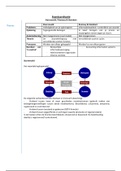
Collective Security Agreement
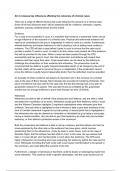
Collective security systems are concentrated in places where states have taken preventive measures. An aggressor against a single state is viewed as an aggressor against all other nations, which collectively respond to resist the attacker. According to Melvin (2018), The Collective Protection mechanism protects every state globally from war or aggression done by another state. It is analogous to an insurance policy in which all nations agree to protect the victim of aggression or war by neutralizing the aggression or war. One of Collective Security's merits is that it is widely regarded as the most promising path to international peace. It is widely acknowledged as an efficient crisis management method in international relations. It aims to protect global peace and security by preventing conflict and aggression in all parts of the world. According to Filonova (2020), one of the disadvantages of engaging in a security agreement is that the countries that take part lead to allying that the world will be divided into two main alliances in case of war. For instance, in the Cold War among countries, countries like Russia and the USA formed economic blocks that affected countries that were not in any war blocks. This led to the formation of the non-aligned movement so that they could promote their economy. Additionally, through the collective security agreement, the countries tend to feel that if a country is not on good terms with a nation in that block, the entire block becomes the enemy of that country. This is a type of fallacy that needs to be criticized.
Written for
- Institution
- CMP - Communication Management Professional
- Module
- CMP - Communication Management Professional
Document information
- Uploaded on
- November 2, 2023
- Number of pages
- 3
- Written in
- 2023/2024
- Type
- Lecture notes
- Professor(s)
- Prof
- Contains
- All classes
Subjects
-
collective security agreement