sociology Research methods
Observation
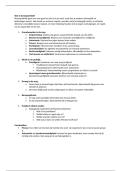
'observation' refers to a method in which researchers study
the ongoing behaviour of their participants. This is a way to
Observations in sociological research take several different
forms; they can either be a participant - The researcher
joins in the activities of the group they are researching.
Or non-participant, - The observer avoids any direct
involvement with the research group.
Additionally, observations can be either covert or overt;
Overt means the research group are aware the observation
is taking place, whereas Covert means the research group
do not know they are being researched.
, sociology Research methods
Pos of Participant ob -
1 One advantage is that They are high in validity. This is
because Researchers can gain the trust of their
participants, and get a better idea of not only what people
do, but how and why they do it. This is useful for making
assumptions by applying their own understandings to the
observed behaviours. Therefore, the findings are more
likely to be reliable.
2 This method is used by interpretivists, who argue that a
sociological understanding of society can only be gained
when researchers put themselves in the same position as
the people they are studying. Therefore, The concept of
Verstehen is seen as important in the use of participant
observation. This is useful because it generates qualitative
data that captures the complexity and diversity of social life
as it encourages researchers to grasp the intentions, and
motivations behind people's actions and behaviours.
Negs of Participant Observation
Observation
'observation' refers to a method in which researchers study
the ongoing behaviour of their participants. This is a way to
Observations in sociological research take several different
forms; they can either be a participant - The researcher
joins in the activities of the group they are researching.
Or non-participant, - The observer avoids any direct
involvement with the research group.
Additionally, observations can be either covert or overt;
Overt means the research group are aware the observation
is taking place, whereas Covert means the research group
do not know they are being researched.
, sociology Research methods
Pos of Participant ob -
1 One advantage is that They are high in validity. This is
because Researchers can gain the trust of their
participants, and get a better idea of not only what people
do, but how and why they do it. This is useful for making
assumptions by applying their own understandings to the
observed behaviours. Therefore, the findings are more
likely to be reliable.
2 This method is used by interpretivists, who argue that a
sociological understanding of society can only be gained
when researchers put themselves in the same position as
the people they are studying. Therefore, The concept of
Verstehen is seen as important in the use of participant
observation. This is useful because it generates qualitative
data that captures the complexity and diversity of social life
as it encourages researchers to grasp the intentions, and
motivations behind people's actions and behaviours.
Negs of Participant Observation