
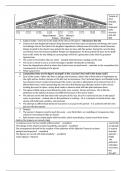
Temple of
Zeus,
Olympia,
East
Pediment
Early
classical –
462-457
BCE
1. Subject matter / story line & the stage of the story in this piece / relevance to this site
Chariot race that happened between King Oinomaos from Pisa (close to Olympia) and Pelops who came
to challenge him for the hand of his daughter hippodamia. Nobody used to be able to beat Oinomaos,
Pelops cheated in the chariot race and got his slave to mess with the spokes. During the race the King
was thrown from his chariot and killed. Pelops won hippodamia. He then pushed his slave to his death
from a cliff, whilst he was falling he cursed pelops which hit 2 generations later with his grandson
Agamemnon.
The scene is from before the race starts – possibly with Oinomaos reading out the rules
The curse is meant to act as a moral message to people viewing this at Olympia
Faces the hippodrome which is where the chariot races are performed – reminder to the competitors the
consequences of cheating at the games
Pelop’s grave here
2. Composition [How are the figures arranged? Is this a success? How well is this shape used?]
Zeus at the centre, either side there is pelops and oinomaos, either side of them there is hippodamia on
the right and her mother sterepe on the left next to oinamaeus. The 2 principle figures are flanked by the
two chariots, horses’ heads turned toward the centre, servants in attendance sit or kneel in front of or
behind the horses. Gods representing the two rivers that flowed past Olympia recline in the corners,
locating the event in space, raising their heads to observe what will take place between them.
The space is filled using a social hierarchy: gods, men, women, horses and slaves. This is like the
pediment on the siphnian treasury, but different because of the lack of action
The old seer on the left side knows the outcome of the race, his arm is raised to his face in the typical
worry or grief pose – nobody else on the pediment is reacting – he is a moment of mental clarity. Age
shown with bald head, wrinkles, and pectorals
The attempt to differentiate between characters is unusual in this period – it is achieved with the men
but not with the women
3. Drapery
The women’s drapery is pretty much the same – very thick fabric, no modelling or transparency lines,
columnar and catenary folds are shown
Both women wear simple peploi with few folds, which nevertheless, clearly reveal their stance
Folds in the drapery are carved crisply
‘an intense scene, but one wholly without action’ – woodford ‘seems like
‘The design of the whole has been beautifully calculated’ - woodford an episode
‘the arrangement devised by the sculptor of the pediment of the Siphnian Treasury has been in a great
adopted and improved’ – woodford dramatic
‘the figures are carved with bold simplicity’ – woodford episode’ –
‘static tableau’- Osborne Pollitt
‘the
pediment
embodies
not action,
but
thought’ –
, Pollitt
Temple of
Zeus,
Olympia,
West
Pediment
Early
classical –
462-457
BCE
1. Subject matter / story line & the stage of the story in this piece / relevance to this site
God presiding over a scene of violence
More active
Greeks defending their women over savages
Something all greeks share together
The Centauromachy – The King of the Lapiths, Peirithoos, was getting married to a woman called
deidameia. They invited their neighbours, the centaurs to the wedding. But they didn’t know that they
were meant to drink their wine watered down. So the Centaurs get drunk pretty easily and a brawl
breaks out and the Centaurs try and carry away the women. The Lapiths had come unarmed so only
Perithoos, being at home, could find a sword with which to defend his bride. Everyone else had to make
do with whatever implements were available
2. Composition [How are the figures arranged? Is this a success? How well is this shape used?]
Apollo in the middle, Peirithoos (King of the Lapiths on the right), Theseus (Perithoos’ friend and a hero
in his own right) on the left. Next to Peirithoos is Deidameia (the bride). Then various groups of Lapiths
fighting Centaurs and also some Lapith women defending themselves too.
The Greeks are shown with short hair and clean shaven; the Centaurs are shown with long hair and long
beards. The Lapith is emotionless and unreactive whereas the Centaurs are much more brutal and harsh
in their body language and facial expressions. – Meant to show the difference between the Greeks and
‘others’ and to contrast the Greeks as the superior of the two. Centaurs are meant to be the Persians.
Modesty and reservation vs. excess and Hedonism.
Apollo is at the centre instead of Zeus. Apollo is the god of law and order but also the god at Delphi. One
of the Delphic Maxims is ‘nothing in excess’ which highlights the barbarity of the Persians depicted as the
Centaurs.
Lots of bodies crossing over one another – a way of showing conflict. The women are just trying to
defend themselves – pathos
Virtually all the figures are interlocked in violent combat
A Lapith youth wrinkles his brow as his lips part to emit a cry of pain
3. Drapery
One of the women has her breast bared. This goes to shock the audience into thinking that the Centaurs
are hugely barbaric because women should be heavily clothes and the rest of her dress is made from
heavy material shown through the modelling lines rather than transparency lines
‘Great stability to his commanding presence’ – Woodford on Apollo’s arm outstretched at a right angle
‘a grimace would not accord with the dignity of this queenly figure’ – woodford
‘emotionally richer than the simple battle of well-matched heroes that was illustrated at Aegina’ – woodford
‘an almost elemental pitting of right against wrong’ – Pollitt
Zeus,
Olympia,
East
Pediment
Early
classical –
462-457
BCE
1. Subject matter / story line & the stage of the story in this piece / relevance to this site
Chariot race that happened between King Oinomaos from Pisa (close to Olympia) and Pelops who came
to challenge him for the hand of his daughter hippodamia. Nobody used to be able to beat Oinomaos,
Pelops cheated in the chariot race and got his slave to mess with the spokes. During the race the King
was thrown from his chariot and killed. Pelops won hippodamia. He then pushed his slave to his death
from a cliff, whilst he was falling he cursed pelops which hit 2 generations later with his grandson
Agamemnon.
The scene is from before the race starts – possibly with Oinomaos reading out the rules
The curse is meant to act as a moral message to people viewing this at Olympia
Faces the hippodrome which is where the chariot races are performed – reminder to the competitors the
consequences of cheating at the games
Pelop’s grave here
2. Composition [How are the figures arranged? Is this a success? How well is this shape used?]
Zeus at the centre, either side there is pelops and oinomaos, either side of them there is hippodamia on
the right and her mother sterepe on the left next to oinamaeus. The 2 principle figures are flanked by the
two chariots, horses’ heads turned toward the centre, servants in attendance sit or kneel in front of or
behind the horses. Gods representing the two rivers that flowed past Olympia recline in the corners,
locating the event in space, raising their heads to observe what will take place between them.
The space is filled using a social hierarchy: gods, men, women, horses and slaves. This is like the
pediment on the siphnian treasury, but different because of the lack of action
The old seer on the left side knows the outcome of the race, his arm is raised to his face in the typical
worry or grief pose – nobody else on the pediment is reacting – he is a moment of mental clarity. Age
shown with bald head, wrinkles, and pectorals
The attempt to differentiate between characters is unusual in this period – it is achieved with the men
but not with the women
3. Drapery
The women’s drapery is pretty much the same – very thick fabric, no modelling or transparency lines,
columnar and catenary folds are shown
Both women wear simple peploi with few folds, which nevertheless, clearly reveal their stance
Folds in the drapery are carved crisply
‘an intense scene, but one wholly without action’ – woodford ‘seems like
‘The design of the whole has been beautifully calculated’ - woodford an episode
‘the arrangement devised by the sculptor of the pediment of the Siphnian Treasury has been in a great
adopted and improved’ – woodford dramatic
‘the figures are carved with bold simplicity’ – woodford episode’ –
‘static tableau’- Osborne Pollitt
‘the
pediment
embodies
not action,
but
thought’ –
, Pollitt
Temple of
Zeus,
Olympia,
West
Pediment
Early
classical –
462-457
BCE
1. Subject matter / story line & the stage of the story in this piece / relevance to this site
God presiding over a scene of violence
More active
Greeks defending their women over savages
Something all greeks share together
The Centauromachy – The King of the Lapiths, Peirithoos, was getting married to a woman called
deidameia. They invited their neighbours, the centaurs to the wedding. But they didn’t know that they
were meant to drink their wine watered down. So the Centaurs get drunk pretty easily and a brawl
breaks out and the Centaurs try and carry away the women. The Lapiths had come unarmed so only
Perithoos, being at home, could find a sword with which to defend his bride. Everyone else had to make
do with whatever implements were available
2. Composition [How are the figures arranged? Is this a success? How well is this shape used?]
Apollo in the middle, Peirithoos (King of the Lapiths on the right), Theseus (Perithoos’ friend and a hero
in his own right) on the left. Next to Peirithoos is Deidameia (the bride). Then various groups of Lapiths
fighting Centaurs and also some Lapith women defending themselves too.
The Greeks are shown with short hair and clean shaven; the Centaurs are shown with long hair and long
beards. The Lapith is emotionless and unreactive whereas the Centaurs are much more brutal and harsh
in their body language and facial expressions. – Meant to show the difference between the Greeks and
‘others’ and to contrast the Greeks as the superior of the two. Centaurs are meant to be the Persians.
Modesty and reservation vs. excess and Hedonism.
Apollo is at the centre instead of Zeus. Apollo is the god of law and order but also the god at Delphi. One
of the Delphic Maxims is ‘nothing in excess’ which highlights the barbarity of the Persians depicted as the
Centaurs.
Lots of bodies crossing over one another – a way of showing conflict. The women are just trying to
defend themselves – pathos
Virtually all the figures are interlocked in violent combat
A Lapith youth wrinkles his brow as his lips part to emit a cry of pain
3. Drapery
One of the women has her breast bared. This goes to shock the audience into thinking that the Centaurs
are hugely barbaric because women should be heavily clothes and the rest of her dress is made from
heavy material shown through the modelling lines rather than transparency lines
‘Great stability to his commanding presence’ – Woodford on Apollo’s arm outstretched at a right angle
‘a grimace would not accord with the dignity of this queenly figure’ – woodford
‘emotionally richer than the simple battle of well-matched heroes that was illustrated at Aegina’ – woodford
‘an almost elemental pitting of right against wrong’ – Pollitt


