

3.1.4 – Energetics
Endothermic and exothermic
Endothermic reaction:
- Overall positive enthalpy change
- Energy for bond breaking greater than energy for bond formation
- Reactants have less energy than products
- Energy transferred from surrounding to system
Exothermic reaction:
- Overall negative enthalpy change
- Energy for bond breaking less than energy for bond formation
- Reactants have more energy than products
- Energy transferred from system to surroundings
Bond breaking is endothermic because energy is taken in to break bonds
Bond formation is exothermic because energy is released to form bonds
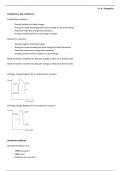
Enthalpy change diagram for an endothermic reaction:
Enthalpy change diagram for an exothermic reaction:
Standard conditions
Standard conditions are:
- 100KPa pressure
- 298K temp.
- Solutions at 1 𝑚𝑜𝑙 𝑑𝑚
, 3.1.4 – Energetics
Enthalpy change
Enthalpy change is the heat energy change measured under conditions of constant pressure
Standard enthalpy change is the heat energy change measured under standard conditions, all reactants and products
being in their standard states
Standard enthalpy change of combustion is the enthalpy change when 1 mole of substance is completely burnt in
oxygen under standard conditions, all reactants and products being in their standard states
Standard enthalpy change of formation is the enthalpy change when 1 mole of substance is formed from its
constituent elements under standard conditions, all reactants and products being in their standard states
Calculating enthalpy change
Formula for molar enthalpy change:
𝑚𝑜𝑙𝑎𝑟 ∆𝐻 = 𝑞 ÷ 𝑚𝑜𝑙𝑒𝑠
Formula for change in thermal energy:
𝑞 = 𝑚𝑐∆𝑇
- q = change in thermal energy = J
- m = mass = grams
- c = specific heat capacity = 𝐽 𝑔 𝐾
- ∆𝑇 = change in temp = K
Formula for density:
𝑑𝑒𝑛𝑠𝑖𝑡𝑦 =
𝑣𝑜𝑙𝑢𝑚𝑒
Units of density vary depending on the question
You should assume the density of a solution is 1𝑔 𝑐𝑚 , the same as water
Calorimetry
We take readings at regular time intervals and extrapolate the graph back to the time the reactants were added
together because:
- If reaction is slow, exact temp. rise can be difficult to obtain because cooling occurs simultaneously with
reaction
- If too much heat loss to surroundings at point solutions are added together, it can be difficult to obtain
accurate temp. rise
Endothermic and exothermic
Endothermic reaction:
- Overall positive enthalpy change
- Energy for bond breaking greater than energy for bond formation
- Reactants have less energy than products
- Energy transferred from surrounding to system
Exothermic reaction:
- Overall negative enthalpy change
- Energy for bond breaking less than energy for bond formation
- Reactants have more energy than products
- Energy transferred from system to surroundings
Bond breaking is endothermic because energy is taken in to break bonds
Bond formation is exothermic because energy is released to form bonds
Enthalpy change diagram for an endothermic reaction:
Enthalpy change diagram for an exothermic reaction:
Standard conditions
Standard conditions are:
- 100KPa pressure
- 298K temp.
- Solutions at 1 𝑚𝑜𝑙 𝑑𝑚
, 3.1.4 – Energetics
Enthalpy change
Enthalpy change is the heat energy change measured under conditions of constant pressure
Standard enthalpy change is the heat energy change measured under standard conditions, all reactants and products
being in their standard states
Standard enthalpy change of combustion is the enthalpy change when 1 mole of substance is completely burnt in
oxygen under standard conditions, all reactants and products being in their standard states
Standard enthalpy change of formation is the enthalpy change when 1 mole of substance is formed from its
constituent elements under standard conditions, all reactants and products being in their standard states
Calculating enthalpy change
Formula for molar enthalpy change:
𝑚𝑜𝑙𝑎𝑟 ∆𝐻 = 𝑞 ÷ 𝑚𝑜𝑙𝑒𝑠
Formula for change in thermal energy:
𝑞 = 𝑚𝑐∆𝑇
- q = change in thermal energy = J
- m = mass = grams
- c = specific heat capacity = 𝐽 𝑔 𝐾
- ∆𝑇 = change in temp = K
Formula for density:
𝑑𝑒𝑛𝑠𝑖𝑡𝑦 =
𝑣𝑜𝑙𝑢𝑚𝑒
Units of density vary depending on the question
You should assume the density of a solution is 1𝑔 𝑐𝑚 , the same as water
Calorimetry
We take readings at regular time intervals and extrapolate the graph back to the time the reactants were added
together because:
- If reaction is slow, exact temp. rise can be difficult to obtain because cooling occurs simultaneously with
reaction
- If too much heat loss to surroundings at point solutions are added together, it can be difficult to obtain
accurate temp. rise


