
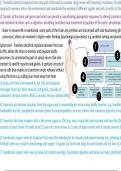
1) Transmits electrical impulses from one part of the body to another using nerve cells (neurons). Functions; To colle
respond to sensory info in the environment and coordinate the working of different organs and cells. Consists of the
2) Consists of the brain and spinal cord which are pivotal in coordinating appropriate responses to stimuli (control of
and essential functions such as digestion, breathing, heartbeat and movement (regulation of the body's physiologica
Brain- It ensures life is maintained, some parts of the brain are primitive and concerned with vital functioning (phy
processes), others are involved in higher order thinking (psychological processes) e.g. problem solving and plannin
Spinal cord- Transfers electrical impulses between the brain
& PNS, allows the brain to monitor and regulate bodily
processes. Its connected by pairs of spinal nerves that also
connect to specific muscles and glands. It contains circuits of
nerve cells that enable us to perform simple reflexes without
using the brain e.g. pulling your hand away from heat
3) Sends info from environment to the CNS and transmits
messages from the CNS to muscles and glands. Consists of;
autonomic nervous system (ANS) & somatic nervous system (SNS)
4) Transmits and receives impulses from the organs and is responsible for unconscious bodily functions e.g. breathin
Subdivided into the; sympathetic nervous system & parasympathetic nervous system (non voluntary, opposite of no
5) Transmits info from receptor cells in the sense organs to CNS (e.g. eyes- visual info) and receives info from the CN
muscles to react/move. Its made up of 12 pairs of cranial nerves & 31 pairs of spinal nerves which contain sensory &
6) Coordinates organs when in situations that need the individual to be aroused and expend energy (e.g. climbing st
football) when our muscles need energy and oxygen. It signals our heart and lungs to work harder and our liver to re
7) Coordinates organs when we can relax and converse energy, it promotes digestion and slows our heart and breath
, Organ Sympathetic NS Parasympathetic nervous system The two sets of nerves in the auton
Eye Dilates pupil Constricts pupil system have the opposite effects o
in our body
Blood vessels Directs blood to muscles Directs blood away from muscles
Lungs Dilates bronchi Constricts bronchi
Gland Function
Pituitary Gland Produces hormones that regulate the endocrine system and influences
‘Master gland’ the release of hormones from other glands
Adrenal Gland Secretes the release of adrenaline (important for fight or flight response)
Testes Facilitate the release of testosterone (male hormones)
Ovaries Facilitate the release of oestrogen and progesterone (female hormones)
Similarities Differences
The brain Both control involuntary processes Brain provides conscious awareness for higher order thinking &
& spinal e.g. the brain stem controls breathing consists of multiple regions for different functions whereas spin
cord and the spinal cord controls reflexes cord allows for simple reflex responses & has only one main fun
Similarities Differences
The somatic, The sympathetic NS responds to external Autonomic NS consists of 2 sub components,
autonomic and stimuli by preparing the body for fight or flight. pathways, controls internal organs & glands a
sympathetic, The somatic NS also responds to external involuntary. In contrast, the somatic NS has 1
parasympathetic stimuli but by carrying info from sensory sensory and motor pathways, it controls mus
nervous system receptors to the spinal cord & brain movement and is under conscious control


