

Voluntary Manslaughter
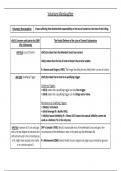
Voluntary Manslaughter D was suffering from diminished responsibility or the loss of control at the time of the killing.
s54(1) Coroners and Justice Act 2009 The Partial Defence of the Loss of Control: Explanation
(The 3 Elements)
s54(1)(a) Loss of Control s54(1)(a) states that the defendant must lose control.
s54(2) states that the loss of control doesn’t have to be sudden.
R v Ibrams and Gregory (1982): The longer the delay the less likely there is a loss of control.
s54(1)(b) Qualifying Trigger s54(1)(b) states there must be a qualifying trigger.
Qualifying Triggers:
> s55(3) states that a qualifying trigger can be a fear trigger.
> s55(4) states that a qualifying trigger can be things said or done.
Restrictions on Qualifying Triggers:
> s56(6)(c) Incitement.
> s54(4) Revenge (R v Baillie 1995).
> s55(6)(c) Sexual Infidelity (R v Clinton 2012 states that sexual infidelity cannot be
used as a defence if it is the only one).
s54(1)(c) A person of D’s sex and age, DPP v Camplin (1978): Would a reasonable man of the defendant’s sex and age in the
with a normal degree of tolerance and circumstances of the defendant, react in the same way the defendant did.
self-restraint and in the circumstances
of D, might have reacted in the same R v Mohammed (2005): Mental health issues, religion and anger issues should be ignored.
or in a similar way to D.
Voluntary Manslaughter D was suffering from diminished responsibility or the loss of control at the time of the killing.
s54(1) Coroners and Justice Act 2009 The Partial Defence of the Loss of Control: Explanation
(The 3 Elements)
s54(1)(a) Loss of Control s54(1)(a) states that the defendant must lose control.
s54(2) states that the loss of control doesn’t have to be sudden.
R v Ibrams and Gregory (1982): The longer the delay the less likely there is a loss of control.
s54(1)(b) Qualifying Trigger s54(1)(b) states there must be a qualifying trigger.
Qualifying Triggers:
> s55(3) states that a qualifying trigger can be a fear trigger.
> s55(4) states that a qualifying trigger can be things said or done.
Restrictions on Qualifying Triggers:
> s56(6)(c) Incitement.
> s54(4) Revenge (R v Baillie 1995).
> s55(6)(c) Sexual Infidelity (R v Clinton 2012 states that sexual infidelity cannot be
used as a defence if it is the only one).
s54(1)(c) A person of D’s sex and age, DPP v Camplin (1978): Would a reasonable man of the defendant’s sex and age in the
with a normal degree of tolerance and circumstances of the defendant, react in the same way the defendant did.
self-restraint and in the circumstances
of D, might have reacted in the same R v Mohammed (2005): Mental health issues, religion and anger issues should be ignored.
or in a similar way to D.


