PYC3701
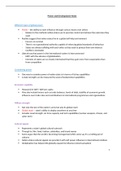
Study
Notes.
, P YC 3701
CH 2
Main Topics of Chapter 2:
Please take note of the following definitions as they are key to understanding Chapter 2. This
information can be found at the back of your textbook from pg 429-436. However, I have
written it out here so that it is easier for you J
Social Cognition:
The manner in which we interpret, analyze, remember and use information about the social
world
Heuristics:
Simple rules for making complex decisions or drawing inferences in a rapid manner and
seemingly effortless manner
Heuristic Processing:
Processing of information in a persuasive message that involves the use of simple rules of
thumb or mental shortcuts
Schemas:
Mental frameworks centering on a specific theme that help us to organize social information
Priming:
A situation that occurs when stimuli or events increase the availability in memory or
consciousness of specific types of information held in memory
Unpriming:
Refers to the fact that the effect of the schemas tend to persist until they are somehow
expressed in thought or behavior and only then do their effects decrease
Make sure you know the difference between Automatic and Controlled Processing!
Please take note of the Key points on pages 43, 47, 52, 59, 65.
I also just want to highlight the very helpful Summary of Chapter 2 on page 66 + 67.
I hope this helps and please don’t hesitate to message me if you have any questions on
Chapter 2.
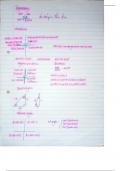
CHAPTER 2
SOCIAL COGNITION
The manner in which we
interpret, analyse,
remember, and use
What is social
information about the social
cognition?
world. How we think about
other people and events in
our life.
The impact of schemas Schemas: What is a schema? Priming /
, As we generally suffer from
unpriming
information overload we use
a schema to help us (Which schemas
categorize a person or event guide our
quickly. When we can’t use thoughts?)
on social cognition and our trusted ideas about the
reality world we claw onto other
ways of making it easier on Persistence of
us; heuristics (simple ways schemas /
to make quick and mostly
perseverance
effortless decisions) See
effect
below.
Heuristics
1. Representativeness
(after you have seen ten
guys with a green/gold shirt
and you have also learned
that they are rugby fans, the
next time you see a guy in a
similar top you will think: Ah,
he is a ruby fan. You have
now formed a prototype.
2. Availability
How we reduce our
effort in social cognition (the more guys you see in
green/gold shirts the
quicker/easier you will make
that judgment/decision on
who they are)
3. Anchoring &
Adjustment The danger here is
that you might
(So now you are pretty sure neglect to ask
these people in green/gold whether these
are rugby fans [easy to people maybe
remember/your anchor from work for a
which you now work]) company using
a similar shirt, as
that takes effort.
Automatic: Like when you
drive a car and you do not
Automatic & Controlled need to focus on shifting Please know the
Processing gears, use the brakes, benefits of this
finding your way home; we
just do it.
The mistake people Sources of error: Distortion; Self-
make in social cognition fulfilling
1. Negative Bias
, (most people have a
tendency to be negative)
2. Optimistic Bias
(But we also generally
believe that things will turn
out just fine)
3. Over confidence
(Have you ever started that
diet?!
4. Planning Fallacy
(we focus too much on our
goal, forgetting to think of
the risks)
Situational-specific sources
of error in social cognition:
1. Counterfactual
thinking
(contrary-to-fact-thinking;
what might have been)
2. Thought
suppression
(Just don’t think about it)
3. Magical Thinking
(My thoughts will
influence my physical
world)
4. Terror Management
(a way, like believing in
the supernatural, with
dealing with the
inevitability of death)
Affect and Cognition
1. Mood affects our
reaction to knew stimuli, e.g.
The influence of
people
cognition on affect, and
vice versa 2. Mood congruence
effects; positive info gets
stored when in a positive
mood; negative info gets
stored when in a negative
mood
Study
Notes.
, P YC 3701
CH 2
Main Topics of Chapter 2:
Please take note of the following definitions as they are key to understanding Chapter 2. This
information can be found at the back of your textbook from pg 429-436. However, I have
written it out here so that it is easier for you J
Social Cognition:
The manner in which we interpret, analyze, remember and use information about the social
world
Heuristics:
Simple rules for making complex decisions or drawing inferences in a rapid manner and
seemingly effortless manner
Heuristic Processing:
Processing of information in a persuasive message that involves the use of simple rules of
thumb or mental shortcuts
Schemas:
Mental frameworks centering on a specific theme that help us to organize social information
Priming:
A situation that occurs when stimuli or events increase the availability in memory or
consciousness of specific types of information held in memory
Unpriming:
Refers to the fact that the effect of the schemas tend to persist until they are somehow
expressed in thought or behavior and only then do their effects decrease
Make sure you know the difference between Automatic and Controlled Processing!
Please take note of the Key points on pages 43, 47, 52, 59, 65.
I also just want to highlight the very helpful Summary of Chapter 2 on page 66 + 67.
I hope this helps and please don’t hesitate to message me if you have any questions on
Chapter 2.
CHAPTER 2
SOCIAL COGNITION
The manner in which we
interpret, analyse,
remember, and use
What is social
information about the social
cognition?
world. How we think about
other people and events in
our life.
The impact of schemas Schemas: What is a schema? Priming /
, As we generally suffer from
unpriming
information overload we use
a schema to help us (Which schemas
categorize a person or event guide our
quickly. When we can’t use thoughts?)
on social cognition and our trusted ideas about the
reality world we claw onto other
ways of making it easier on Persistence of
us; heuristics (simple ways schemas /
to make quick and mostly
perseverance
effortless decisions) See
effect
below.
Heuristics
1. Representativeness
(after you have seen ten
guys with a green/gold shirt
and you have also learned
that they are rugby fans, the
next time you see a guy in a
similar top you will think: Ah,
he is a ruby fan. You have
now formed a prototype.
2. Availability
How we reduce our
effort in social cognition (the more guys you see in
green/gold shirts the
quicker/easier you will make
that judgment/decision on
who they are)
3. Anchoring &
Adjustment The danger here is
that you might
(So now you are pretty sure neglect to ask
these people in green/gold whether these
are rugby fans [easy to people maybe
remember/your anchor from work for a
which you now work]) company using
a similar shirt, as
that takes effort.
Automatic: Like when you
drive a car and you do not
Automatic & Controlled need to focus on shifting Please know the
Processing gears, use the brakes, benefits of this
finding your way home; we
just do it.
The mistake people Sources of error: Distortion; Self-
make in social cognition fulfilling
1. Negative Bias
, (most people have a
tendency to be negative)
2. Optimistic Bias
(But we also generally
believe that things will turn
out just fine)
3. Over confidence
(Have you ever started that
diet?!
4. Planning Fallacy
(we focus too much on our
goal, forgetting to think of
the risks)
Situational-specific sources
of error in social cognition:
1. Counterfactual
thinking
(contrary-to-fact-thinking;
what might have been)
2. Thought
suppression
(Just don’t think about it)
3. Magical Thinking
(My thoughts will
influence my physical
world)
4. Terror Management
(a way, like believing in
the supernatural, with
dealing with the
inevitability of death)
Affect and Cognition
1. Mood affects our
reaction to knew stimuli, e.g.
The influence of
people
cognition on affect, and
vice versa 2. Mood congruence
effects; positive info gets
stored when in a positive
mood; negative info gets
stored when in a negative
mood