

Conformity
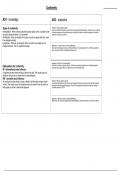
AO1 - knowledge AO3 - evaluation
Types of conformity Strength - ISI has research support
Lucas et al. asked to students to give answers to easy and hard maths questions. There was more conformity
Internalisation - When a person genuinely accepts group norms; a private as well to incorrect answers when the problems were more difficult. Students who rated themselves poor at maths
as public change of opinion. It is permanent. were even more likely to conform.
Identification - When we identify with a group in public we agree with them, even
if we disagree privately.
Compliance - When we ‘go along with others’ in public, but privately do not
change behaviour. This is a superficial change. Weakness - ISI doesn’t factor in individual differences
Asch found that students were less conformist (28%) than other participants (37%). Conformity varies from
person to person and the circumstances that they are in.
Weakness - NSI and ISI is oversimplified
Explanations for conformity Conformity is not just a ‘two-step process’. Conformity was reduced when there was a dissenting partner,
providing social support (NSI) or an alternative source of information (ISI).
ISI - informational social influence
A cognitive process where one has a desire to be right. This usually occurs in
situations that are new or where there is some ambiguity.
NSI - normative social influence
An emotional process where one has a desire to be liked and concerns social Strength - NSI has research support
Asch asked participants why they felt they had to agree with the wrong answer and they felt that answering
‘norms’. This usually occurs in situations where one doesn’t know the norms or otherwise would make people disapprove of them. When participants were asked to write down answers,
with people you know to seek social approval. conformity rates fell to 12.5%.
Weakness - NSI doesn’t factor in individual differences
People who care more about being liked are called nAffliliators; they are more likely to conform than others.
, Conformity: Asch’s research
AO1 - knowledge AO3 - evaluation
Asch’s baseline procedure Weakness - Artificial situation and task
Asch (1951) devised a procedure to assess conformity, particularly the extent to Participants knew they were in a research study and may have simply gone along with what
which people will conform to the opinions of others. He tested 123 American men, was expected (demand characteristics). The task of identifying the lines was trivial and so there
was no reason not to conform. Fiske (2014) stated that ‘Asch’s groups were not very groupy’,
each one in a group with other apparent participants. He also ensured that the P i.e they didn’t resemble groups we experience in everyday life. We cannot generalise these
was seated last or next to last. Each P saw 2 large white cards on each trial, one findings to everyday life, particularly when the consequences of conformity hold more value.
presenting the ‘standard line’, and the other presented three more ‘comparison
lines’. Ps were then asked to identify the matching comparison line.
Asch found that the Ps agreed with the confederates’ incorrect answers 36.8% of
Weakness - Limited application
the time. 25% of Ps never gave a wrong answer. Asch’s participants were solely American men. Neto (1995) has suggested that women are
more conformist as they are more concerned about social relationships. Bond and Smith
Variables investigated by Asch (1996) also conducted studies in other cultures that are more collectivist, e.g China, and found
1. Group size - Asch wanted to know whether the size of the group higher conformity rates than Asch’s study which was based in the US’ individualist culture. This
affected conformity and so varied the number of confederates from 1 to means that the result of Asch’s research cannot be generalised.
15 and found a curvilinear relationship, i.e conformity increased with
group size but only to a point. Three confederates increased conformity
to 31.8%, but more than that had little difference. Strength - Research support
2. Unanimity - Asch wondered if the presence of a non-conforming person Lucas et al. (2006) asked participants to solve ‘easy’ and ‘hard’ maths problems. They were
would affect conformity and so he introduced a confederate who given answers form three other ‘students’. Ps conformed more often when the problems were
disagreed with the other confederates. Conformity decreased to less harder. This could show that Asch was correct in claiming that task difficulty affects conformity.
However, Lucas et al’s study also found that conformity is more complex than Asch suggested.
than a quarter of the level when the majority was unanimous.
Ps with high confidence in their math abilities conformed less on hard tasks than those with low
3. Task difficulty - Asch wanted to know whether making the task harder confidence, showing that individual factors influence conformity alongside situational variables.
affected conformity and so made the comparison lines increasingly
similar to the standard line. Conformity increased due to ISI.
Weakness - Ethical issues
The participants were deceived because they thought the other people involved in the
procedure were also naïve.
However, it is important to weigh up these ethical costs against the benefits gained from the
study and the the way in which his research helped us understand mindless destructive
conformity.
AO1 - knowledge AO3 - evaluation
Types of conformity Strength - ISI has research support
Lucas et al. asked to students to give answers to easy and hard maths questions. There was more conformity
Internalisation - When a person genuinely accepts group norms; a private as well to incorrect answers when the problems were more difficult. Students who rated themselves poor at maths
as public change of opinion. It is permanent. were even more likely to conform.
Identification - When we identify with a group in public we agree with them, even
if we disagree privately.
Compliance - When we ‘go along with others’ in public, but privately do not
change behaviour. This is a superficial change. Weakness - ISI doesn’t factor in individual differences
Asch found that students were less conformist (28%) than other participants (37%). Conformity varies from
person to person and the circumstances that they are in.
Weakness - NSI and ISI is oversimplified
Explanations for conformity Conformity is not just a ‘two-step process’. Conformity was reduced when there was a dissenting partner,
providing social support (NSI) or an alternative source of information (ISI).
ISI - informational social influence
A cognitive process where one has a desire to be right. This usually occurs in
situations that are new or where there is some ambiguity.
NSI - normative social influence
An emotional process where one has a desire to be liked and concerns social Strength - NSI has research support
Asch asked participants why they felt they had to agree with the wrong answer and they felt that answering
‘norms’. This usually occurs in situations where one doesn’t know the norms or otherwise would make people disapprove of them. When participants were asked to write down answers,
with people you know to seek social approval. conformity rates fell to 12.5%.
Weakness - NSI doesn’t factor in individual differences
People who care more about being liked are called nAffliliators; they are more likely to conform than others.
, Conformity: Asch’s research
AO1 - knowledge AO3 - evaluation
Asch’s baseline procedure Weakness - Artificial situation and task
Asch (1951) devised a procedure to assess conformity, particularly the extent to Participants knew they were in a research study and may have simply gone along with what
which people will conform to the opinions of others. He tested 123 American men, was expected (demand characteristics). The task of identifying the lines was trivial and so there
was no reason not to conform. Fiske (2014) stated that ‘Asch’s groups were not very groupy’,
each one in a group with other apparent participants. He also ensured that the P i.e they didn’t resemble groups we experience in everyday life. We cannot generalise these
was seated last or next to last. Each P saw 2 large white cards on each trial, one findings to everyday life, particularly when the consequences of conformity hold more value.
presenting the ‘standard line’, and the other presented three more ‘comparison
lines’. Ps were then asked to identify the matching comparison line.
Asch found that the Ps agreed with the confederates’ incorrect answers 36.8% of
Weakness - Limited application
the time. 25% of Ps never gave a wrong answer. Asch’s participants were solely American men. Neto (1995) has suggested that women are
more conformist as they are more concerned about social relationships. Bond and Smith
Variables investigated by Asch (1996) also conducted studies in other cultures that are more collectivist, e.g China, and found
1. Group size - Asch wanted to know whether the size of the group higher conformity rates than Asch’s study which was based in the US’ individualist culture. This
affected conformity and so varied the number of confederates from 1 to means that the result of Asch’s research cannot be generalised.
15 and found a curvilinear relationship, i.e conformity increased with
group size but only to a point. Three confederates increased conformity
to 31.8%, but more than that had little difference. Strength - Research support
2. Unanimity - Asch wondered if the presence of a non-conforming person Lucas et al. (2006) asked participants to solve ‘easy’ and ‘hard’ maths problems. They were
would affect conformity and so he introduced a confederate who given answers form three other ‘students’. Ps conformed more often when the problems were
disagreed with the other confederates. Conformity decreased to less harder. This could show that Asch was correct in claiming that task difficulty affects conformity.
However, Lucas et al’s study also found that conformity is more complex than Asch suggested.
than a quarter of the level when the majority was unanimous.
Ps with high confidence in their math abilities conformed less on hard tasks than those with low
3. Task difficulty - Asch wanted to know whether making the task harder confidence, showing that individual factors influence conformity alongside situational variables.
affected conformity and so made the comparison lines increasingly
similar to the standard line. Conformity increased due to ISI.
Weakness - Ethical issues
The participants were deceived because they thought the other people involved in the
procedure were also naïve.
However, it is important to weigh up these ethical costs against the benefits gained from the
study and the the way in which his research helped us understand mindless destructive
conformity.


