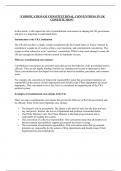
“CODIFICATION OF CONSTITUTIONAL CONVENTIONS IN UK
CONSTITUTION”
In this article, I will explore the role of constitutional conventions in shaping the UK government
and why it is important to understand them.
Introduction to the UK Constitution
The UK does not have a single, written constitution like the United States or France. Instead, its
constitution is made up of a series of laws, court decisions, and constitutional conventions. This
system is often referred to as an "unwritten" constitution. While it may seem strange to some, the
UK has managed to function with this system for hundreds of years.
What are constitutional conventions?
Constitutional conventions are unwritten rules that govern the behavior of the government and its
officials. They are not legally binding, but they are considered to be just as important as laws.
These conventions have developed over time and are based on tradition, precedent, and common
sense.
For example, the convention of ministerial responsibility states that government ministers are
responsible for the actions of their departments and should resign if their department has acted
improperly. This convention is not a law, but it is considered an important part of the UK's
political system.
Examples of constitutional conventions in the UK
There are many constitutional conventions that govern the behavior of the UK government and
its officials. Some of the most important ones include:
The Queen's role in government: The Queen is the head of state, but she does not have
any real power. Instead, she acts as a figurehead and performs ceremonial duties.
The Prime Minister's role: The Prime Minister is the head of government and is
responsible for leading the country.
The convention of collective responsibility: This convention states that all members of
the government must publicly support government decisions or resign.
The convention of ministerial responsibility: This convention states that government
ministers are responsible for the actions of their departments and should resign if their
department has acted improperly.
CONSTITUTION”
In this article, I will explore the role of constitutional conventions in shaping the UK government
and why it is important to understand them.
Introduction to the UK Constitution
The UK does not have a single, written constitution like the United States or France. Instead, its
constitution is made up of a series of laws, court decisions, and constitutional conventions. This
system is often referred to as an "unwritten" constitution. While it may seem strange to some, the
UK has managed to function with this system for hundreds of years.
What are constitutional conventions?
Constitutional conventions are unwritten rules that govern the behavior of the government and its
officials. They are not legally binding, but they are considered to be just as important as laws.
These conventions have developed over time and are based on tradition, precedent, and common
sense.
For example, the convention of ministerial responsibility states that government ministers are
responsible for the actions of their departments and should resign if their department has acted
improperly. This convention is not a law, but it is considered an important part of the UK's
political system.
Examples of constitutional conventions in the UK
There are many constitutional conventions that govern the behavior of the UK government and
its officials. Some of the most important ones include:
The Queen's role in government: The Queen is the head of state, but she does not have
any real power. Instead, she acts as a figurehead and performs ceremonial duties.
The Prime Minister's role: The Prime Minister is the head of government and is
responsible for leading the country.
The convention of collective responsibility: This convention states that all members of
the government must publicly support government decisions or resign.
The convention of ministerial responsibility: This convention states that government
ministers are responsible for the actions of their departments and should resign if their
department has acted improperly.