Behav approach
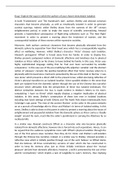
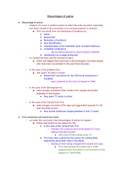
ASSUMPTIONS Classical Conditioning Operant Conditioning
developed by Pavlov :
developed by
↳ Skinner :
Born a blank slate :
-
all behaviour =
response to stimulus
, learning occurs through the consequences of
Behaviour IS learnt 0h14 born with a few innate responses behaviour
determined by interactions most responses are learned through interaction + ve reinforcement reward given for doing
→
something
+ experiences in our environ -
then behaviour is likely to be repeated
merit CC IS learning by association -
ve reinforcement →
something unpleasant stops when performing
a desired behaviour then behaviour is likely to be repeated
e. 9 → washing the dishes , achieved high score on test . Parents
reject Vagueness Of '
2 Stimuli repeatedly paired together dishes = likely to be repeated
say you dont need to wash
.
introspection
.
A neutral stimulus does not cause a punishment →
If occurs after behaviour then this ↓ Chances
Is same for
process Of learning of behaviour to be repeated e. 9 → stop an activity you enjoy
all species → valid to study on animals after doing badly in an exam
response , An unconditioned stimulus
.
causes
a natural response .
After repeated pairings shaping → route to target behaviour behaviours ,
which lead
to target behaviour are rewarded
(( →
Pavlov dogs the neutral stimulus alone / conditioned
↳ d
Ogs can be conditioned to stimulus ) will cause
"
fear
"
→ conditioned
( → Skinner Box
salivate to the sound Of a bell
If that sound was repeatedly response . Introduce hungry rat into the box , inside box was a
at the same time lever that when pressed would deliver pallet of food
presented
.
,
as they were given food . UCS UCR rat soon learned that pulling lever results in food / reward)
Skinner observed that as consequence of its actions the rat
Gradually → learned to associate VCR display this behaviour
'
continued to
UCS 1- NS .
It rely reinforced)
the sound Of bell with food + would
produce the salivation response CS CR Skinner changed mechanism of lever →
pressing
everytime they heard sound .
it gave an electric shock to rats Paw quickly .
rat stopped
parlor → able to show how parlor found several Other points about pressing the lever / punishment)
NS can come to elicit a new
learned response through the process :
Skinner set up box so that the floor was electrified
association .
+ lever switched off the current . once he electrified the
Unlearned
UCR
Timing → association occurs it VCs + NS are floor rat bounced and accidently pressed the lever
, .
food → ☐ 09 presented at same time if this doesnt occur .
electric current was turned off + experiment was
Salivates
UCS then no associations will Occur repeated rat learned to lever when current was on
. .
press
☐09 UCR l -
ve reinforcement)
food 1- Bell →
ucs ns
salivates stimulus generalisation → once animal
conditioned they would also respond to other
DETERMINISTIC
↳ repeated at the .
:
begins Sees
Bei"a¥¥¥g+
same time association
/+
=
all behaviour as
controlled by past experiences that have been conditioned
being
as
CR Extinction → e. G- parlor dogs if bell is Skinner suggested everything we do is the sum of our reinforcement
↳ process complete : dog conditioned
i→
to
salivate to the sound Of bell alone disappears behaviour behaviour cannot choose our behaviour not our fault
=
is extinguished
.
. .
goes against legal )
. .
system etc ( can say supporting Research -
O s think
/
-
( reject biological influences)
-
f Research :
EVIDENCE :
many supporting research mainly from scientific lab studies
.
like parlors clogs -
cc -
Skinner box research -0C -
strength → ↑ validity + credibility to
High lab studies have tight control over the Ir t
control over the variables :
behaviour 1st approach .
extraneous variables Skinners study all variables kept the same apart from
.
effect relationship
reinforcement / Punishment strength → cause +
the type of
I cat / ON :
.
conditioning have been applied to range of
_
between IV + dv can be established .
principle of
real world behaviours + problems .
/ e- OC is the basis of token economy
" " " " " " "" "" " " " " " " " " " " " " " " " " " "" " " " " " " "" " " " " " " " " "
"" " " "" " " " " " " " " "" " " " " " " "
study Skinners rats no possibility tha1- they could snow please you or screw you
.
-
rewarding appropriate behaviour with tokens that can be exchanged for privllegs .
behaviour .
Strength : doesn't invalidate results
CC → led to development anxiety associated
of treatment for the reduction of
m-n.n.iai.s.u-e.m.na.mas.aa-e.m-nai-re.ia.n.n-mm.axa.in .
Lack Of Generalisation research is carried on animals pavlov used
:
.
dogs strength → token economies successful in treating + correcting behaviour . SD has ↑
Humans + dogs dont match similarly unlike a chimp of 98.4% Match .
success rate of treating phobic patients → can be used in real life .
weakness : ? Whether can apply findings to humans , reduces
we validity
of method + Whole behaviour 1st approach anthropomorphism .
Ethical Issues :
Using animals -
kept hungry 1- thirsty in order to motivate them in Cthods :
research comes from lab animal experiments Skinner used .
lab
electrocuted → Physical harm Pavlov also extraneous variable to establish CTE
experimental procedures Skinner box rats
experiment allowed him to remove
- .
.
.
,
put test tubes to get dogs saliva on saliva glands Weakness : research should follow
relationship between reinforcement t learning of behaviour Strength →
.
.
animal ethical code Of conduct animal shouldn't be psychologically or
behaviour / SM been very influential in
by using scientific methods
.
,
physically harmed during an experiment .
development of psychology as a scientific discipline , giving psych greater
fcredlbninststans.gg
?⃝
, = SLT =
all
ASSUMPTIONS SLT :
Bandura ( demonstrates now Bandura study
child may learn a new behaviour,
L Bandura agreed
. with the behaviorists SIT →
people learn by observing what other people say or conducted experiment with young children
behaviour learned from experience +
IS do more likely to observe
.
+ Imitate some people rather than
( 3. gyps from USA ) to demonstrate observational /
models
environment the Stt proposed a diff way ppl
everyone→ role
imitative learning
.
observing
.
learn through .
people
2. SIT believes learning occurs directly / Cct-0C) In order for social learning to occur someone must 1ˢᵗ , Group A :
children put in room , one at a time with ,
an
but also indirectly ( vicarious conditioning) carry out the behaviour or attitude to be learned modelling ,
adult who behaved in an aggressive way
towards a
Bandura believed that mediation at processes
different types bobo doll Adult hit 01011 With hammer
of Role models, live model /parent /teacher etc ) + Shouted abuse
-
. . .
that tie between stimulus + response are symbolic model :
somebody portrayed in media / actress)
essential for learning to take place .
processes
allow us to think about what we're going to do ↳ models provide examples of behaviour that can be Observed Group B :
one at a time children put in room where
before we do It therefore only . study human by individual + Later produced by imitating them .
adult behave in a subdued nonaggressive way
learning
towards the doll Each child put in playroom
.
Identification extent to which an individual relates to model
: .
based exp wants to be like them likely to happen if similar Identity with with toys including bobo doll + hammer researchers
3. believe in using scientific , lab t . . .
model observer must tell likely to experience the same outcomes
recorded aggressive behaviours
,
number of each child
to study behaviour In an Objective WAY .
in that situation . If an individual can identify = more likely to
Made towards the doll
Imitate
.
.
D. E. A. M :
child learns through imitation of attitudes + behaviours more aggressive acts recorded for children who had
that are modelled by people around us model provided .
Observed adult behave aggressively than the children
whole patterns
can be quicklyacquired factors determine who ha d not Boys more aggressive than girls
☐ →
. . .
less deterministic than behar app If a behaviour is imitated : in
characteristics of Exposure to model behaving aggressively results
suggests when person observes behaviour .
the the model
obsgrvatlonalleStudy
armngtagg.rs?vebehar1ILval
they have cognitive mental processes to the observers ability to perform that behaviour
-
.
choose whether to imitate behaviour .
.
the consequences of the behaviour
e. G- Child Observes Role model being aggressive
they can choose to imitate It motivated . i carious Reinforcement :
reinforcement thats not directly
Of
then ↑ likely to Imitate behaviour experienced occurs through observing someone else being
-
.
strength → not entirely deterministic reinforced .
takes into account humans have some
High controls over variables :
lab studies →
Bandura study
individual who observes model being rewarded for a certain
all variables kept same s → cause + effect between Ir t DV
will ( to an extent)
.
free more likely to imitate that behaviour as that
behaviour is
can be established ↓ dot children
want the same reward Idea that individuals don't need .
behaviour of
to experience rewards / punishments directly in order to learn
r M
.
.
[ →
Many pieces of supporting evidence ↳ Instead they observe
consequences experienced by a Standardised procedures :
tab -
replicated .
for SLT approach comes from scientific .
model 1- then make judgements to imitating such actions e. g- Bandura study standardised = replicated . S→ possible to
lab studies like Bobo aggression study
-
for same experience when opportunity to perform learnt
-
behaviour occurs the behaviour will then modelled . check If findings are reliable ( consistent)
supports SIT as it demonstrates the power
same thing happens for punishment ( dont imitate due to
it child observing role model producing
consequences )
aggressive act , child will imitate the act .
lack Of generalisation / realism : artificial → Bandura →
childsees adult being aggressive to doll
validity +
credibility to SIT not everyday that
.
s → gives
Role of mediation at Processes : Involved in learning Bandura .
W → questionable If we can apply findings to real life behaviour
lacks ecological validity
Identified 4 Mediation at processes in learning :
principles of 517 Used to increase 1. Attention -
in order to learn behaviour we must first Demand characteristics : human participants → 3-8 Older =
notice someone ( model / their environment + pay attention May worked out aim of Study + shown please V / screw U
our understanding of why humans in
behave in pro social way social / anti to them + what they're doing
behaviour w ↓ internal validity
- -
→
.
of research,
/
.
skews
SIT can be used to explain how children """ "" " " " " " " " "" " " " " " " " " " " " "
findings
develop aggressive behaviour or gender
.
stereotypical behaviour These behaviours are .
3. Motor reproduction -
Observer must know they have ability
perform the behaviour
usually modelled by same sex models + to
by children ESP If
/
such behaviours Imitated
differences
,
they expect to be rewarded s → to know how .
4. MOTIVATION Individual must have a reason to demonstrate
-
between benavt SU Is the participants
✗
children learn these behaviours from note models .
the behaviour that they have Observed Imitation more likely it .
parents may use theory to ensure child isnt exposed person expects to be reinforced
to VC behaviours / avoid media ) prosocial used human vs animals SH focuses on aggression
-
. etc . . .
being modelled at home .
1+2 =
learning of behaviour, last 2 = performance Of behaviour
( learning + performance dont need to occur together maybe .
most supporting research comes from stored and reproduced later time .
scientific lab studies em phasing importance of
.
+ +new rename on +ne
scientific processes
scientific method , gives psych greater credibility +
1
I
status as a science Bandura used children .
in controlled lab exp to investigate learning .
s → establish cause + effect between IV + DV
, I
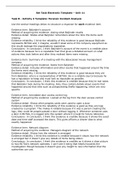
ASSUMPTIONS Role of the unconscious mind structure of personality
freud Divided
-
claims theres 3 parts to the partof mind not accessible to conscious thought mind into 3 structures, each demand gratification
Often an referred to the unconscious mind. frequently in conflict with other parts.
personally:Id, ego, superego. is
+
The Id:operates
Unconsciousconflictbetweensuperegousedmetaphor of anebergtodescribethearere
in unconscious mind, contains libido. Itoperates
according principle. Only id is presenta tbirth
to pleasure
achieved:a bnormal behaviour demands instant gratification of Its needs.
UNCONSCIOUS Id is selfish
(Anxiety disorders occur due to
o f our behaviours are
most
the product of the unconscious
the tongue, freudian
over developed superego) itself by the slip of
mind, revealing
slips i n neurotic mental health symptoms.
Theegobalancesdesiresofimpulsive mora"sicdemandoneit
-
is
freud proposed thatthe mind unconscious
mind prevents traumatic memories from
-
between the two (Id+superego) operates on really principle, does
structure like an iceberg, preconscious reaching consciousness by using defence mechanisms this effectively bydeploying defence machanisms
unconscious. - cannot be directly accessed
but expresses itselfindirectly through
- > small amounto f The Superego:formed atthe age of 5 within
phallicstage of
mental illnesses + dreams.
mental activity we know development. Sense of whats v+x, based on moraling principle
about. Logical (thoughts/perception) represents moral standards of same sex parent punishes the
gut ten
ego for anything done wrong through the feeling of
thndesantetaawbantd/tried
I
->
D.
Rimsingirout be
- > unaware, cant
irrational ruled by pleasure
+
impulsed (fears/ unacceptable
directly accessed
seeking
sexual desires
D:psychic deterministic in its view of
violent motives/traumatic, shameful expl & efence mechanisms
human behaviour, no such thing as an accident
freud-random slip of the tongue is driven by
unconscious forces e.g-calling teacher used by the ego to reduce conflict between Id + superego
-
mumetc-> this is what you intended IS +
defence mechanism - mental process initiated unconsciously to
determined byunconscious forces with deep
symbolic meanings. We implies all behaviour Psychosexual stages avoid
with
experiencing conflicto r anxiety. Individual confronted
t hey're unable to deal with rationally, am
situation that
aredetermined by unconscious conflicts rooted will be employed unconsciously stops them becoming aware of
unpleasant thoughts or
feelings.
ncnidhoodfreetimesperment ↳>
personally developmentoccurred through
shows no free will, he did research on
servers of 3 stages.
Printimprises onitinterDenver!"nairaist
aware of reasons behind behaviour e.g. child trouble to form relationships
muscle motion and found thata decision later in life buthas no recollection of being abused as a child by parent.
was made 0.5 seconds before awarness.
·
most important driving force in development
is
supporting frends theory of unconscious the need to express sexual energy-IIbido-
mind.
·each stage besides latency stage is marked by
Denial:refuses to acceptreality avoids +
to deal with having
a different conflict that the child must resolve painful feelings associated with the event. act as it event
s tage.
to next
to progress happened. They're seen as bizzare.e.g-lost a loved one-man
Wealth of supporting research. comes notresolved:fixated in a stage + carried in adult life
hasnt
deny this even after theyve been to the funeral.
from unscientific research methods
case studies clinical interviews. 1909-
+
freud did case study on phobia-syr old Oral 10-2 years) ->
focus of pleasures the mouth Displacement:redirecting thoughts/feelings in situations one
little Hans developed fear of horses after mothers breast is object of desire.Oral receptive is unable to express them at the person they should be directing
them towards. Individual argued with someone, instead of confronting them
seeing accidentinvolving a horse. Freud
interpretated this as Hans having agreetimeestre, Barnstarficas-sorting A carthic -
they take
ito ut
feel better after
anger
doing
o n victim or
out
something -
object.
Psychological relief
unresolved Oedipus complex the ego
displaced unconscious fear (auerodm) of
his father onto horses Hans associated them
-
-
nal (2-3 years) -
focus
of pleasure is Anus, child
with his father.se4 validing of Psychtheory gains pleasure from holding onto expelling their
case studies:r ich qualitative date.
faeces -> Anal retentive (strict, potty training) perfectionist,
Research methods
+
He gender blased, case sway (weakness) o bsessive, neat, stingly. Anal expulsive/lenient potty training)
thoughtless, messy, disorganised, overly generous.
Psych approach led to several effective
perience,genes seeacompie? haiersningenitalama case studies - Indepth clinical technique whereby an
individual or a small group of Individual are studies. Useful
therapies, been applied mostf requently narcissistic, reckless, homosexual unusual characteristics such as mental Illnesses.
through psychodynamic therapies
new
to way of studying
people with psychological problems. Oedipus complex boy experiences Intense sexual feelings data gathered is derived from convos between patient + therapist.
I
allows therapist to understand the causes of mental illnesses by uncovering
psychoanalysis to help patients with
-
for his mother. sees dad as competition for love of his mother.
their Internal, unconscious conflict.
neurotic symptoms overcome their problem wants dad to leave.
move on
-
with their lives. Psychoanalysis worried dad will castrate him (If he finds out he has feelings 2.9-little Hans study.
can use dream analysis/ free association for mums -
castration anxiety.
to help patients examine contents of
their unconscious in order to understand
↳ Boy befriends dad, engaging in activities dad pursues in Eval:4in ecological validity little Hans phobla affected his
-
currentdifficulties get well therapy
identcastany orpusompexisa everyday life. Se study more realistic compared to lab swdy.
-
enables link to be made between physical
IncaseswideProteamaninrepresentatave,anonYeYenenergy
develops superego+ gender identing from dad.
adplanisreafferunder
symptom e
Psychoanalysed her. i gives credibling
to theory showed importance of childhood Electra complex -
same thing but
girl sees mum
experiences in adult mental illness freed rival for love of her father girls atthis stage realise they
intentsatbe benefica,themean it is researchers
only finding into from is to benefit their oedupus
donthave penis-mum removed
it age of 3: penisenvy work -
little Hans +
showed that childhood traumat problems
complexresolved.
need to be understood in order to help patients when desire notf illed substined through desire to have
-
recover a baby.
based on case study + clinical interview ↳
gir Identifies with mother takes on mothers principles
-
Clinical interviews:talking to patients, face to face, using pre-
data. Freuds theory was based on Intensive electra complexresolved + girl develops superego + gender determined questions, asking in particular order. p's have chance to ask questions
often in t o understand the causes ofmental Illnesses
study of single Individuals who were Identity freud:girls Identification
-> weaker -
no freely. Allowstherapist
theranindietea,as beenmat
man castration anxiety:weaker superego by uncovering their internal, unconscious conflicts.
from hysteria
E.g-clinical Interview Anna O suffered
-
studies ofsuch small
number associated
nature based on the condition was
after being clinically interviewed
Latency (6-12 years) -> conflict+issues
ofIndividualswho werepsychologicalaber
at
childrevousstay
with the death of her father.
repressed with the consequences that a
conclusions. e arly years.
their
have drawn the same remember much of
Eval:Strength allows patient to develop their answers
-
↳ enabled freed to Anna hysterical symptoms +
to gain insight
helped her deal with the problem consciously so she could be
enitensebeen desrichcaninconservedaside cured.
relationships weakness -> Interviewer bias ->
therapistr eports data that supports
old age pensioners like Gin
*
theirheart egifreud focusingon behaviourofAnna tafdieeet
↓
etc
personal characteristics ofI nterview can be a barrier-gender, age
ASSUMPTIONS Classical Conditioning Operant Conditioning
developed by Pavlov :
developed by
↳ Skinner :
Born a blank slate :
-
all behaviour =
response to stimulus
, learning occurs through the consequences of
Behaviour IS learnt 0h14 born with a few innate responses behaviour
determined by interactions most responses are learned through interaction + ve reinforcement reward given for doing
→
something
+ experiences in our environ -
then behaviour is likely to be repeated
merit CC IS learning by association -
ve reinforcement →
something unpleasant stops when performing
a desired behaviour then behaviour is likely to be repeated
e. 9 → washing the dishes , achieved high score on test . Parents
reject Vagueness Of '
2 Stimuli repeatedly paired together dishes = likely to be repeated
say you dont need to wash
.
introspection
.
A neutral stimulus does not cause a punishment →
If occurs after behaviour then this ↓ Chances
Is same for
process Of learning of behaviour to be repeated e. 9 → stop an activity you enjoy
all species → valid to study on animals after doing badly in an exam
response , An unconditioned stimulus
.
causes
a natural response .
After repeated pairings shaping → route to target behaviour behaviours ,
which lead
to target behaviour are rewarded
(( →
Pavlov dogs the neutral stimulus alone / conditioned
↳ d
Ogs can be conditioned to stimulus ) will cause
"
fear
"
→ conditioned
( → Skinner Box
salivate to the sound Of a bell
If that sound was repeatedly response . Introduce hungry rat into the box , inside box was a
at the same time lever that when pressed would deliver pallet of food
presented
.
,
as they were given food . UCS UCR rat soon learned that pulling lever results in food / reward)
Skinner observed that as consequence of its actions the rat
Gradually → learned to associate VCR display this behaviour
'
continued to
UCS 1- NS .
It rely reinforced)
the sound Of bell with food + would
produce the salivation response CS CR Skinner changed mechanism of lever →
pressing
everytime they heard sound .
it gave an electric shock to rats Paw quickly .
rat stopped
parlor → able to show how parlor found several Other points about pressing the lever / punishment)
NS can come to elicit a new
learned response through the process :
Skinner set up box so that the floor was electrified
association .
+ lever switched off the current . once he electrified the
Unlearned
UCR
Timing → association occurs it VCs + NS are floor rat bounced and accidently pressed the lever
, .
food → ☐ 09 presented at same time if this doesnt occur .
electric current was turned off + experiment was
Salivates
UCS then no associations will Occur repeated rat learned to lever when current was on
. .
press
☐09 UCR l -
ve reinforcement)
food 1- Bell →
ucs ns
salivates stimulus generalisation → once animal
conditioned they would also respond to other
DETERMINISTIC
↳ repeated at the .
:
begins Sees
Bei"a¥¥¥g+
same time association
/+
=
all behaviour as
controlled by past experiences that have been conditioned
being
as
CR Extinction → e. G- parlor dogs if bell is Skinner suggested everything we do is the sum of our reinforcement
↳ process complete : dog conditioned
i→
to
salivate to the sound Of bell alone disappears behaviour behaviour cannot choose our behaviour not our fault
=
is extinguished
.
. .
goes against legal )
. .
system etc ( can say supporting Research -
O s think
/
-
( reject biological influences)
-
f Research :
EVIDENCE :
many supporting research mainly from scientific lab studies
.
like parlors clogs -
cc -
Skinner box research -0C -
strength → ↑ validity + credibility to
High lab studies have tight control over the Ir t
control over the variables :
behaviour 1st approach .
extraneous variables Skinners study all variables kept the same apart from
.
effect relationship
reinforcement / Punishment strength → cause +
the type of
I cat / ON :
.
conditioning have been applied to range of
_
between IV + dv can be established .
principle of
real world behaviours + problems .
/ e- OC is the basis of token economy
" " " " " " "" "" " " " " " " " " " " " " " " " " " "" " " " " " " "" " " " " " " " " "
"" " " "" " " " " " " " " "" " " " " " " "
study Skinners rats no possibility tha1- they could snow please you or screw you
.
-
rewarding appropriate behaviour with tokens that can be exchanged for privllegs .
behaviour .
Strength : doesn't invalidate results
CC → led to development anxiety associated
of treatment for the reduction of
m-n.n.iai.s.u-e.m.na.mas.aa-e.m-nai-re.ia.n.n-mm.axa.in .
Lack Of Generalisation research is carried on animals pavlov used
:
.
dogs strength → token economies successful in treating + correcting behaviour . SD has ↑
Humans + dogs dont match similarly unlike a chimp of 98.4% Match .
success rate of treating phobic patients → can be used in real life .
weakness : ? Whether can apply findings to humans , reduces
we validity
of method + Whole behaviour 1st approach anthropomorphism .
Ethical Issues :
Using animals -
kept hungry 1- thirsty in order to motivate them in Cthods :
research comes from lab animal experiments Skinner used .
lab
electrocuted → Physical harm Pavlov also extraneous variable to establish CTE
experimental procedures Skinner box rats
experiment allowed him to remove
- .
.
.
,
put test tubes to get dogs saliva on saliva glands Weakness : research should follow
relationship between reinforcement t learning of behaviour Strength →
.
.
animal ethical code Of conduct animal shouldn't be psychologically or
behaviour / SM been very influential in
by using scientific methods
.
,
physically harmed during an experiment .
development of psychology as a scientific discipline , giving psych greater
fcredlbninststans.gg
?⃝
, = SLT =
all
ASSUMPTIONS SLT :
Bandura ( demonstrates now Bandura study
child may learn a new behaviour,
L Bandura agreed
. with the behaviorists SIT →
people learn by observing what other people say or conducted experiment with young children
behaviour learned from experience +
IS do more likely to observe
.
+ Imitate some people rather than
( 3. gyps from USA ) to demonstrate observational /
models
environment the Stt proposed a diff way ppl
everyone→ role
imitative learning
.
observing
.
learn through .
people
2. SIT believes learning occurs directly / Cct-0C) In order for social learning to occur someone must 1ˢᵗ , Group A :
children put in room , one at a time with ,
an
but also indirectly ( vicarious conditioning) carry out the behaviour or attitude to be learned modelling ,
adult who behaved in an aggressive way
towards a
Bandura believed that mediation at processes
different types bobo doll Adult hit 01011 With hammer
of Role models, live model /parent /teacher etc ) + Shouted abuse
-
. . .
that tie between stimulus + response are symbolic model :
somebody portrayed in media / actress)
essential for learning to take place .
processes
allow us to think about what we're going to do ↳ models provide examples of behaviour that can be Observed Group B :
one at a time children put in room where
before we do It therefore only . study human by individual + Later produced by imitating them .
adult behave in a subdued nonaggressive way
learning
towards the doll Each child put in playroom
.
Identification extent to which an individual relates to model
: .
based exp wants to be like them likely to happen if similar Identity with with toys including bobo doll + hammer researchers
3. believe in using scientific , lab t . . .
model observer must tell likely to experience the same outcomes
recorded aggressive behaviours
,
number of each child
to study behaviour In an Objective WAY .
in that situation . If an individual can identify = more likely to
Made towards the doll
Imitate
.
.
D. E. A. M :
child learns through imitation of attitudes + behaviours more aggressive acts recorded for children who had
that are modelled by people around us model provided .
Observed adult behave aggressively than the children
whole patterns
can be quicklyacquired factors determine who ha d not Boys more aggressive than girls
☐ →
. . .
less deterministic than behar app If a behaviour is imitated : in
characteristics of Exposure to model behaving aggressively results
suggests when person observes behaviour .
the the model
obsgrvatlonalleStudy
armngtagg.rs?vebehar1ILval
they have cognitive mental processes to the observers ability to perform that behaviour
-
.
choose whether to imitate behaviour .
.
the consequences of the behaviour
e. G- Child Observes Role model being aggressive
they can choose to imitate It motivated . i carious Reinforcement :
reinforcement thats not directly
Of
then ↑ likely to Imitate behaviour experienced occurs through observing someone else being
-
.
strength → not entirely deterministic reinforced .
takes into account humans have some
High controls over variables :
lab studies →
Bandura study
individual who observes model being rewarded for a certain
all variables kept same s → cause + effect between Ir t DV
will ( to an extent)
.
free more likely to imitate that behaviour as that
behaviour is
can be established ↓ dot children
want the same reward Idea that individuals don't need .
behaviour of
to experience rewards / punishments directly in order to learn
r M
.
.
[ →
Many pieces of supporting evidence ↳ Instead they observe
consequences experienced by a Standardised procedures :
tab -
replicated .
for SLT approach comes from scientific .
model 1- then make judgements to imitating such actions e. g- Bandura study standardised = replicated . S→ possible to
lab studies like Bobo aggression study
-
for same experience when opportunity to perform learnt
-
behaviour occurs the behaviour will then modelled . check If findings are reliable ( consistent)
supports SIT as it demonstrates the power
same thing happens for punishment ( dont imitate due to
it child observing role model producing
consequences )
aggressive act , child will imitate the act .
lack Of generalisation / realism : artificial → Bandura →
childsees adult being aggressive to doll
validity +
credibility to SIT not everyday that
.
s → gives
Role of mediation at Processes : Involved in learning Bandura .
W → questionable If we can apply findings to real life behaviour
lacks ecological validity
Identified 4 Mediation at processes in learning :
principles of 517 Used to increase 1. Attention -
in order to learn behaviour we must first Demand characteristics : human participants → 3-8 Older =
notice someone ( model / their environment + pay attention May worked out aim of Study + shown please V / screw U
our understanding of why humans in
behave in pro social way social / anti to them + what they're doing
behaviour w ↓ internal validity
- -
→
.
of research,
/
.
skews
SIT can be used to explain how children """ "" " " " " " " " "" " " " " " " " " " " " "
findings
develop aggressive behaviour or gender
.
stereotypical behaviour These behaviours are .
3. Motor reproduction -
Observer must know they have ability
perform the behaviour
usually modelled by same sex models + to
by children ESP If
/
such behaviours Imitated
differences
,
they expect to be rewarded s → to know how .
4. MOTIVATION Individual must have a reason to demonstrate
-
between benavt SU Is the participants
✗
children learn these behaviours from note models .
the behaviour that they have Observed Imitation more likely it .
parents may use theory to ensure child isnt exposed person expects to be reinforced
to VC behaviours / avoid media ) prosocial used human vs animals SH focuses on aggression
-
. etc . . .
being modelled at home .
1+2 =
learning of behaviour, last 2 = performance Of behaviour
( learning + performance dont need to occur together maybe .
most supporting research comes from stored and reproduced later time .
scientific lab studies em phasing importance of
.
+ +new rename on +ne
scientific processes
scientific method , gives psych greater credibility +
1
I
status as a science Bandura used children .
in controlled lab exp to investigate learning .
s → establish cause + effect between IV + DV
, I
ASSUMPTIONS Role of the unconscious mind structure of personality
freud Divided
-
claims theres 3 parts to the partof mind not accessible to conscious thought mind into 3 structures, each demand gratification
Often an referred to the unconscious mind. frequently in conflict with other parts.
personally:Id, ego, superego. is
+
The Id:operates
Unconsciousconflictbetweensuperegousedmetaphor of anebergtodescribethearere
in unconscious mind, contains libido. Itoperates
according principle. Only id is presenta tbirth
to pleasure
achieved:a bnormal behaviour demands instant gratification of Its needs.
UNCONSCIOUS Id is selfish
(Anxiety disorders occur due to
o f our behaviours are
most
the product of the unconscious
the tongue, freudian
over developed superego) itself by the slip of
mind, revealing
slips i n neurotic mental health symptoms.
Theegobalancesdesiresofimpulsive mora"sicdemandoneit
-
is
freud proposed thatthe mind unconscious
mind prevents traumatic memories from
-
between the two (Id+superego) operates on really principle, does
structure like an iceberg, preconscious reaching consciousness by using defence mechanisms this effectively bydeploying defence machanisms
unconscious. - cannot be directly accessed
but expresses itselfindirectly through
- > small amounto f The Superego:formed atthe age of 5 within
phallicstage of
mental illnesses + dreams.
mental activity we know development. Sense of whats v+x, based on moraling principle
about. Logical (thoughts/perception) represents moral standards of same sex parent punishes the
gut ten
ego for anything done wrong through the feeling of
thndesantetaawbantd/tried
I
->
D.
Rimsingirout be
- > unaware, cant
irrational ruled by pleasure
+
impulsed (fears/ unacceptable
directly accessed
seeking
sexual desires
D:psychic deterministic in its view of
violent motives/traumatic, shameful expl & efence mechanisms
human behaviour, no such thing as an accident
freud-random slip of the tongue is driven by
unconscious forces e.g-calling teacher used by the ego to reduce conflict between Id + superego
-
mumetc-> this is what you intended IS +
defence mechanism - mental process initiated unconsciously to
determined byunconscious forces with deep
symbolic meanings. We implies all behaviour Psychosexual stages avoid
with
experiencing conflicto r anxiety. Individual confronted
t hey're unable to deal with rationally, am
situation that
aredetermined by unconscious conflicts rooted will be employed unconsciously stops them becoming aware of
unpleasant thoughts or
feelings.
ncnidhoodfreetimesperment ↳>
personally developmentoccurred through
shows no free will, he did research on
servers of 3 stages.
Printimprises onitinterDenver!"nairaist
aware of reasons behind behaviour e.g. child trouble to form relationships
muscle motion and found thata decision later in life buthas no recollection of being abused as a child by parent.
was made 0.5 seconds before awarness.
·
most important driving force in development
is
supporting frends theory of unconscious the need to express sexual energy-IIbido-
mind.
·each stage besides latency stage is marked by
Denial:refuses to acceptreality avoids +
to deal with having
a different conflict that the child must resolve painful feelings associated with the event. act as it event
s tage.
to next
to progress happened. They're seen as bizzare.e.g-lost a loved one-man
Wealth of supporting research. comes notresolved:fixated in a stage + carried in adult life
hasnt
deny this even after theyve been to the funeral.
from unscientific research methods
case studies clinical interviews. 1909-
+
freud did case study on phobia-syr old Oral 10-2 years) ->
focus of pleasures the mouth Displacement:redirecting thoughts/feelings in situations one
little Hans developed fear of horses after mothers breast is object of desire.Oral receptive is unable to express them at the person they should be directing
them towards. Individual argued with someone, instead of confronting them
seeing accidentinvolving a horse. Freud
interpretated this as Hans having agreetimeestre, Barnstarficas-sorting A carthic -
they take
ito ut
feel better after
anger
doing
o n victim or
out
something -
object.
Psychological relief
unresolved Oedipus complex the ego
displaced unconscious fear (auerodm) of
his father onto horses Hans associated them
-
-
nal (2-3 years) -
focus
of pleasure is Anus, child
with his father.se4 validing of Psychtheory gains pleasure from holding onto expelling their
case studies:r ich qualitative date.
faeces -> Anal retentive (strict, potty training) perfectionist,
Research methods
+
He gender blased, case sway (weakness) o bsessive, neat, stingly. Anal expulsive/lenient potty training)
thoughtless, messy, disorganised, overly generous.
Psych approach led to several effective
perience,genes seeacompie? haiersningenitalama case studies - Indepth clinical technique whereby an
individual or a small group of Individual are studies. Useful
therapies, been applied mostf requently narcissistic, reckless, homosexual unusual characteristics such as mental Illnesses.
through psychodynamic therapies
new
to way of studying
people with psychological problems. Oedipus complex boy experiences Intense sexual feelings data gathered is derived from convos between patient + therapist.
I
allows therapist to understand the causes of mental illnesses by uncovering
psychoanalysis to help patients with
-
for his mother. sees dad as competition for love of his mother.
their Internal, unconscious conflict.
neurotic symptoms overcome their problem wants dad to leave.
move on
-
with their lives. Psychoanalysis worried dad will castrate him (If he finds out he has feelings 2.9-little Hans study.
can use dream analysis/ free association for mums -
castration anxiety.
to help patients examine contents of
their unconscious in order to understand
↳ Boy befriends dad, engaging in activities dad pursues in Eval:4in ecological validity little Hans phobla affected his
-
currentdifficulties get well therapy
identcastany orpusompexisa everyday life. Se study more realistic compared to lab swdy.
-
enables link to be made between physical
IncaseswideProteamaninrepresentatave,anonYeYenenergy
develops superego+ gender identing from dad.
adplanisreafferunder
symptom e
Psychoanalysed her. i gives credibling
to theory showed importance of childhood Electra complex -
same thing but
girl sees mum
experiences in adult mental illness freed rival for love of her father girls atthis stage realise they
intentsatbe benefica,themean it is researchers
only finding into from is to benefit their oedupus
donthave penis-mum removed
it age of 3: penisenvy work -
little Hans +
showed that childhood traumat problems
complexresolved.
need to be understood in order to help patients when desire notf illed substined through desire to have
-
recover a baby.
based on case study + clinical interview ↳
gir Identifies with mother takes on mothers principles
-
Clinical interviews:talking to patients, face to face, using pre-
data. Freuds theory was based on Intensive electra complexresolved + girl develops superego + gender determined questions, asking in particular order. p's have chance to ask questions
often in t o understand the causes ofmental Illnesses
study of single Individuals who were Identity freud:girls Identification
-> weaker -
no freely. Allowstherapist
theranindietea,as beenmat
man castration anxiety:weaker superego by uncovering their internal, unconscious conflicts.
from hysteria
E.g-clinical Interview Anna O suffered
-
studies ofsuch small
number associated
nature based on the condition was
after being clinically interviewed
Latency (6-12 years) -> conflict+issues
ofIndividualswho werepsychologicalaber
at
childrevousstay
with the death of her father.
repressed with the consequences that a
conclusions. e arly years.
their
have drawn the same remember much of
Eval:Strength allows patient to develop their answers
-
↳ enabled freed to Anna hysterical symptoms +
to gain insight
helped her deal with the problem consciously so she could be
enitensebeen desrichcaninconservedaside cured.
relationships weakness -> Interviewer bias ->
therapistr eports data that supports
old age pensioners like Gin
*
theirheart egifreud focusingon behaviourofAnna tafdieeet
↓
etc
personal characteristics ofI nterview can be a barrier-gender, age