9. ASSET SALES
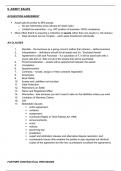
ACQUISITION AGREEMENT
Asset sale AA similar to SPA except:
o No tax indemnities (only relevant for share sale)
o Limited tax warranties – e.g. VAT position of business, PAYE compliance
Must reflect that B is acquiring a collection of assets rather than one asset (i.e. the shares)
o Deal structure can be complex – each asset transferred individually
AA CLAUSES
1. Recitals – the business as a going concern (rather than shares) – define business
2. Interpretation - definitions should list all assets and inc. ‘Excluded Assets’
3. Agreement to Sell and Purchase – if a subsidiary of T, it will be asset sale with a
share sale bolt on. Sets out all of the assets that will be purchased
4. Price/Consideration – assets will be apportioned between the assets
5. Completion
6. Apportionments
7. Contracts – novate, assign or fresh contracts negotiated
8. Employees
9. Book Debts
10. Assets and Liabilities not included
11. Data Protection
12. Restrictions on Seller
13. Name and Registered Office
14. Warranties - less because you don’t need to take on the liabilities unless you want
15. Limitation of Warranty Claims
16. VAT
17. Boilerplate clauses:
entire agreement;
variation;
assignment;
Contracts (Rights of Third Parties) Act 1999;
announcements;
costs;
notices;
governing law;
jurisdiction;
expert and arbitration clauses and alternative dispute resolution; and
counterparts clause (this enables the parties to sign separate but identical
copies of the agreement but the two counterparts constitute the agreement).
FURTHER CONTRACTUAL PROVISIONS
, 1. Description of business being sold
B only acquires assets + liabilities that the agreement specifies as being part of ‘The
business
‘The Business’ must be accurately defined where > 1 business is operated by the selling
company
This definition also has implications for RCs
2. List of assets acquired + liabilities assumed
+ consideration allocated to each category of asset, for CGT calcs (sale proceeds/base
cost + cap allow.) + stamp duty
a. Premises
b. Plant and machinery
c. Stock and work in progress
d. Third party contracts
e. IP
f. Employees; and
g. (possibly) debtors (receivables)
h. (possibly) creditors
3. Assets excluded from sale – for avoidance of doubt
4. Schedule of continuing contracts
Specifying contracts B wants benefit of e.g. distribution, suppliers + customers
fundamental to the business
5. Schedule of employees (TUPE)
6. Apportionments
parties’ agreement re: apportioning outgoings and other payments incurred by the
business (e.g. utility charges / rent) which straddle period before and after completion
o standard position = S responsible up to completion, B thereafter
7. Licences – e.g. IP rights and assigning the lease of any property transferred
8. Debtor + creditor provisions
9. Records of the business
Statutory books remain with S but PAYE + employee records may be required for B to
run business
10. VAT provisions – exemption from paying VAT if business sold as going concern
11. SDLT provisions
12. Completion requirements – obligations on S to: Complete sale of any real property
transferring to B, Give B possession of assets transferring via delivery and Delivery to B in
agreed form executed assignments / novations of assets not transferrable by delivery
SELLING DEBTS – DEBTORS (BOOK DEBTS)
, Balance sheet of co. treats sums owed to business by 3 rd parties i.e. book debts/
receivables = assets B wants to acquire as part of package of assets being sold
o May be worth a lot of money
o + if debtors owing them continue to be customers after completion, B wants to
maintain good relationships with them
If B does not acquire, they remain with S = concern that S could pursue debts too
vigorously = damage to GW of business B just acquired
S will expect payment for debts sold to B who will be tasked with collecting them
o Concern that B may not be able to collect in all debts as some may be bad debts that
are ultimately written off
Addressed by acquiring debts at a discount = profit for B on collection
Debts detailed in schedule to AA + assignment of trade debts between B + S
S advantage = clean break and does not bear the collection risk
B advantage = could make profit on discounted debts when collected
S Disadvantage = likely to have to sell debts below face value
B Disadvantage = effort of collecting debts, some of which may have to be written off
S cannot sell debts arising under a contract which prohibits assignment of the benefit
ALTERNATIVE METHODS OF SELLING DEBT
1. Seller retains ownership
S advantage = keeps everything it collects
B advantage = does not acquire the risk of bad debts
S disadvantage = will need personnel to carry out debt collection, and if all assets sold,
under TUPE it will not have any employees (i.e. will need to engage a third party to do it)
B disadvantage = S may damage ongoing commercial relationship if it is too vigorous in
pursuing the debts
o B may negotiate undertaking from S that it will not issue proceedings to recover
debts for specified period after completion
o + will allow B the option to buy the debts after this period
2. Seller retains ownership of debts but buyer collects them as agent in return for
collection fee / commission
S advantage = gets around issue of having no employees, while keeping what is collected
by B + not having to sell debts at discount
B advantage = may control (through provisions in asset sale agreement) what steps the S
can take to enforce collection, and thus preserve relationship with debtors
B advantage – no need to pay for debts + take risk that debts will be irrecoverable, but may
still benefit from debt collection fee (% of debts recovered)
TRANSFERRING CREDITORS
ACQUISITION AGREEMENT
Asset sale AA similar to SPA except:
o No tax indemnities (only relevant for share sale)
o Limited tax warranties – e.g. VAT position of business, PAYE compliance
Must reflect that B is acquiring a collection of assets rather than one asset (i.e. the shares)
o Deal structure can be complex – each asset transferred individually
AA CLAUSES
1. Recitals – the business as a going concern (rather than shares) – define business
2. Interpretation - definitions should list all assets and inc. ‘Excluded Assets’
3. Agreement to Sell and Purchase – if a subsidiary of T, it will be asset sale with a
share sale bolt on. Sets out all of the assets that will be purchased
4. Price/Consideration – assets will be apportioned between the assets
5. Completion
6. Apportionments
7. Contracts – novate, assign or fresh contracts negotiated
8. Employees
9. Book Debts
10. Assets and Liabilities not included
11. Data Protection
12. Restrictions on Seller
13. Name and Registered Office
14. Warranties - less because you don’t need to take on the liabilities unless you want
15. Limitation of Warranty Claims
16. VAT
17. Boilerplate clauses:
entire agreement;
variation;
assignment;
Contracts (Rights of Third Parties) Act 1999;
announcements;
costs;
notices;
governing law;
jurisdiction;
expert and arbitration clauses and alternative dispute resolution; and
counterparts clause (this enables the parties to sign separate but identical
copies of the agreement but the two counterparts constitute the agreement).
FURTHER CONTRACTUAL PROVISIONS
, 1. Description of business being sold
B only acquires assets + liabilities that the agreement specifies as being part of ‘The
business
‘The Business’ must be accurately defined where > 1 business is operated by the selling
company
This definition also has implications for RCs
2. List of assets acquired + liabilities assumed
+ consideration allocated to each category of asset, for CGT calcs (sale proceeds/base
cost + cap allow.) + stamp duty
a. Premises
b. Plant and machinery
c. Stock and work in progress
d. Third party contracts
e. IP
f. Employees; and
g. (possibly) debtors (receivables)
h. (possibly) creditors
3. Assets excluded from sale – for avoidance of doubt
4. Schedule of continuing contracts
Specifying contracts B wants benefit of e.g. distribution, suppliers + customers
fundamental to the business
5. Schedule of employees (TUPE)
6. Apportionments
parties’ agreement re: apportioning outgoings and other payments incurred by the
business (e.g. utility charges / rent) which straddle period before and after completion
o standard position = S responsible up to completion, B thereafter
7. Licences – e.g. IP rights and assigning the lease of any property transferred
8. Debtor + creditor provisions
9. Records of the business
Statutory books remain with S but PAYE + employee records may be required for B to
run business
10. VAT provisions – exemption from paying VAT if business sold as going concern
11. SDLT provisions
12. Completion requirements – obligations on S to: Complete sale of any real property
transferring to B, Give B possession of assets transferring via delivery and Delivery to B in
agreed form executed assignments / novations of assets not transferrable by delivery
SELLING DEBTS – DEBTORS (BOOK DEBTS)
, Balance sheet of co. treats sums owed to business by 3 rd parties i.e. book debts/
receivables = assets B wants to acquire as part of package of assets being sold
o May be worth a lot of money
o + if debtors owing them continue to be customers after completion, B wants to
maintain good relationships with them
If B does not acquire, they remain with S = concern that S could pursue debts too
vigorously = damage to GW of business B just acquired
S will expect payment for debts sold to B who will be tasked with collecting them
o Concern that B may not be able to collect in all debts as some may be bad debts that
are ultimately written off
Addressed by acquiring debts at a discount = profit for B on collection
Debts detailed in schedule to AA + assignment of trade debts between B + S
S advantage = clean break and does not bear the collection risk
B advantage = could make profit on discounted debts when collected
S Disadvantage = likely to have to sell debts below face value
B Disadvantage = effort of collecting debts, some of which may have to be written off
S cannot sell debts arising under a contract which prohibits assignment of the benefit
ALTERNATIVE METHODS OF SELLING DEBT
1. Seller retains ownership
S advantage = keeps everything it collects
B advantage = does not acquire the risk of bad debts
S disadvantage = will need personnel to carry out debt collection, and if all assets sold,
under TUPE it will not have any employees (i.e. will need to engage a third party to do it)
B disadvantage = S may damage ongoing commercial relationship if it is too vigorous in
pursuing the debts
o B may negotiate undertaking from S that it will not issue proceedings to recover
debts for specified period after completion
o + will allow B the option to buy the debts after this period
2. Seller retains ownership of debts but buyer collects them as agent in return for
collection fee / commission
S advantage = gets around issue of having no employees, while keeping what is collected
by B + not having to sell debts at discount
B advantage = may control (through provisions in asset sale agreement) what steps the S
can take to enforce collection, and thus preserve relationship with debtors
B advantage – no need to pay for debts + take risk that debts will be irrecoverable, but may
still benefit from debt collection fee (% of debts recovered)
TRANSFERRING CREDITORS