‘Between the years of 1515 and 1540 Tudor government was completely transformed.’ - Do you
agree or disagree with this view?
Under the reign of Henry VIII the nature and extent of royal authority dramatically changed.
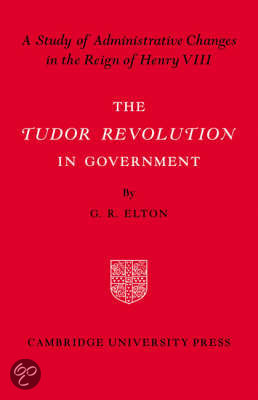
Though Elton argues that the series of reforms in government led by Cromwell between 1515 and 1540
were revolutionary, the majority of historians claim that he overstated the reforms of government and
that the changes were part of an evolution rather than a revolution. Whether Wolsey’s and Cromwell’s
reforms have been exaggerated or really did completely transform is questionable.
It is undeniable that Henry in ending papal supremacy and making himself, the King the supreme
head of the Church in England, was transforming the royal supremacy and therefore the government.
Cromwell wrote that England was an empire and that everyone owed the King, ruling under God, total
obedience. What he is describing is a single unitary state with all power deriving from the monarch.
However, in 1533, the King was subject to the Pope’s views in matters of religious doctrine and
appointing bishops and other high ranking officials. Moreover, England held ‘liberties’ which had semi-
independent status (eg. Durham was governed by the bishop), this meant that royal authority was
unevenly distributed. Cromwell dealt with this problem by using the break with Rome, and in 1536, the
Act of Union with Wales. Furthermore, in 1537 the Council for the North was established in York. It was
controlled from London so it could suppress trouble. It replaced the temporary council which had
existed from Edward IV’s time. Therefore separatism was replaced with centralisation. The Act against
liberties also removed and restricted the powers exercised by regional nobles. This action eroded the
ancient privileges of the nobility. Though the Crown already had significant influence over the church, I
would argue that there was a Constitutional revolution as Henry became head of the Church and State,
and also extended the royal authority over Wales and other semi-independent regions, dramatically
changing the nature of the King’s government.
Wolsey successfully made significant changes to the taxation system, alongside John Heron, the
Treasurer of the Chamber, he created the ‘Subsidy’. This was a form of taxation which accurately
calculated the valuation of the taxpayer’s wealth. This greatly improved the previous system, which was
unfair as those of a low income had to pay a similar amount of tax as the wealthy. This revolutionary
system was certainly not a failure as it is similar to the taxation system in England today. This was a more
efficient form of taxation, that enabled Wolsey to raise enough money for the King's foreign expeditions,
bringing in over £300,000. Wolsey was also able to raise considerable amounts, such as through
‘benevolences’ and enforced loans from the nobility, which raised £200,000 in 1522. Additionally,
Cromwell created new financial institutions to manage the new income from the break with Rome, and the
closure of the monasteries, for example the Court of Augmentations.
There were numerous changes made to the Royal Household between 1515 and 1540, most
importantly, the emergence of the Privy Council as the strongest engine of government. This
contributed to what could be described as a ‘bureaucratic revolution.’ Before 1515, the King
regularly met with his advisors. This was a large group of around 50 to 60 men which included
noblemen, clergy and members of the King’s household. However between 1515 and 1540, the
Council became more specialised, for example the Star Chamber was delegated legal work. The
nature of the Privy council changed as the number of members of the Privy Council decreased,
no more than 20, and it became more professional, trained lawyers and bureaucrats rather than
the nobles from the wider ruling classes. The fact that professional administers rather than
untrained nobility were required to maintain the system meant that unlike the nobility these men
depended upon the King for their promotions and titles therefore were an utterly loyal group of
agree or disagree with this view?
Under the reign of Henry VIII the nature and extent of royal authority dramatically changed.
Though Elton argues that the series of reforms in government led by Cromwell between 1515 and 1540
were revolutionary, the majority of historians claim that he overstated the reforms of government and
that the changes were part of an evolution rather than a revolution. Whether Wolsey’s and Cromwell’s
reforms have been exaggerated or really did completely transform is questionable.
It is undeniable that Henry in ending papal supremacy and making himself, the King the supreme
head of the Church in England, was transforming the royal supremacy and therefore the government.
Cromwell wrote that England was an empire and that everyone owed the King, ruling under God, total
obedience. What he is describing is a single unitary state with all power deriving from the monarch.
However, in 1533, the King was subject to the Pope’s views in matters of religious doctrine and
appointing bishops and other high ranking officials. Moreover, England held ‘liberties’ which had semi-
independent status (eg. Durham was governed by the bishop), this meant that royal authority was
unevenly distributed. Cromwell dealt with this problem by using the break with Rome, and in 1536, the
Act of Union with Wales. Furthermore, in 1537 the Council for the North was established in York. It was
controlled from London so it could suppress trouble. It replaced the temporary council which had
existed from Edward IV’s time. Therefore separatism was replaced with centralisation. The Act against
liberties also removed and restricted the powers exercised by regional nobles. This action eroded the
ancient privileges of the nobility. Though the Crown already had significant influence over the church, I
would argue that there was a Constitutional revolution as Henry became head of the Church and State,
and also extended the royal authority over Wales and other semi-independent regions, dramatically
changing the nature of the King’s government.
Wolsey successfully made significant changes to the taxation system, alongside John Heron, the
Treasurer of the Chamber, he created the ‘Subsidy’. This was a form of taxation which accurately
calculated the valuation of the taxpayer’s wealth. This greatly improved the previous system, which was
unfair as those of a low income had to pay a similar amount of tax as the wealthy. This revolutionary
system was certainly not a failure as it is similar to the taxation system in England today. This was a more
efficient form of taxation, that enabled Wolsey to raise enough money for the King's foreign expeditions,
bringing in over £300,000. Wolsey was also able to raise considerable amounts, such as through
‘benevolences’ and enforced loans from the nobility, which raised £200,000 in 1522. Additionally,
Cromwell created new financial institutions to manage the new income from the break with Rome, and the
closure of the monasteries, for example the Court of Augmentations.
There were numerous changes made to the Royal Household between 1515 and 1540, most
importantly, the emergence of the Privy Council as the strongest engine of government. This
contributed to what could be described as a ‘bureaucratic revolution.’ Before 1515, the King
regularly met with his advisors. This was a large group of around 50 to 60 men which included
noblemen, clergy and members of the King’s household. However between 1515 and 1540, the
Council became more specialised, for example the Star Chamber was delegated legal work. The
nature of the Privy council changed as the number of members of the Privy Council decreased,
no more than 20, and it became more professional, trained lawyers and bureaucrats rather than
the nobles from the wider ruling classes. The fact that professional administers rather than
untrained nobility were required to maintain the system meant that unlike the nobility these men
depended upon the King for their promotions and titles therefore were an utterly loyal group of