
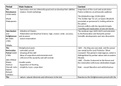
Period Main features Context
The - humanism: men are inherently good and can develop their abilities Importance of the court and social status
Renaissance - classics: Greek mythology Poetry written to an aristocratic audience
(1500-1660)
The Elizabethan Age (1558-1603):
Wyatt 'The Golden Age' for art, as Queen Elizabeth
Shakespeare promoted as sponsored it, inviting artists to
the palace
Armed conflicts with the Spanish Armada
Travelling and exploration of new territories
Neoclassism - Imitation of Classics The Jacobean Age (1603-1625) and extension
and - Materialism and Empirical Science: logic, reason, order, accuracy, to the Restoration and Romantic period
Enlightenme and structure Scientific developments and new discoveries
nt (1600– - social conservatism
1785)
Othello
The Metaphysical poets 1649 – the King was executed, and the power
Restoration - extended conceit was seized by the Lord Protector, Oliver
Period (1660- - showing off the skill Cromwell. This period is Interregnum, which is
1700) - ideas of carpe diem and momento mori distinguished by puritan values and an austere
- criticism of the austerity and self-restrain lifestyle.
John Wilmot 1660 – Charles II returned to the throne and
(Rake), Cavalier poets: the restoration with many celebrations began.
Andrew - Supporters of the King
Marvell, John - simplicity in joy: carpe diem Rake – sexual liberation and wild behaviour
Donne,
Richard
Lovelace
The - nature: natural elements and references in the text Reaction to the Enlightenment period with the


