

Unit 2 – Exercise Physiology
Assignment 2 – Fatigue and Recovery
What is fatigue?
Fatigue is a feeling of extreme physical or mental tiredness brought on by extreme exertion. It
can result in temporary loss of strength and energy.
There are many causes of fatigue, including lack of oxygen, overheating, dehydration,
neuromuscular fatigue, too much lactic acid, too much carbon dioxide and depletion of energy
sources. However, in this assignment, I am going to talk about the depletion of energy sources,
the effects of waste products, and neuromuscular fatigue.
1. Depletion of energy sources
Creatine phosphate is a high energy compound stored in the muscles and the liver. It is made up
of phosphate and creatine. It is for explosive actions for 10-15 seconds of activity. This is ideal
for a sprinter in the 100m, or a swimmer in a 50m swim. The energy runs out quickly which is why
you get fatigued. It can take up to 2-3 minutes to replenish the PC stores. The graph shows how
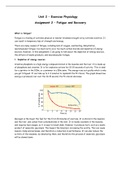
energy is produced, but over the 10-15 second, the PC stored decrease.
Glycogen is the major the fuel for the first 20 minutes of exercise. It is stored in the muscles
and the liver, and comes from carbohydrates in the diet. It is readily available in the muscles,
and requires less oxygen, so it is easy to break down. However it produces lactic acid as a waste
product of anaerobic glycolysis. This lowers the blood pH, increasing the acidity. This can cause
muscle cramp and soreness, and therefore a reduction in performance. It can also reduce the
activity of the enzymes, by denaturing them, and therefore the process of anaerobic glycolysis
will be slowed down.
Assignment 2 – Fatigue and Recovery
What is fatigue?
Fatigue is a feeling of extreme physical or mental tiredness brought on by extreme exertion. It
can result in temporary loss of strength and energy.
There are many causes of fatigue, including lack of oxygen, overheating, dehydration,
neuromuscular fatigue, too much lactic acid, too much carbon dioxide and depletion of energy
sources. However, in this assignment, I am going to talk about the depletion of energy sources,
the effects of waste products, and neuromuscular fatigue.
1. Depletion of energy sources
Creatine phosphate is a high energy compound stored in the muscles and the liver. It is made up
of phosphate and creatine. It is for explosive actions for 10-15 seconds of activity. This is ideal
for a sprinter in the 100m, or a swimmer in a 50m swim. The energy runs out quickly which is why
you get fatigued. It can take up to 2-3 minutes to replenish the PC stores. The graph shows how
energy is produced, but over the 10-15 second, the PC stored decrease.
Glycogen is the major the fuel for the first 20 minutes of exercise. It is stored in the muscles
and the liver, and comes from carbohydrates in the diet. It is readily available in the muscles,
and requires less oxygen, so it is easy to break down. However it produces lactic acid as a waste
product of anaerobic glycolysis. This lowers the blood pH, increasing the acidity. This can cause
muscle cramp and soreness, and therefore a reduction in performance. It can also reduce the
activity of the enzymes, by denaturing them, and therefore the process of anaerobic glycolysis
will be slowed down.


