

a LEVEL
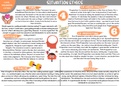
SITUATION ETHICS
PHILOSOPHY
FOUR WORKING PRINCIPLES
& ETHICS AGAPE
Agape is the word used in the New Testament for pure, Pragmatism: It is based on experience rather than on theory. For a
unconditional Christian love. It is love which is disinterested course of action to be right, it has to be practical. It must work.
and seeks only the benefit of the one who is loved. Agape is Relativism: It is based on making the absolute laws of Christian ethics
concern for others. Fletcher uses the term ‘best interest’, relative. ‘It relativizes the absolute, it does not absolutise the
so this seems much the same as Singer’s utilitarianism. We relative’.Positivism:It begins with belief in the reality and importance of
act out of love for others, trying to do the best to serve love.You have to start with a positive choice – you need to want to do
their interests. good. Personalism:Persons, not laws or anything else, are at the centre
Should agape be a guiding principle in decision making? If agape represents self- of situation ethics. Situation Ethics puts people first. People are more
less love, surely it would make a good guiding principle in decision making because important than rules.
love for others will always be a good thing. However, it can be argued that the
concept of agape is much too subjective and individualistic to centre decision
SIX PROPOSITIONS
making around it.
CONSCIENCE First Proposition: Love only is always good:‘Only
Conscience is not a noun it is a verb.It is a word that one ‘thing’ is intrinsically good; namely love: nothing else at all’. Second Proposition:
describes our attempts to make proper decisions.Fletcher Love is the only norm (rule)- Love replaces the law. The law should only be obeyed in
adopts Aquinas’ idea that conscience is reason-making moral the interests of love. Third Proposition: Love and justice are the same ‘Love and
judgements, though he rejects Aquinas’ other moral justice are the same thing – for justice is love distributed nothing else.’ Fourth
thoughts. The conscience is used in a special sense in Proposition: Love is not liking ‘Love wills the neighbour’s good whether we like him or
Situation Ethics. Fletcher rejects the idea that conscience not.’:Love is discerning and critical, not sentimental. . Fifth Proposition: Love
is: intuition, a channel for divine guidance, the internalised justifies the means ‘Only the end justifies the means; nothing else’: If good comes
values of the individuals culture, the part of reason that from something, it is right. Sixth Proposition: Love decides there and then: There are
makes value judgements. This is because all of these treat no rules about what should or shouldn’t be done – in each situation, you decide there
conscience as a thing, which Fletcher believes is a mistake. and then what the most loving thing to do is.
STRENGTHS
WEAKNESSES
Main strengths of situation ethics: The view that seeking maximum agape – selfless Main weaknesses of situation ethics: Situation Ethics makes morality subjective. In
love – is a useful principle in any situation where moral decision-marking is taking other words, this would mean there is no fact about whether an action is right or
place as love for others will always be considered a ‘good’ thing. The view that six wrong, merely different opinions. Situation Ethics is further criticised for being
propositions and four working principles provide useful guidance for moral individualistic. The individual has too much control or influence, and people tend to
decision-making and prevent situation ethics from being entirely individualistic and be selfish. It is questionable whether it can provide useful guidance because of how
subjective. individualistic and subjective it is.
SITUATION ETHICS
PHILOSOPHY
FOUR WORKING PRINCIPLES
& ETHICS AGAPE
Agape is the word used in the New Testament for pure, Pragmatism: It is based on experience rather than on theory. For a
unconditional Christian love. It is love which is disinterested course of action to be right, it has to be practical. It must work.
and seeks only the benefit of the one who is loved. Agape is Relativism: It is based on making the absolute laws of Christian ethics
concern for others. Fletcher uses the term ‘best interest’, relative. ‘It relativizes the absolute, it does not absolutise the
so this seems much the same as Singer’s utilitarianism. We relative’.Positivism:It begins with belief in the reality and importance of
act out of love for others, trying to do the best to serve love.You have to start with a positive choice – you need to want to do
their interests. good. Personalism:Persons, not laws or anything else, are at the centre
Should agape be a guiding principle in decision making? If agape represents self- of situation ethics. Situation Ethics puts people first. People are more
less love, surely it would make a good guiding principle in decision making because important than rules.
love for others will always be a good thing. However, it can be argued that the
concept of agape is much too subjective and individualistic to centre decision
SIX PROPOSITIONS
making around it.
CONSCIENCE First Proposition: Love only is always good:‘Only
Conscience is not a noun it is a verb.It is a word that one ‘thing’ is intrinsically good; namely love: nothing else at all’. Second Proposition:
describes our attempts to make proper decisions.Fletcher Love is the only norm (rule)- Love replaces the law. The law should only be obeyed in
adopts Aquinas’ idea that conscience is reason-making moral the interests of love. Third Proposition: Love and justice are the same ‘Love and
judgements, though he rejects Aquinas’ other moral justice are the same thing – for justice is love distributed nothing else.’ Fourth
thoughts. The conscience is used in a special sense in Proposition: Love is not liking ‘Love wills the neighbour’s good whether we like him or
Situation Ethics. Fletcher rejects the idea that conscience not.’:Love is discerning and critical, not sentimental. . Fifth Proposition: Love
is: intuition, a channel for divine guidance, the internalised justifies the means ‘Only the end justifies the means; nothing else’: If good comes
values of the individuals culture, the part of reason that from something, it is right. Sixth Proposition: Love decides there and then: There are
makes value judgements. This is because all of these treat no rules about what should or shouldn’t be done – in each situation, you decide there
conscience as a thing, which Fletcher believes is a mistake. and then what the most loving thing to do is.
STRENGTHS
WEAKNESSES
Main strengths of situation ethics: The view that seeking maximum agape – selfless Main weaknesses of situation ethics: Situation Ethics makes morality subjective. In
love – is a useful principle in any situation where moral decision-marking is taking other words, this would mean there is no fact about whether an action is right or
place as love for others will always be considered a ‘good’ thing. The view that six wrong, merely different opinions. Situation Ethics is further criticised for being
propositions and four working principles provide useful guidance for moral individualistic. The individual has too much control or influence, and people tend to
decision-making and prevent situation ethics from being entirely individualistic and be selfish. It is questionable whether it can provide useful guidance because of how
subjective. individualistic and subjective it is.


