Animal Behaviour – Ethograms
After observing a horse, I was able to separate and identify diverse types of behaviours with detailed
descriptions to display a clear image of the behaviours present.
Here is a list of behaviours I observed:
Sleeping/resting
Grooming themselves and other members of their species.
Urinating and defecating.
A variation of movement.
Eating and drinking.
Foraging for food.
Exploring.
Playing.
Interacting with other members of their own species.
Fighting.
Stealing food.
Showing a wide variety of body language to display emotions such as: relaxation, aggression,
fear etc.
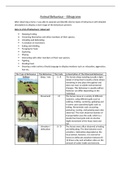
The Type of Behaviour The Behaviour The Code A description of The Observed Behaviour
Solitary Sleep / rest S/R The horses sleep standing (usually a light
sleep) or lying down (usually a deep sleep),
remaining in one place throughout and
does not react to subtle environmental
changes. This behaviour is usually solitary
however can differ depending on the
individual.
Movement M The horses move in a variety of different
manners, using different gaits such as
walking, trotting, cantering, galloping and
in some cases specialised gaits such as
tolting. Movements such as pawing,
posturing, rearing, and jumping were also
observed. The most observed manner of
transportation was the walk, which is a
steady four beat gate and can involve
slight movement of the head, back and
tail.
Urination / U/D The horses were often observed urinating
defecation and defecating. The time between each
urination / defecation depended on the
focal animal, however, it is normal for
horses to defecate anywhere between 8 –
12 times a day and urination relies on the
amount of water intake and exercise.
After observing a horse, I was able to separate and identify diverse types of behaviours with detailed
descriptions to display a clear image of the behaviours present.
Here is a list of behaviours I observed:
Sleeping/resting
Grooming themselves and other members of their species.
Urinating and defecating.
A variation of movement.
Eating and drinking.
Foraging for food.
Exploring.
Playing.
Interacting with other members of their own species.
Fighting.
Stealing food.
Showing a wide variety of body language to display emotions such as: relaxation, aggression,
fear etc.
The Type of Behaviour The Behaviour The Code A description of The Observed Behaviour
Solitary Sleep / rest S/R The horses sleep standing (usually a light
sleep) or lying down (usually a deep sleep),
remaining in one place throughout and
does not react to subtle environmental
changes. This behaviour is usually solitary
however can differ depending on the
individual.
Movement M The horses move in a variety of different
manners, using different gaits such as
walking, trotting, cantering, galloping and
in some cases specialised gaits such as
tolting. Movements such as pawing,
posturing, rearing, and jumping were also
observed. The most observed manner of
transportation was the walk, which is a
steady four beat gate and can involve
slight movement of the head, back and
tail.
Urination / U/D The horses were often observed urinating
defecation and defecating. The time between each
urination / defecation depended on the
focal animal, however, it is normal for
horses to defecate anywhere between 8 –
12 times a day and urination relies on the
amount of water intake and exercise.