Explanations of attachment :
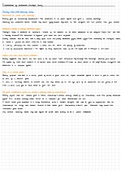
Bowlby 's theory
Bowlby ( 195811969) Mono tropic theory
Attachment is innate , like
imprinting
Bowlby gave an evolutionary explanation -
that attachment is an innate
system that
gives a survival
advantage .
Imprinting and attachment evolved because they ensure
young animals
stay close to their
caregivers and this
protects them
from
hazards .
Monotropic =
having a
primary attachment
figure
C. mono
'
Bowlby is described '
's theory as monotroptc because
of the emphasis on the Childs attachment to one
caregiver
= one and tropic
)
'
'
=
learning towards this attachment is
different from others ana more
important .
(
figure /
Bowlby believed time necessarily
that the more a baby spent with this
primary attachment mother
figure
not the
biological mother,
-
2
indeed
female) There main
or a the better . are reasons :
1- Law the better
of continuity = the more constant a arias care , the
quality of attachment .
2. Law accumulated separation the
effect of separation adds So , '
the is
therefore close
'
of =
every up .
safest door a zero .
Babies are born with social releaser s
Bowlby innate behaviours
Ceg smiling) that
' '
suggested that babies born with set cute attention
:
adults
are a
of encourage from
The
purpose of
these social release rs is to activate adult social interaction Cie :
make an adult attach to the baby) Bowlby recognised that
attachment is a
reciprocal system
.
There is a critical period
Bowlby proposed that there is a critical period of about 2
years when the infant attachment system is active .
In
fact , he viewed this
as more
of a sensitive
period
A child is
maximally sensitive at 6 months and this may extend up to the
age of 2 .
If an attachment has not
formed
in this
time , a child will
gwia it much harder to
form
one later .
The attachment relationships
first forms an internal
working model
of
Bowlby argued that the children
forms
a mental relationship C internal
morning model ) of the relationship with their
primary attachment
'
figure . This internal
working model serves as a
'
template for what relationships are like .
A Childs whose
first experience
is a
loving relationship with a reliable
caregiver will tend to
form
an
expectation that all
relationships are
loving and reliable . However , a child whose
first relationship involves poor treatment
may expect such
treatment others
from
.
this internal
morning model
may also effect the Childs later
ability to be a
parent themselves .
Bowlby 's theory
Bowlby ( 195811969) Mono tropic theory
Attachment is innate , like
imprinting
Bowlby gave an evolutionary explanation -
that attachment is an innate
system that
gives a survival
advantage .
Imprinting and attachment evolved because they ensure
young animals
stay close to their
caregivers and this
protects them
from
hazards .
Monotropic =
having a
primary attachment
figure
C. mono
'
Bowlby is described '
's theory as monotroptc because
of the emphasis on the Childs attachment to one
caregiver
= one and tropic
)
'
'
=
learning towards this attachment is
different from others ana more
important .
(
figure /
Bowlby believed time necessarily
that the more a baby spent with this
primary attachment mother
figure
not the
biological mother,
-
2
indeed
female) There main
or a the better . are reasons :
1- Law the better
of continuity = the more constant a arias care , the
quality of attachment .
2. Law accumulated separation the
effect of separation adds So , '
the is
therefore close
'
of =
every up .
safest door a zero .
Babies are born with social releaser s
Bowlby innate behaviours
Ceg smiling) that
' '
suggested that babies born with set cute attention
:
adults
are a
of encourage from
The
purpose of
these social release rs is to activate adult social interaction Cie :
make an adult attach to the baby) Bowlby recognised that
attachment is a
reciprocal system
.
There is a critical period
Bowlby proposed that there is a critical period of about 2
years when the infant attachment system is active .
In
fact , he viewed this
as more
of a sensitive
period
A child is
maximally sensitive at 6 months and this may extend up to the
age of 2 .
If an attachment has not
formed
in this
time , a child will
gwia it much harder to
form
one later .
The attachment relationships
first forms an internal
working model
of
Bowlby argued that the children
forms
a mental relationship C internal
morning model ) of the relationship with their
primary attachment
'
figure . This internal
working model serves as a
'
template for what relationships are like .
A Childs whose
first experience
is a
loving relationship with a reliable
caregiver will tend to
form
an
expectation that all
relationships are
loving and reliable . However , a child whose
first relationship involves poor treatment
may expect such
treatment others
from
.
this internal
morning model
may also effect the Childs later
ability to be a
parent themselves .