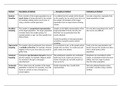
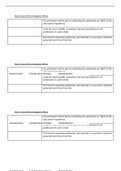
Method Description of Method ✔ Strengths of Method Limitations of Method
Random Every member of the target population has an It is unlikely that the sample will be biased, Can take a long time, especially if the
Sampling equal chance of being selected for the sample. as the sampler has no control over who is in target population is large.
For example, picking names out of a hat, or the sample. All members of the target
using a random number generator. population have an equal chance of being
chosen.
Stratified This sample is a proportional representation Sample can be highly representative of the It is very time consuming to do, and it
Sampling of the target population. The target population target population if done correctly and also can be very difficult.
is broken down into smaller groups, for therefore we can generalise from the
example gender or age. You then sample from results obtained.
those groups.
Avoids the problem of misrepresentation
sometimes caused by purely random
sampling.
Opportunity The sampler selects participants from whoever It is convenient to do, as the sample selects Tends to be less representative and
Sampling is available at the time. For example, whoever people who are there. It is really easy and biased, because the sample was taken
happens to be in your class when you want to quick. Likely to be ethical. from a small section of the
gather data. population.
Volunteer Participants put themselves forward to be put The participants would be very motivated. Volunteers are most likely to all be
Sampling into the sample. For example, Milgram asked Quite easy to do. It gives you access to a similar, as volunteers tend to be more
for volunteers through a newspaper variety of people you normally would not willing, and more eager to please
advertisement. have access to. than the wider population.
Systematic This is when every nth member of the target Avoids researcher bias. Usually fairly Not truly unbiased/random unless
Sampling population is selected. For example, every 5th representative. you select a number using a random
house on a street or every 3rd pupil on a method.
school register.
Random Every member of the target population has an It is unlikely that the sample will be biased, Can take a long time, especially if the
Sampling equal chance of being selected for the sample. as the sampler has no control over who is in target population is large.
For example, picking names out of a hat, or the sample. All members of the target
using a random number generator. population have an equal chance of being
chosen.
Stratified This sample is a proportional representation Sample can be highly representative of the It is very time consuming to do, and it
Sampling of the target population. The target population target population if done correctly and also can be very difficult.
is broken down into smaller groups, for therefore we can generalise from the
example gender or age. You then sample from results obtained.
those groups.
Avoids the problem of misrepresentation
sometimes caused by purely random
sampling.
Opportunity The sampler selects participants from whoever It is convenient to do, as the sample selects Tends to be less representative and
Sampling is available at the time. For example, whoever people who are there. It is really easy and biased, because the sample was taken
happens to be in your class when you want to quick. Likely to be ethical. from a small section of the
gather data. population.
Volunteer Participants put themselves forward to be put The participants would be very motivated. Volunteers are most likely to all be
Sampling into the sample. For example, Milgram asked Quite easy to do. It gives you access to a similar, as volunteers tend to be more
for volunteers through a newspaper variety of people you normally would not willing, and more eager to please
advertisement. have access to. than the wider population.
Systematic This is when every nth member of the target Avoids researcher bias. Usually fairly Not truly unbiased/random unless
Sampling population is selected. For example, every 5th representative. you select a number using a random
house on a street or every 3rd pupil on a method.
school register.