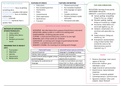
FIVE FUNCTIONS OF SPEECH FEATURES OF SPEECH FEATURES ON WRITING
* False starts * Planned and revised TEXT LEXIS FORMATION:
TRANSACTIONAL- focus on getting * Non-standard grammar * No immediate feedback
something done * Contractions * Only language can signal NEOLOGISM: forming of new worlds
REFERENTIAL- provides information * Fillers tone ARCHAISMS: Old words
INTERACTIONAL- focus on building * Context bound * Complex sentences OBSOLETE: a word that is totally gone
relationships * Dietic expressions * Distance between reader © Variant spelling- misspelling
PHATIC- small talk * Spontaneous and writer things for fun e.g., omigod
EXPRESSIVE- expresses how a * Transient * Permanent and static © Phonetic spelling- spelling
speaker feels things as it sounds e.g., tonight
© Acronomy- initial letters of a
METHODS OF WORD FORMATION word said together e.g., lol
METHODS OF IMITATING © Initialism- initial letters of a
SPOKEN PHONOLOGY: ACRONYMS- the initial letters form a group of words form a new word word but said separately e.g.,
1. Using capitals AFFIXATION- adding a prefix or a suffix to an existing word omg
2. Adding extra letters COMPOUNDING- combining separate words © Vowel omission: taking out
3. Emojis CLIPPING- a shortened word becomes a word in its own right vowels e.g., txt
4. Multiple punctuation BLENDING- parts of two words are combined
© Homophonic representation-
marks CONVERSION- an existing word changes its grammatical function
suing a letter/number that
COINING- a completely new word made up
sounds the same as the
GRAMMAR THAT IS USUALLY SEMANTIC CHANGE- the meaning of an existing word changes
letter/word you want to
LOST: represent e.g., 4
1. Punctuation PRESCRIPTIVISM DESCRIPTIVISM (DAVID CRYSTAL)
2. Adjectives Lazy and incorrect Language is changing/ evolving
3. Adverbs Isolates other groups Creative and innovative BLOGS
4. Determiners Unfair to those where English is their Improving literacy rates – more
5. Modal verbs second language opportunity to practice à Reverse chronology- most recent
Damaging the authenticity of In order to must letters you must appear at the top
language know that it is there- code switch à Democratic medium- gives
Only 10% of words are abbreviated individuals a voice
80% of people who text are adults à Single channel of communication
à Asynchronous- lapses between
responses
à Transient- constantly updated
à Contemporaneous- current to time
à Egocentric medium- often omit
subjects- about themself
* False starts * Planned and revised TEXT LEXIS FORMATION:
TRANSACTIONAL- focus on getting * Non-standard grammar * No immediate feedback
something done * Contractions * Only language can signal NEOLOGISM: forming of new worlds
REFERENTIAL- provides information * Fillers tone ARCHAISMS: Old words
INTERACTIONAL- focus on building * Context bound * Complex sentences OBSOLETE: a word that is totally gone
relationships * Dietic expressions * Distance between reader © Variant spelling- misspelling
PHATIC- small talk * Spontaneous and writer things for fun e.g., omigod
EXPRESSIVE- expresses how a * Transient * Permanent and static © Phonetic spelling- spelling
speaker feels things as it sounds e.g., tonight
© Acronomy- initial letters of a
METHODS OF WORD FORMATION word said together e.g., lol
METHODS OF IMITATING © Initialism- initial letters of a
SPOKEN PHONOLOGY: ACRONYMS- the initial letters form a group of words form a new word word but said separately e.g.,
1. Using capitals AFFIXATION- adding a prefix or a suffix to an existing word omg
2. Adding extra letters COMPOUNDING- combining separate words © Vowel omission: taking out
3. Emojis CLIPPING- a shortened word becomes a word in its own right vowels e.g., txt
4. Multiple punctuation BLENDING- parts of two words are combined
© Homophonic representation-
marks CONVERSION- an existing word changes its grammatical function
suing a letter/number that
COINING- a completely new word made up
sounds the same as the
GRAMMAR THAT IS USUALLY SEMANTIC CHANGE- the meaning of an existing word changes
letter/word you want to
LOST: represent e.g., 4
1. Punctuation PRESCRIPTIVISM DESCRIPTIVISM (DAVID CRYSTAL)
2. Adjectives Lazy and incorrect Language is changing/ evolving
3. Adverbs Isolates other groups Creative and innovative BLOGS
4. Determiners Unfair to those where English is their Improving literacy rates – more
5. Modal verbs second language opportunity to practice à Reverse chronology- most recent
Damaging the authenticity of In order to must letters you must appear at the top
language know that it is there- code switch à Democratic medium- gives
Only 10% of words are abbreviated individuals a voice
80% of people who text are adults à Single channel of communication
à Asynchronous- lapses between
responses
à Transient- constantly updated
à Contemporaneous- current to time
à Egocentric medium- often omit
subjects- about themself