animal
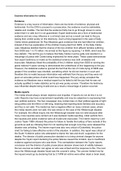
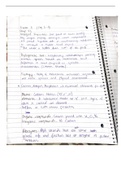
RESPONSES
Themammalian nervous system consists of the pus and ons
d
neurones and
mainly relayneurones Cns
I PNS
connecting sensory to motor b I 1
Brain spine
I
Motor sensory
The Dns ensures communication between
The receptor cars and effector somatic autonomic
fight orflight
The sensoryfibres connect the sensory receptors
to the ens
The motor division consists of the somatic and autonomicsystem
and connects cns to effector
The somatic system controls the voluntary actions such as movement
using skeletal muscles This consists of mainly meylenated
The autonomic system controls involuntary actions such as glands and
smooth muscle and consists of mostly unmylienated neurones
with at least two neuron.es connecting to the effector
The autonomic is further divided into the pathetic preparation for
sy
activity and the parasympathetic conservation of energy
, The Brain
Mmmmm
Ygg
intelligence conciousthought andfactual memory
The cerebrum has two cerebralhemispheres
T.FM
fIfijfgii
pituatry
Joinedwith neuronal tracks called corpuscallosum
and the outermost layer is called the cerebralcortex
The medulla oblongata controls involuntary processes in 3 main areas
the
vasomotor controls blood pressure
Respiratory lungs and respiration
Cardiac heart cardiac muscles
Pituatrythypothalymus
Temperature regulation The hypothalamus detects changes in the core body
temperature and responds changes from receptors in skin
Osmoregulation The hypothalamus responds to receptors in the blood that
detect changes in water potential in the blood
The hypothalamus consists of two lobes the posterior which releases
hormones such as ADH which helps regulate water levels in the body
The anterior lobes produces its own hormones which releaseinto the
blood due to releasing factorsproduced in the blood
cerebellum
The cerebellum is responsible for coordination and balance in thebody
this involves actions such as
Judgement of distance
walking and running
coordination for instruments
muscle tension
RESPONSES
Themammalian nervous system consists of the pus and ons
d
neurones and
mainly relayneurones Cns
I PNS
connecting sensory to motor b I 1
Brain spine
I
Motor sensory
The Dns ensures communication between
The receptor cars and effector somatic autonomic
fight orflight
The sensoryfibres connect the sensory receptors
to the ens
The motor division consists of the somatic and autonomicsystem
and connects cns to effector
The somatic system controls the voluntary actions such as movement
using skeletal muscles This consists of mainly meylenated
The autonomic system controls involuntary actions such as glands and
smooth muscle and consists of mostly unmylienated neurones
with at least two neuron.es connecting to the effector
The autonomic is further divided into the pathetic preparation for
sy
activity and the parasympathetic conservation of energy
, The Brain
Mmmmm
Ygg
intelligence conciousthought andfactual memory
The cerebrum has two cerebralhemispheres
T.FM
fIfijfgii
pituatry
Joinedwith neuronal tracks called corpuscallosum
and the outermost layer is called the cerebralcortex
The medulla oblongata controls involuntary processes in 3 main areas
the
vasomotor controls blood pressure
Respiratory lungs and respiration
Cardiac heart cardiac muscles
Pituatrythypothalymus
Temperature regulation The hypothalamus detects changes in the core body
temperature and responds changes from receptors in skin
Osmoregulation The hypothalamus responds to receptors in the blood that
detect changes in water potential in the blood
The hypothalamus consists of two lobes the posterior which releases
hormones such as ADH which helps regulate water levels in the body
The anterior lobes produces its own hormones which releaseinto the
blood due to releasing factorsproduced in the blood
cerebellum
The cerebellum is responsible for coordination and balance in thebody
this involves actions such as
Judgement of distance
walking and running
coordination for instruments
muscle tension