Memory
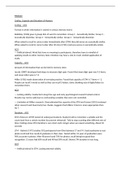
Coding, Capacity and Duration of Memory
Coding – AO1
Format in which information is stored in various memory stores
Baddeley (1966) gave 4 groups lists of word to remember. Group 1 – Acoustically Similar, Group 2 –
Acoustically dissimilar, Group 3 – Semantically similar, Group 4 – Semantically dissimilar
When asked to recall in correct order immediately after (STM) they did worse on acoustically similar.
When asked to recall in correct order after 20 mins (LTM) recall was worse on semantically similar.
AO3
--- Artificial stimuli. Word lists have no meaning to participants, therefore have to mindful of
applying results to other memory tests. Emotion may have a role in recall. Limited application of
study.
Capacity – AO1
Amount of information that can be held in memory store.
Jacobs (1887) developed technique to measure digit span. Found that mean digit span was 9.3 items,
and mean letter span is 7.3
Miller (1956) made observation of everyday practise. Found that capacity of STM is 7 items +/- 2.
People can recall 5 words as well as they can recall 5 letters, done chunking sets of digits/letters to
remember them.
AO3
--- Lacking validity. Conducted a long time ago and early psychological research lacked control.
Results may not be valid due to confounding variables that were not controlled.
--- Limitation of Millers research. Overestimated the capacity of the STM and Cowan (2001) reviewed
other research and found only four chunks. Suggests that Millers 5 items is more appropriate than
his 7.
Duration – AO1
STM, Peterson (1959) tested 24 undergrad students. Student told to remember a syllable and the
count back from a certain number (to prevent rehearsal). Told to stop counting after different sets of
time. Findings show STM duration is very short and is longer when we repeat something. About 18
seconds
LTM – Bahrick (1975) studies 392 participants from Ohio between 17 and 74. Used yearbooks to test
photo recall and free recall of graduates in their class. Tested within 15 years of graduation were
90% accurate in photos. After 48 years found 70% for photos, recall being less good than
recognition. 15 years had 60% recall and 48 had 30% recall. Shows LTM duration is very long.
AO3
--- Artificial stimuli in STM. Lacking external validity
, +++ High external validity in LTM. Real meaningful life memories studied. Very applicable results
with wide age range.
Multi-store model of memory
Sensory register
Stimulus from the environment passes into sensory register. Several sections. Iconic memory where
visual information is coded and echoic memory where sound is coded acoustically.
Duration is brief, less than half a second. Very high capacity. Very little of information in sensory
register passes into memory system. Unless attention is paid to the stimulus.
STM
Limited capacity store, on average 5-9 items. Information is coded acoustically and lasts 30 seconds
unless rehearsal takes place.
Maintenance rehearsal - repeating information. If rehearsal goes on for long enough information
goes into LTM
LTM
Permanent memory store for information that has been rehearsed for a long time. Unlimited
capacity. E.g. Bahrick et al’s study. Coded semantically (by meaning)
Must be retrieved to be recalled. Nothing is directly recalled from the LTM, must go to STM to be
spoken
AO3
+++ Supporting evidence. Studys show that STM and LTM are vastly different. Baddeley’s mix up
study of word lists. Supports the theory that STM and LTM are separate and independent.
--- More than one STM. MSM says STM is one thing, however evidence from amnesia shows this isn't
true. Shallice and Warrington (1970) studied KF, couldn’t recall digits if they were spoken to him, but
could if he read them himself, Proof for a nonverbal STM store. WMM includes these separate
elements.
--- Artificial materials. No recall of meaningless lists in real life. Memories have meaning so major
limitation, emotion could have effect on memory recall.
Types of long-term memory
Episodic memory
Recall of events (episodes) of our life, Record of daily events.
Coding, Capacity and Duration of Memory
Coding – AO1
Format in which information is stored in various memory stores
Baddeley (1966) gave 4 groups lists of word to remember. Group 1 – Acoustically Similar, Group 2 –
Acoustically dissimilar, Group 3 – Semantically similar, Group 4 – Semantically dissimilar
When asked to recall in correct order immediately after (STM) they did worse on acoustically similar.
When asked to recall in correct order after 20 mins (LTM) recall was worse on semantically similar.
AO3
--- Artificial stimuli. Word lists have no meaning to participants, therefore have to mindful of
applying results to other memory tests. Emotion may have a role in recall. Limited application of
study.
Capacity – AO1
Amount of information that can be held in memory store.
Jacobs (1887) developed technique to measure digit span. Found that mean digit span was 9.3 items,
and mean letter span is 7.3
Miller (1956) made observation of everyday practise. Found that capacity of STM is 7 items +/- 2.
People can recall 5 words as well as they can recall 5 letters, done chunking sets of digits/letters to
remember them.
AO3
--- Lacking validity. Conducted a long time ago and early psychological research lacked control.
Results may not be valid due to confounding variables that were not controlled.
--- Limitation of Millers research. Overestimated the capacity of the STM and Cowan (2001) reviewed
other research and found only four chunks. Suggests that Millers 5 items is more appropriate than
his 7.
Duration – AO1
STM, Peterson (1959) tested 24 undergrad students. Student told to remember a syllable and the
count back from a certain number (to prevent rehearsal). Told to stop counting after different sets of
time. Findings show STM duration is very short and is longer when we repeat something. About 18
seconds
LTM – Bahrick (1975) studies 392 participants from Ohio between 17 and 74. Used yearbooks to test
photo recall and free recall of graduates in their class. Tested within 15 years of graduation were
90% accurate in photos. After 48 years found 70% for photos, recall being less good than
recognition. 15 years had 60% recall and 48 had 30% recall. Shows LTM duration is very long.
AO3
--- Artificial stimuli in STM. Lacking external validity
, +++ High external validity in LTM. Real meaningful life memories studied. Very applicable results
with wide age range.
Multi-store model of memory
Sensory register
Stimulus from the environment passes into sensory register. Several sections. Iconic memory where
visual information is coded and echoic memory where sound is coded acoustically.
Duration is brief, less than half a second. Very high capacity. Very little of information in sensory
register passes into memory system. Unless attention is paid to the stimulus.
STM
Limited capacity store, on average 5-9 items. Information is coded acoustically and lasts 30 seconds
unless rehearsal takes place.
Maintenance rehearsal - repeating information. If rehearsal goes on for long enough information
goes into LTM
LTM
Permanent memory store for information that has been rehearsed for a long time. Unlimited
capacity. E.g. Bahrick et al’s study. Coded semantically (by meaning)
Must be retrieved to be recalled. Nothing is directly recalled from the LTM, must go to STM to be
spoken
AO3
+++ Supporting evidence. Studys show that STM and LTM are vastly different. Baddeley’s mix up
study of word lists. Supports the theory that STM and LTM are separate and independent.
--- More than one STM. MSM says STM is one thing, however evidence from amnesia shows this isn't
true. Shallice and Warrington (1970) studied KF, couldn’t recall digits if they were spoken to him, but
could if he read them himself, Proof for a nonverbal STM store. WMM includes these separate
elements.
--- Artificial materials. No recall of meaningless lists in real life. Memories have meaning so major
limitation, emotion could have effect on memory recall.
Types of long-term memory
Episodic memory
Recall of events (episodes) of our life, Record of daily events.