

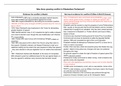
Was there growing conflict in Elizabethan Parliament?
Evidence for conflict (J.Neale) Not much evidence for conflict (G.Elton & M.A.R.Graves)
- Half of Elizabeth’s MPs had a university education/ trained lawyers- - Only 13 Parliaments were summoned during Elizabeth’s reign- each
more self-confident and argumentative against the Crown sat for a short period of time- average 10 weeks per session- she
- 1566: MPs angered Elizabeth by discussing the succession question mainly worked through her Privy Council and without the need for par-
- 1563-66: A Puritan party emerged (40 MPs) pressed issue for more re- liamentary legislation
ligious reform
- Elizabeth used her powers to stop the progress of some Parliamentary
- 1576: Peter Wentworth was imprisoned in the Tower for demanding bills- usually on the grounds that the bill had defects and her ministers
greater freedom of speech realised that it needed to be redrafted. Only few were vetoed because
- 1586: Norfolk election case- H of C asserted its right to settle a dispute they unwelcome to Elizabeth i.e. Puritan reforms and issue of Mary,
Queen of Scots
over result of election even though this was traditionally Lord Chancel-
- Commons was important training ground for future Privy Councillors
lor’s responsibility
- 1584: Puritan MPs were furious with Archbishop Whitgift’s attack on
- Commons did not press its demands to settle the disputed Norfolk
preachers election 1586 and conceded the right of the Lord Chancellor
- 1593: MPs discussed a bill to reform the Church using their claim to
- Elizabeth resisted all attempts by Parliament (and PC) to force her to
free speech. Elizabeth ordered Lord Keeper Pickering to read out a marry or name a successor
statement setting out the extent she was prepared to allow free speech
- Puritan Choir was less united and powerful group than Neale has sug-
- they were allowed to discuss legislation but not matters that extended gested - failed to bring about any changes and was not sustained
it throughout the reign
- 1601: Parliament clashed with Elizabeth on the issue of monopolies-
- No general support to obtain the right of freedom of speech given Eliz-
MPs refused to grant her additional taxes for the war against Spain un- abeth’s absolute position
less she agreed to withdraw many licences that had been issued
- Parliaments mostly summoned to obtain money- most occasions she
got the money she requested
- Most work was legislating uncontentious issues such as land disputes
or town charters
- 1/3 MPs were nominated by a lord, with no real election. Some of the
Queen’s chief ministers, such as William Cecil had a seat in the House
of Lords but not in the Commons
- Government influence in the Commons was achieved through the
presence of lesser ministers such as Sir Christopher Hatton
Evidence for conflict (J.Neale) Not much evidence for conflict (G.Elton & M.A.R.Graves)
- Half of Elizabeth’s MPs had a university education/ trained lawyers- - Only 13 Parliaments were summoned during Elizabeth’s reign- each
more self-confident and argumentative against the Crown sat for a short period of time- average 10 weeks per session- she
- 1566: MPs angered Elizabeth by discussing the succession question mainly worked through her Privy Council and without the need for par-
- 1563-66: A Puritan party emerged (40 MPs) pressed issue for more re- liamentary legislation
ligious reform
- Elizabeth used her powers to stop the progress of some Parliamentary
- 1576: Peter Wentworth was imprisoned in the Tower for demanding bills- usually on the grounds that the bill had defects and her ministers
greater freedom of speech realised that it needed to be redrafted. Only few were vetoed because
- 1586: Norfolk election case- H of C asserted its right to settle a dispute they unwelcome to Elizabeth i.e. Puritan reforms and issue of Mary,
Queen of Scots
over result of election even though this was traditionally Lord Chancel-
- Commons was important training ground for future Privy Councillors
lor’s responsibility
- 1584: Puritan MPs were furious with Archbishop Whitgift’s attack on
- Commons did not press its demands to settle the disputed Norfolk
preachers election 1586 and conceded the right of the Lord Chancellor
- 1593: MPs discussed a bill to reform the Church using their claim to
- Elizabeth resisted all attempts by Parliament (and PC) to force her to
free speech. Elizabeth ordered Lord Keeper Pickering to read out a marry or name a successor
statement setting out the extent she was prepared to allow free speech
- Puritan Choir was less united and powerful group than Neale has sug-
- they were allowed to discuss legislation but not matters that extended gested - failed to bring about any changes and was not sustained
it throughout the reign
- 1601: Parliament clashed with Elizabeth on the issue of monopolies-
- No general support to obtain the right of freedom of speech given Eliz-
MPs refused to grant her additional taxes for the war against Spain un- abeth’s absolute position
less she agreed to withdraw many licences that had been issued
- Parliaments mostly summoned to obtain money- most occasions she
got the money she requested
- Most work was legislating uncontentious issues such as land disputes
or town charters
- 1/3 MPs were nominated by a lord, with no real election. Some of the
Queen’s chief ministers, such as William Cecil had a seat in the House
of Lords but not in the Commons
- Government influence in the Commons was achieved through the
presence of lesser ministers such as Sir Christopher Hatton


