
ELECTRIC FIELDS
static electricity
An uncharged solid contains equal numbers of protons and electrons. When an uncharged perspex rod is rubbed with
:O
an uncharged dry cloth, electrons transfer from the rod to the cloth so the rod becomes positively charged and the cloth
becomes negatively charged.
Electrical conductors (eg metals) contain lots of free electrons. Therefore to charge a metal it must not be in contact with
the Earth otherwise any charge given to it would be neutralised by electrons transferring between the Earth and the
metal conductor.
Electrical insulators dont have free electrons. Some insulators such as perspex or polythene are easy to change since their
surface atoms easily lose and gain electrons
Fieldlines and patterns
0 Any two charged objects exert equal and opposite forces at each other.
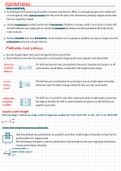
0 Electric field lines show the lines along witch a small positive charge would move it placed in that electric field.
opposite" The field lines become more concentrated at the points. A positive test charge in an off-
CHARGED centre position would follow a curved path to the negative point charge.
OBJECTS
A POINT
-
-
-
-
-
-
-
n
n
'
.
I .
The field lines are concentrated at the point object, but are at right angles to the plate
where they meet. The field is strongest where the lines are most concentrated.
= = .
NEAR A - - -
-
-
i '
I
PLATE
'
OPPOSITELY
+
-
= = I
- -
-
.
-
The field lines run parallel to each other, meeting the plates at right angles, except near
CHARGED
+ i =
the edges of the field. The field is uniform between the plates since the field lines are
- -
=
+ -
- - -
- -
+ == = I = -
PLATES +
=
parallel to each other.
-
- -
- -
-
Electric field strength
Electric field the force would experience due to the electric field in the electric field
strength =
per unit charge a positive test charge at that point .
IN)
f
(ne -
Y E =
TO (c)
Electric field strength between two parallel plates.
+
y -
Field lines between two parallel plates are parallel to each other, at right angles to the plates and go from the
+
>
-
+ -
>
+
positive plate to the negative plate.
-
+ 7 -
+ 7 -
+
✓
-
The field between the plates is uniform and the electric field strength has the same magnitude and direction
at every point between the plates.
pd between plates ( vs
←
=
I e- distance between plates Im)
Field strength
( Vm )
' '
NE
-
or


