

1930s
Nationalism
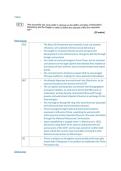
YES o The New Life Movement was created to root out western
influence, and cultivate Chinese social behaviours
o He sought to increase Chinese income and promote
development in the infrastructure, though he did this through
foreign connections
o He could not remove foreigners from China, but he removed
concessions in the legal system that allowed their residence
and abuse of their workers, and increased import and export
duties.
o His commitment to Confucius meant that he encouraged
Chinese traditions, making him more patriotic/nationalistic
BUT o He allowed Japanese encroachment into Manchuria, as he
was too focused on the actions of the CCP
o His corruption and business connection with the gangsters
and opium dealers, as well as his ties to the ESA were un-
nationalist, as they directly connected China with foreign
powers and welcomed imperial influence in exchange for his
financial gain.
o His marriage to Soong Mei-ling, who was American educated
and whose parents had connections abroad.
o He encouraged foreign trade and welcomed investors
overseas to influence China, exploiting its workers with
unfair pay and undue imperial influence. This was channeled
through the National Resources Commission.
o Japan established a ‘puppet-state’ in Manchuria in 1932,
allowed by Jiang Jieshi as he was too distracted with his
persecution of the CCP, and he was scared of conflict with
Japan whilst the country was vulnerable. During this time
Manchuria was known as Manchukyo.
SO o China’s reliance on foreigners economically and financially
meant that Chiang was in no position to implement the Three
Principles fully.
Democracy
, YES o The GMD wanted to follow Sun Yatsen's principles, one of
which was democracy
BUT o He frequently used friends and family in positions of power
within the GMD, which led to accusations of nepotism and
not following democratic beliefs
o He did not have popular mandate, as there were no elections
in China from 1928-36, and he had maintained his power
through military and espionage-based force.
o Jiang wanted to increase the number of supporters he had in
the government and the military, and he made his wife’s
brother the Finance Minister in 1928
o Military rule and his band of 'blue shirts' (modelled on the
Nazi SA and SS) resulted in an image of unity and strength
and also intimidation for those who might oppose the GMD,
causing a ‘terror-state’
o He did not delegate duties well, which had a domino effect
on the efficacy of government and social welfare
SO o He prioritised his own gain over democracy and upholding
Sun Yatsen’s principles.
People’s Livelihood
YES o Numbers of people in education increased, and the number
of schools increased, showing that the GMD was attempting
to improve people's livelihood
o The upper and middle classes liked him as he was
committed to confucian values, and encouraged traditional
practice
o The GMD had declared its intention to end landlord control of
peasants, extend property rights to the peasants, and
guarantee fair prices and rents
BUT o The focus of new schools was in the main cities
(Shanghai/Nanjing/Beijing) suggesting that there wasn't
much focus on the improvement of the livelihood of the lower
classes - GMD always prioritised middle and upper classes
o There was a lack of interest in rural reforms and so little was
done to improve the lives of peasants and little was done to
improve the conditions and welfare of urban workers,
highlighting the poverty across China
o Introduction of the Blue Shirts - a secret police having the
power to arrest and torture people without trial to get
information
, o His focus and party allegiance with the middle classes and
China’s trade relationship meant that there was a lack of
interest in rural reform, and the peasant population suffered
o His inattention to the grassroots meant that rural warlords
were able to oppress large peasant communities, and during
the 1920-30s China’s military was forced to go to war with
these warlords.
SO o His rule overall cultured a ‘terror-state’ in China, under the
oversight of the secret police and Jiang’s own paranoia and
fear of communism.
o The GMD had declared its intention to end landlord control of
peasants, extend property rights to the peasants, and
guarantee fair prices and rents, but as it held power over only
1/3 of china and 2/3 of its population at the heigh of power, it
could do little to enforce true change in the provinces.
Conclusion
• Round up previous points:
• Therefore:
• China’s reliance on foreigners economically and financially meant that
Chiang was in no position to implement the Three Principles fully.
, 2. THEME 1: MILITARY STRENGTH
YES • despite criticism that the government abandoned the people to the
Japanese, this tactic arguable led to Japanese forces being
overstretched in such a large land mass as China
• Conscription brought more numbers to the Chinese army, this
enhanced military strength undoubtedly
BUT • However conscripts were poorly trained, inadequately fed, lacked
medical backup and basic equipment. Therefore their overall
effectiveness and value to the army was not of great significance.
• The NRA officers frequently treated them poorly and diverted funds
form the soldiers pay into their own accounts. American accounts
recall nra soldiers being roped together to prevent desertion
• NRA desertions and the Japanese failings from early 1945, the
CCP's military presence grew, thus reducing the reliance on the
GMD and shifting domestic support towards the CCP. Numbers
grew from about 7000 in 1936 to 800,000 in 1945 for the PLA.
• Even the generals of the nra began to question Chiangs leadership.
Chiang valued loyalty over ability and withheld supplies of
commanders that he did not trust, he issued contradictory orders
resulting in a lack of coordination amongst the GMD attacks and
movements
SO
THEME 2: POLITICAL LEGITIMACY + SUPPORT
YES • The GMD had the majority of support and numbers in their military
force, and he controlled most of the provinces in China in
comparison to the CCP.
BUT • Chiangs focus on retreating from the Japanese instead of
counterattacking lost him much respect among the Chinese people,
thus reducing his prestige a s a political figure. His flee form the
west also had an impact on his image as it resulted in criticism that
the government abandoned the people again as well instead of
counterattacking.
• Chiangs focus on surrounding the CCP at Yan’an allowed him to be
portrayed as a coward by his enemies- someone without
nationalistic spirit. The NRAs treatment of conscripts further
alienated the Chinese people.
Nationalism
YES o The New Life Movement was created to root out western
influence, and cultivate Chinese social behaviours
o He sought to increase Chinese income and promote
development in the infrastructure, though he did this through
foreign connections
o He could not remove foreigners from China, but he removed
concessions in the legal system that allowed their residence
and abuse of their workers, and increased import and export
duties.
o His commitment to Confucius meant that he encouraged
Chinese traditions, making him more patriotic/nationalistic
BUT o He allowed Japanese encroachment into Manchuria, as he
was too focused on the actions of the CCP
o His corruption and business connection with the gangsters
and opium dealers, as well as his ties to the ESA were un-
nationalist, as they directly connected China with foreign
powers and welcomed imperial influence in exchange for his
financial gain.
o His marriage to Soong Mei-ling, who was American educated
and whose parents had connections abroad.
o He encouraged foreign trade and welcomed investors
overseas to influence China, exploiting its workers with
unfair pay and undue imperial influence. This was channeled
through the National Resources Commission.
o Japan established a ‘puppet-state’ in Manchuria in 1932,
allowed by Jiang Jieshi as he was too distracted with his
persecution of the CCP, and he was scared of conflict with
Japan whilst the country was vulnerable. During this time
Manchuria was known as Manchukyo.
SO o China’s reliance on foreigners economically and financially
meant that Chiang was in no position to implement the Three
Principles fully.
Democracy
, YES o The GMD wanted to follow Sun Yatsen's principles, one of
which was democracy
BUT o He frequently used friends and family in positions of power
within the GMD, which led to accusations of nepotism and
not following democratic beliefs
o He did not have popular mandate, as there were no elections
in China from 1928-36, and he had maintained his power
through military and espionage-based force.
o Jiang wanted to increase the number of supporters he had in
the government and the military, and he made his wife’s
brother the Finance Minister in 1928
o Military rule and his band of 'blue shirts' (modelled on the
Nazi SA and SS) resulted in an image of unity and strength
and also intimidation for those who might oppose the GMD,
causing a ‘terror-state’
o He did not delegate duties well, which had a domino effect
on the efficacy of government and social welfare
SO o He prioritised his own gain over democracy and upholding
Sun Yatsen’s principles.
People’s Livelihood
YES o Numbers of people in education increased, and the number
of schools increased, showing that the GMD was attempting
to improve people's livelihood
o The upper and middle classes liked him as he was
committed to confucian values, and encouraged traditional
practice
o The GMD had declared its intention to end landlord control of
peasants, extend property rights to the peasants, and
guarantee fair prices and rents
BUT o The focus of new schools was in the main cities
(Shanghai/Nanjing/Beijing) suggesting that there wasn't
much focus on the improvement of the livelihood of the lower
classes - GMD always prioritised middle and upper classes
o There was a lack of interest in rural reforms and so little was
done to improve the lives of peasants and little was done to
improve the conditions and welfare of urban workers,
highlighting the poverty across China
o Introduction of the Blue Shirts - a secret police having the
power to arrest and torture people without trial to get
information
, o His focus and party allegiance with the middle classes and
China’s trade relationship meant that there was a lack of
interest in rural reform, and the peasant population suffered
o His inattention to the grassroots meant that rural warlords
were able to oppress large peasant communities, and during
the 1920-30s China’s military was forced to go to war with
these warlords.
SO o His rule overall cultured a ‘terror-state’ in China, under the
oversight of the secret police and Jiang’s own paranoia and
fear of communism.
o The GMD had declared its intention to end landlord control of
peasants, extend property rights to the peasants, and
guarantee fair prices and rents, but as it held power over only
1/3 of china and 2/3 of its population at the heigh of power, it
could do little to enforce true change in the provinces.
Conclusion
• Round up previous points:
• Therefore:
• China’s reliance on foreigners economically and financially meant that
Chiang was in no position to implement the Three Principles fully.
, 2. THEME 1: MILITARY STRENGTH
YES • despite criticism that the government abandoned the people to the
Japanese, this tactic arguable led to Japanese forces being
overstretched in such a large land mass as China
• Conscription brought more numbers to the Chinese army, this
enhanced military strength undoubtedly
BUT • However conscripts were poorly trained, inadequately fed, lacked
medical backup and basic equipment. Therefore their overall
effectiveness and value to the army was not of great significance.
• The NRA officers frequently treated them poorly and diverted funds
form the soldiers pay into their own accounts. American accounts
recall nra soldiers being roped together to prevent desertion
• NRA desertions and the Japanese failings from early 1945, the
CCP's military presence grew, thus reducing the reliance on the
GMD and shifting domestic support towards the CCP. Numbers
grew from about 7000 in 1936 to 800,000 in 1945 for the PLA.
• Even the generals of the nra began to question Chiangs leadership.
Chiang valued loyalty over ability and withheld supplies of
commanders that he did not trust, he issued contradictory orders
resulting in a lack of coordination amongst the GMD attacks and
movements
SO
THEME 2: POLITICAL LEGITIMACY + SUPPORT
YES • The GMD had the majority of support and numbers in their military
force, and he controlled most of the provinces in China in
comparison to the CCP.
BUT • Chiangs focus on retreating from the Japanese instead of
counterattacking lost him much respect among the Chinese people,
thus reducing his prestige a s a political figure. His flee form the
west also had an impact on his image as it resulted in criticism that
the government abandoned the people again as well instead of
counterattacking.
• Chiangs focus on surrounding the CCP at Yan’an allowed him to be
portrayed as a coward by his enemies- someone without
nationalistic spirit. The NRAs treatment of conscripts further
alienated the Chinese people.


