

ATP Questions 1
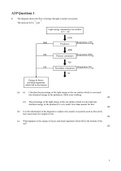
1. The diagram shows the flow of energy through a marine ecosystem.
–2 –1
The units are kJ m year .
Light energy measured at sea surface
12.5 × 10 5
6250
1000 Respiration 1250
Producers
4000
500 Respiration 2800
Primary consumers
700
100 Respiration 550
Secondary consumers
50
Energy in faeces
and dead organisms
which fall to the bottom
(a) (i) Calculate the percentage of the light energy at the sea surface which is converted
into chemical energy in the producers. Show your working.
(2)
(ii) The percentage of the light energy at the sea surface which is converted into
chemical energy in the producers is very small. Give two reasons for this.
(2)
(b) Use the information in the diagram to explain why marine ecosystems such as this rarely
have more than five trophic levels.
(2)
(c) What happens to the energy in faeces and dead organisms which fall to the bottom of the
sea?
(2)
1
,(d) Light energy is important in the light-dependent reaction of photosynthesis. The energy
changes which take place in the light-dependent reaction are shown in the diagram.
Chain of
electron
carriers
Chain of
electron
carriers
Energy Reduced
Level NADP NADP
ATP
Light
ADP + Pi
Chlorophyll
Light
Chlorophyll
(i) Describe what happens to the chlorophyll when it is struck by light.
(2)
(ii) The weedkiller DCMU blocks the flow of electrons along the chains of electron
carriers. Describe and explain the effect this will have on the production of triose
phosphate in the light-independent reaction.
(3)
(e) Living organisms release energy from organic molecules such as glucose during
respiration.
Much of this energy is used to produce ATP.
Explain why ATP is better than glucose as an immediate energy source for cell
metabolism.
(2)
(f) The production of ATP is said to be coupled to the transport of electrons along the carrier
chain. Normally, electrons are only passed along the carrier chain if ADP is being
converted to ATP at the same time. When the amount of ADP in a cell is low, electrons do
not flow from reduced coenzyme to oxygen.
(i) Suggest how the rate of respiration is linked to the needs of the cell.
(3)
(ii) DNP is a substance which allows electron transport to take place without the
production of ATP. When DNP is given to rats, their body temperatures rise.
Explain why.
(2)
(Total 20 marks)
2
,2. The diagram gives an outline of the process of aerobic respiration.
Glucose
2 ATP
Stage C
Stage A 2 reduced NAD 6 ATP
4 ATP
2 Pyruvate
2 CO 2
2 reduced NAD 6 ATP
2 Acetylcoenzyme A
2 Coenzyme A
6 reduced NAD 18 ATP
Stage B 2 reduced NAD 4 ATP
2 ATP
4 CO 2
H + ions and electrons
(a) (i) Complete the table by naming stages A and B and giving the location of each stage
in a cell such as a liver cell.
Stage Name of stage Location in cell
A
B
(2)
(ii) How many carbon atoms are there in each pyruvate ion? ...............................(1)
3
, (iii) What happens to the H+ ions and electrons released in stage C?
..........................................................................................................................
..........................................................................................................................
..........................................................................................................................
(2)
(b) In aerobic conditions, ATP is produced by substrate-level phosphorylation and by
oxidative phosphorylation. Use information in the diagram to find the net yield of
molecules of ATP per molecule of glucose by
(i) substrate-level phosphorylation; .....................................................................
(ii) oxidative phosphorylation. ..............................................................................
(2)
(c) (i) One mole of glucose releases 2880 kJ of energy when burned completely in
oxygen. Hydrolysis of one mole of ATP to ADP and phosphate releases 31 kJ of
energy. Use your answers from part (b) to calculate the percentage efficiency of
energy transfer from glucose to ATP by aerobic respiration. Show your working.
Percentage efficiency = .......................................%
(2)
(ii) What happens to the energy which is not transferred to ATP?
..........................................................................................................................
(1)
(iii) Explain why ATP is better than glucose as an immediate energy source for cell
metabolism.
..........................................................................................................................
..........................................................................................................................
..........................................................................................................................
..........................................................................................................................
(2)
4
1. The diagram shows the flow of energy through a marine ecosystem.
–2 –1
The units are kJ m year .
Light energy measured at sea surface
12.5 × 10 5
6250
1000 Respiration 1250
Producers
4000
500 Respiration 2800
Primary consumers
700
100 Respiration 550
Secondary consumers
50
Energy in faeces
and dead organisms
which fall to the bottom
(a) (i) Calculate the percentage of the light energy at the sea surface which is converted
into chemical energy in the producers. Show your working.
(2)
(ii) The percentage of the light energy at the sea surface which is converted into
chemical energy in the producers is very small. Give two reasons for this.
(2)
(b) Use the information in the diagram to explain why marine ecosystems such as this rarely
have more than five trophic levels.
(2)
(c) What happens to the energy in faeces and dead organisms which fall to the bottom of the
sea?
(2)
1
,(d) Light energy is important in the light-dependent reaction of photosynthesis. The energy
changes which take place in the light-dependent reaction are shown in the diagram.
Chain of
electron
carriers
Chain of
electron
carriers
Energy Reduced
Level NADP NADP
ATP
Light
ADP + Pi
Chlorophyll
Light
Chlorophyll
(i) Describe what happens to the chlorophyll when it is struck by light.
(2)
(ii) The weedkiller DCMU blocks the flow of electrons along the chains of electron
carriers. Describe and explain the effect this will have on the production of triose
phosphate in the light-independent reaction.
(3)
(e) Living organisms release energy from organic molecules such as glucose during
respiration.
Much of this energy is used to produce ATP.
Explain why ATP is better than glucose as an immediate energy source for cell
metabolism.
(2)
(f) The production of ATP is said to be coupled to the transport of electrons along the carrier
chain. Normally, electrons are only passed along the carrier chain if ADP is being
converted to ATP at the same time. When the amount of ADP in a cell is low, electrons do
not flow from reduced coenzyme to oxygen.
(i) Suggest how the rate of respiration is linked to the needs of the cell.
(3)
(ii) DNP is a substance which allows electron transport to take place without the
production of ATP. When DNP is given to rats, their body temperatures rise.
Explain why.
(2)
(Total 20 marks)
2
,2. The diagram gives an outline of the process of aerobic respiration.
Glucose
2 ATP
Stage C
Stage A 2 reduced NAD 6 ATP
4 ATP
2 Pyruvate
2 CO 2
2 reduced NAD 6 ATP
2 Acetylcoenzyme A
2 Coenzyme A
6 reduced NAD 18 ATP
Stage B 2 reduced NAD 4 ATP
2 ATP
4 CO 2
H + ions and electrons
(a) (i) Complete the table by naming stages A and B and giving the location of each stage
in a cell such as a liver cell.
Stage Name of stage Location in cell
A
B
(2)
(ii) How many carbon atoms are there in each pyruvate ion? ...............................(1)
3
, (iii) What happens to the H+ ions and electrons released in stage C?
..........................................................................................................................
..........................................................................................................................
..........................................................................................................................
(2)
(b) In aerobic conditions, ATP is produced by substrate-level phosphorylation and by
oxidative phosphorylation. Use information in the diagram to find the net yield of
molecules of ATP per molecule of glucose by
(i) substrate-level phosphorylation; .....................................................................
(ii) oxidative phosphorylation. ..............................................................................
(2)
(c) (i) One mole of glucose releases 2880 kJ of energy when burned completely in
oxygen. Hydrolysis of one mole of ATP to ADP and phosphate releases 31 kJ of
energy. Use your answers from part (b) to calculate the percentage efficiency of
energy transfer from glucose to ATP by aerobic respiration. Show your working.
Percentage efficiency = .......................................%
(2)
(ii) What happens to the energy which is not transferred to ATP?
..........................................................................................................................
(1)
(iii) Explain why ATP is better than glucose as an immediate energy source for cell
metabolism.
..........................................................................................................................
..........................................................................................................................
..........................................................................................................................
..........................................................................................................................
(2)
4


