

1. Moose are large herbivorous animals.
(a) In a study of one population of moose, 72 animals were trapped and marked with ear tags.
They were then released. One month later, fieldworkers examined 120 moose and found
that 14 of these had ear tags.
Use these figures to calculate the size of the moose population. Show your working.
Answer:............................
(2)
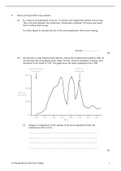
(b) Isle Royale is a large island in Lake Superior. Moose first colonised this island in 1900. At
the time they had no predators on the island. Wolves, which are predators of moose, were
introduced to the island in 1950. The graph shows the moose population from 1900.
I s la n d c o lo n is e d W o lv e s
b y m oose in tro d u c e d
3000
2000
M oose
p o p u la tio n
1000
0
1900 1910 1920 1930 1940 1950 1960 1970
D a te
(i) Suggest an explanation for the changes in the moose population before the
introduction of the wolves.
...........................................................................................................................
...........................................................................................................................
...........................................................................................................................
...........................................................................................................................
(2)
Sir George Monoux Sixth Form College 1
, (ii) Describe the effect of introducing wolves on the moose population.
...........................................................................................................................
...........................................................................................................................
(1)
(Total 5 marks)
2. Spruce trees produce very large numbers of seeds. Most of these seeds die immediately,
releasing nitrogen compounds into the soil. Swedish scientists investigated the effects of this on
the growth of pine seedlings, in areas where the forest floor was free of moss plants and in areas
where moss plants grew.
(a) Describe the part played by soil bacteria in making the nitrogen in compounds in the dead
spruce seeds available to pine seedlings.
.....................................................................................................................................
.....................................................................................................................................
.....................................................................................................................................
.....................................................................................................................................
.....................................................................................................................................
.....................................................................................................................................
(3)
(b) In areas where the forest floor was free of moss plants, the pine seedlings grew better in
plots with added spruce seeds than they did in control plots. In areas in which moss plants
grew, the difference in growth of the pine seedlings in plots with added spruce seeds was
not statistically significant from those in the control plots. Suggest an explanation for the
effect of the moss plants on the growth of the pine seedlings.
.....................................................................................................................................
.....................................................................................................................................
.....................................................................................................................................
.....................................................................................................................................
(2)
(Total 5 marks)
Sir George Monoux Sixth Form College 2
,3. The sand shrimp, Crangon septemspinosa, is a member of the community found in a sea-shore
ecosystem.
(a) Give the meaning of:
(i) community; .......................................................................................................
...........................................................................................................................
(ii) ecosystem. ........................................................................................................
...........................................................................................................................
(2)
(b) The contours on the graph represent 0%, 50% and 100% survival for C. septemspinosa in
aerated water over a range of temperatures and salinities (salt content of sea water).
30
5 0 % s u rv iv a l
25 0%
s u rv iv a l
T e m p e ra tu re 20
/ °C 1 0 0 % s u rv iv a l
15
10
5
0 5 10 15 20 25 30 35 40 45
P e rc e n ta g e s a lin ity
(i) What are the upper and lower limits of temperature for 100% survival of
C. septemspinosa?
...........................................................................................................................
(1)
(ii) Other than the factors shown in the graph, name one biotic and one abiotic factor,
which might also limit the survival of C. septemspinosa.
Biotic factor ......................................................................................................
Abiotic factor ....................................................................................................
(2)
(Total 5 marks)
Sir George Monoux Sixth Form College 3
, 4. The diagram shows some of the feeding relationships in a food web for a forest.
S p a rro w h a w k Fox
G ra ss H edgehog
sn ak e
B lu e tit F ro g
G ro u n d S p id e r
b e e tle
G rey
S lu g
sq u irre l
W in te r m o th , W ood W o o d b o rin g
c a te r p illa rs E a rth w o rm
m ouse b e e tle
L eaves F ru its W ood
and
seed s
(a) Name an organism that is both a primary and a secondary consumer in this food web.
....................................................................................................................................
(1)
(b) Name a group of organisms, not shown in the web, which is needed to recycle nutrients.
....................................................................................................................................
(1)
(c) Explain how bare ground may, over a long period of time, become forest.
....................................................................................................................................
....................................................................................................................................
....................................................................................................................................
....................................................................................................................................
(3)
Sir George Monoux Sixth Form College 4
(a) In a study of one population of moose, 72 animals were trapped and marked with ear tags.
They were then released. One month later, fieldworkers examined 120 moose and found
that 14 of these had ear tags.
Use these figures to calculate the size of the moose population. Show your working.
Answer:............................
(2)
(b) Isle Royale is a large island in Lake Superior. Moose first colonised this island in 1900. At
the time they had no predators on the island. Wolves, which are predators of moose, were
introduced to the island in 1950. The graph shows the moose population from 1900.
I s la n d c o lo n is e d W o lv e s
b y m oose in tro d u c e d
3000
2000
M oose
p o p u la tio n
1000
0
1900 1910 1920 1930 1940 1950 1960 1970
D a te
(i) Suggest an explanation for the changes in the moose population before the
introduction of the wolves.
...........................................................................................................................
...........................................................................................................................
...........................................................................................................................
...........................................................................................................................
(2)
Sir George Monoux Sixth Form College 1
, (ii) Describe the effect of introducing wolves on the moose population.
...........................................................................................................................
...........................................................................................................................
(1)
(Total 5 marks)
2. Spruce trees produce very large numbers of seeds. Most of these seeds die immediately,
releasing nitrogen compounds into the soil. Swedish scientists investigated the effects of this on
the growth of pine seedlings, in areas where the forest floor was free of moss plants and in areas
where moss plants grew.
(a) Describe the part played by soil bacteria in making the nitrogen in compounds in the dead
spruce seeds available to pine seedlings.
.....................................................................................................................................
.....................................................................................................................................
.....................................................................................................................................
.....................................................................................................................................
.....................................................................................................................................
.....................................................................................................................................
(3)
(b) In areas where the forest floor was free of moss plants, the pine seedlings grew better in
plots with added spruce seeds than they did in control plots. In areas in which moss plants
grew, the difference in growth of the pine seedlings in plots with added spruce seeds was
not statistically significant from those in the control plots. Suggest an explanation for the
effect of the moss plants on the growth of the pine seedlings.
.....................................................................................................................................
.....................................................................................................................................
.....................................................................................................................................
.....................................................................................................................................
(2)
(Total 5 marks)
Sir George Monoux Sixth Form College 2
,3. The sand shrimp, Crangon septemspinosa, is a member of the community found in a sea-shore
ecosystem.
(a) Give the meaning of:
(i) community; .......................................................................................................
...........................................................................................................................
(ii) ecosystem. ........................................................................................................
...........................................................................................................................
(2)
(b) The contours on the graph represent 0%, 50% and 100% survival for C. septemspinosa in
aerated water over a range of temperatures and salinities (salt content of sea water).
30
5 0 % s u rv iv a l
25 0%
s u rv iv a l
T e m p e ra tu re 20
/ °C 1 0 0 % s u rv iv a l
15
10
5
0 5 10 15 20 25 30 35 40 45
P e rc e n ta g e s a lin ity
(i) What are the upper and lower limits of temperature for 100% survival of
C. septemspinosa?
...........................................................................................................................
(1)
(ii) Other than the factors shown in the graph, name one biotic and one abiotic factor,
which might also limit the survival of C. septemspinosa.
Biotic factor ......................................................................................................
Abiotic factor ....................................................................................................
(2)
(Total 5 marks)
Sir George Monoux Sixth Form College 3
, 4. The diagram shows some of the feeding relationships in a food web for a forest.
S p a rro w h a w k Fox
G ra ss H edgehog
sn ak e
B lu e tit F ro g
G ro u n d S p id e r
b e e tle
G rey
S lu g
sq u irre l
W in te r m o th , W ood W o o d b o rin g
c a te r p illa rs E a rth w o rm
m ouse b e e tle
L eaves F ru its W ood
and
seed s
(a) Name an organism that is both a primary and a secondary consumer in this food web.
....................................................................................................................................
(1)
(b) Name a group of organisms, not shown in the web, which is needed to recycle nutrients.
....................................................................................................................................
(1)
(c) Explain how bare ground may, over a long period of time, become forest.
....................................................................................................................................
....................................................................................................................................
....................................................................................................................................
....................................................................................................................................
(3)
Sir George Monoux Sixth Form College 4


