
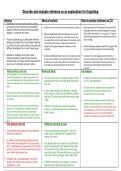
Describe and evaluate inference as an explanation for forgetting
Inference Effects of similarity Effect of proactive interference on LTM
Forgetting because one memory blocks another,
causing one or both memories to be distorted or Inference is worse in both cases when the memories are similar. Keppel and underwood- Participants were presented with
forgotten. Memories not gone just not accessible, meaningless three‐letter consonant trigrams (for example,
happens if 2 memories are similar. THG) at different intervals (3, 6, 9 seconds, etc.) To prevent
McGeoch and Mcdonald studied R.I. Participants were given a
list of ten adjectives to learn (list a) with 100% accuracy. Once rehearsal the participants had to count backwards in threes
Proactive- forgetting occurs when older memories these adjectives were learnt, participants were then given one of before recalling.
already stores disrupt the recall of newer memories. six other lists (list B) to learn, which varied in terms of its
E.g. Teacher learnt so many names in the past have similarity to the original. (Synonyms, antonyms or words Results: Participants typically remembered the trigrams that
difficulty remembering her current classes names. unrelated) were presented first, irrespective of the interval length.
Retroactive- Forgetting occurs when newer McGeoch and McDonald found recall was worse when lists A and Conclusion: The results suggest proactive interference
memories disrupt the recall of older memories B were closest in similarity. This supports the idea of retroactive occurred, as memory for the earlier consonants (which had
already stored. E.g. teacher learned new names this interference because the more similar the new material is to the transferred to LTM) interfered with the memory for new
year she can’t remember last year’s names. previously learnt material, the greater the interference. consonants, due to the similarity of the information
presented.
Baddley and Hitch- real life study Burke and Skrull Lab evidence
Asked rugby players to try and remember the names of the
teams they had played so far in that season week by week. They presented a series of magazine adverts to their Evidence for inference comes from lab experiments
The sample comprised players who had played every match participants who had to recall the detail of what they so it is a valid explanation.
in the season and players who had missed some games due to had seen.
injury.
This was shown in research done by underwood
In some cases they had more difficulty in recalling and postman and McGeoch and Mcdonald who
They found that the players who had played the most games earlier adverts, in others they had difficulty recalling investigated inference in a lab setting.
forgot more games than those who had played fewer games later ones. The effect was greater when adverts were
due to injury. similar. Therefore, this is strength as extraneous variables can be
controlled and they experiments can be replicated so
Therefore this shows that this was the result of retroactive Therefore, this supports the idea of competitive reliability can be tested. However artificial materials, which
inference, as the learning of new information (new team inference, as when both adverts were similar it was were meaningless, were used so does not represent every
names) interfered with the memory of old information harder to recall. day situation when we have to remember things that
(earlier team names) and that recall doesn’t depend on how actually have meaning. Inference may be less likely here.
long ago the matches took place but how many matches took
place.
Time between learning Inference overcome by cues
Lab experiments are designed so the possibility of Tulving and psotka gave participants 5 lists of 24
inference is maximized. words, each list organized into 6 categories (hut,
cottage, tent, hotel).
For example, the time periods between learning
lists of words and recalling them. They are usually The categories were not explicit but presumed to be
short, a participant may have to learn a list of words obvious to participants. They found recall was about
and then a second one 20 mins later and then recall 70% for the first word list but fell as p’s were given
one of them a few minutes later. more lists to learn. They were then given a cued recall
test and found that recall again rose to about 70%.
Therefore, this is unrepresentative of a real life
situation and inference may be lower in real life Therefore, this shows us that inference – proactive
compared to in a lab. does exist and it may be overcome with cues.
Inference Effects of similarity Effect of proactive interference on LTM
Forgetting because one memory blocks another,
causing one or both memories to be distorted or Inference is worse in both cases when the memories are similar. Keppel and underwood- Participants were presented with
forgotten. Memories not gone just not accessible, meaningless three‐letter consonant trigrams (for example,
happens if 2 memories are similar. THG) at different intervals (3, 6, 9 seconds, etc.) To prevent
McGeoch and Mcdonald studied R.I. Participants were given a
list of ten adjectives to learn (list a) with 100% accuracy. Once rehearsal the participants had to count backwards in threes
Proactive- forgetting occurs when older memories these adjectives were learnt, participants were then given one of before recalling.
already stores disrupt the recall of newer memories. six other lists (list B) to learn, which varied in terms of its
E.g. Teacher learnt so many names in the past have similarity to the original. (Synonyms, antonyms or words Results: Participants typically remembered the trigrams that
difficulty remembering her current classes names. unrelated) were presented first, irrespective of the interval length.
Retroactive- Forgetting occurs when newer McGeoch and McDonald found recall was worse when lists A and Conclusion: The results suggest proactive interference
memories disrupt the recall of older memories B were closest in similarity. This supports the idea of retroactive occurred, as memory for the earlier consonants (which had
already stored. E.g. teacher learned new names this interference because the more similar the new material is to the transferred to LTM) interfered with the memory for new
year she can’t remember last year’s names. previously learnt material, the greater the interference. consonants, due to the similarity of the information
presented.
Baddley and Hitch- real life study Burke and Skrull Lab evidence
Asked rugby players to try and remember the names of the
teams they had played so far in that season week by week. They presented a series of magazine adverts to their Evidence for inference comes from lab experiments
The sample comprised players who had played every match participants who had to recall the detail of what they so it is a valid explanation.
in the season and players who had missed some games due to had seen.
injury.
This was shown in research done by underwood
In some cases they had more difficulty in recalling and postman and McGeoch and Mcdonald who
They found that the players who had played the most games earlier adverts, in others they had difficulty recalling investigated inference in a lab setting.
forgot more games than those who had played fewer games later ones. The effect was greater when adverts were
due to injury. similar. Therefore, this is strength as extraneous variables can be
controlled and they experiments can be replicated so
Therefore this shows that this was the result of retroactive Therefore, this supports the idea of competitive reliability can be tested. However artificial materials, which
inference, as the learning of new information (new team inference, as when both adverts were similar it was were meaningless, were used so does not represent every
names) interfered with the memory of old information harder to recall. day situation when we have to remember things that
(earlier team names) and that recall doesn’t depend on how actually have meaning. Inference may be less likely here.
long ago the matches took place but how many matches took
place.
Time between learning Inference overcome by cues
Lab experiments are designed so the possibility of Tulving and psotka gave participants 5 lists of 24
inference is maximized. words, each list organized into 6 categories (hut,
cottage, tent, hotel).
For example, the time periods between learning
lists of words and recalling them. They are usually The categories were not explicit but presumed to be
short, a participant may have to learn a list of words obvious to participants. They found recall was about
and then a second one 20 mins later and then recall 70% for the first word list but fell as p’s were given
one of them a few minutes later. more lists to learn. They were then given a cued recall
test and found that recall again rose to about 70%.
Therefore, this is unrepresentative of a real life
situation and inference may be lower in real life Therefore, this shows us that inference – proactive
compared to in a lab. does exist and it may be overcome with cues.


