

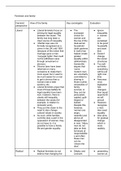
Feminism and family-
Feminist View of the family Key sociologists Evaluation
perspective
Liberal ● Liberal feminists focus on ● The ● Ignore
striving for legal equality increased inequalitie
between the sexes. The choice for s- women
family has long been a women and are
clear source of inequality. the rise of the socialised
● Marital rape was not dual-earner to be good
formally recognised as a household housewife
crime in the UK until 1991 (both partners and want
(because of the notion that in work) has that.
marriage gave a man helped create ● Doesn’t
“conjugal rights” that could greater change
not be withdrawn save equality within the social
through annulment or relationships. structures
divorce). Somerville ● Too soft
● Divorce laws have been argues that as thinks
reformed on many ‘some everything
occasions to make them modern men will be put
more equal, but it used to are voluntarily right over
be much easier for a man committed to time
to get a divorce than a sharing in ● Assumes
woman (see a later those routine once
section), etc. necessities of legislation
● Liberal feminists argue that family has
most of those battles for survival, or changed,
legal equality have been they can be then equal
won, however, there is persuaded, opportuniti
clearly still inequality cajoled, guilt- es will
between the sexes (for tripped or prevail
example, in relation to bullied’. ● However,
domestic work). Despite this, recognise
● They put this down to the however, s men
need to also change ‘women are also need
cultural values in society. angry, equality
● As such, while families resentful and ● Also aims
currently play a part in the above all for gradual
oppression of women, they disappointed change
do not have to: it is in men.’ Many which is
possible to have a family men do not more
life and gender equality. take on their realistic.
full share of
responsibilitie
s and often
these men
can be
‘shown the
door’.
Radical ● Radical feminists do not ● Delphy and ● presenting
believe that changing the Leonard- women as
Feminist View of the family Key sociologists Evaluation
perspective
Liberal ● Liberal feminists focus on ● The ● Ignore
striving for legal equality increased inequalitie
between the sexes. The choice for s- women
family has long been a women and are
clear source of inequality. the rise of the socialised
● Marital rape was not dual-earner to be good
formally recognised as a household housewife
crime in the UK until 1991 (both partners and want
(because of the notion that in work) has that.
marriage gave a man helped create ● Doesn’t
“conjugal rights” that could greater change
not be withdrawn save equality within the social
through annulment or relationships. structures
divorce). Somerville ● Too soft
● Divorce laws have been argues that as thinks
reformed on many ‘some everything
occasions to make them modern men will be put
more equal, but it used to are voluntarily right over
be much easier for a man committed to time
to get a divorce than a sharing in ● Assumes
woman (see a later those routine once
section), etc. necessities of legislation
● Liberal feminists argue that family has
most of those battles for survival, or changed,
legal equality have been they can be then equal
won, however, there is persuaded, opportuniti
clearly still inequality cajoled, guilt- es will
between the sexes (for tripped or prevail
example, in relation to bullied’. ● However,
domestic work). Despite this, recognise
● They put this down to the however, s men
need to also change ‘women are also need
cultural values in society. angry, equality
● As such, while families resentful and ● Also aims
currently play a part in the above all for gradual
oppression of women, they disappointed change
do not have to: it is in men.’ Many which is
possible to have a family men do not more
life and gender equality. take on their realistic.
full share of
responsibilitie
s and often
these men
can be
‘shown the
door’.
Radical ● Radical feminists do not ● Delphy and ● presenting
believe that changing the Leonard- women as


