China
Section 5
Revision
Notes
, SECTION 5: The Cultural Revolution, 1966-1976
The Origins of the Cultural Revolution:
- 1966 – Mao launched the ‘Great Proletarian Cultural Revolution’
- Extraordinary & violent upheaval – threatened foundations of regime which he had done so much to
establish
- Lin Biao’s Poster Campaign in May 1966 = event that brought the CR to the attention of the Chinese people
first.
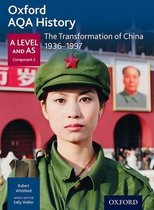
- 18th August 1966 - Tiananmen Square in Beijing – reception of 1 million Red Guards (students / young etc)
waving copies of Mao’s ‘Little Red Book’ – THE AUGUST RALLY
o They chanted = ‘Chairman Mao, may you live for a thousand years!’ / ‘Mao Zedong is the red sun
rising in the east’
o Lasted for a whole day evidence for the organising skill of Lin Biao & Chen Boda
o Also evidence for the effectiveness of the development of the cult of Mao.
- Wore a green PLA uniform to emphasise warlike mood & closeness to the army
- Lin Biao = addressed the crowd described Mao as the ‘Great Leader, Great Teacher, Great Helmsman and
Great Commander’
- Very enthusiastic from the students Liu & Deng = tried to contain the violence party splits – Zhou Enlai
(good diplomat) – tried to keep the peace between those in the party who wanted to restore peace & those
who wanted the Maoist elements to spread.
- 1st of 8 rallies in Beijing – Red guards = violent campaigns against ‘all those people in authority who are
taking the capitalist road’
- Parts of China = descended into chaos until movement was finally brought under control by PLA in 1969
- Violent phase of CR was over then but repercussions were felt into the 70s and beyond.
Shanghai radicals:
- Mao had assembled a coalition of supporters to help him take on Party leadership
- Included – radical group of intellectuals in Shanghai
- Centred on his wife – Mme Mao (Jiang Qing)
- Mao = responsible for launching it – he was careful in the early stages to let the Shanghai radicals take the
lead in attacking cultural policies of the CCP
- Meant that he could stay in the background & wait until sure he could succeed in aims of purging Party
leadership & remoulding Chinese culture
Reasons for launching the CR:
The CR was a means for Mao to reassert his authority over China now aware of his mortality.
To preserve himself in power for the rest of his life by removing all possible sources of opposition
To get rid of the damaging record of failure of the GLF
Ensure PERMENANT revolution
o He believed that the continuing revolution = being betrayed from within
o Wanted the CR = to be viewed as an extension of this continuing revolution
o Believed that if it stopped = it would undo everything the CCP had achieved since 1949
o Therefore – to prevent it Mao = appealed directly to the people – great populist gesture – he
would enlist them in a campaign to save & consolidate the revolution.
REACTION to Soviet developments
, o 1956 – Mao = interpreted Soviet attack on Stalin’s ‘cult of personality’ as a criticism of his leadership
of China
o 1964 – Fall of Khrushchev official reason given by Soviet authorities for his fall = ‘hare-brained
economic schemes’
o No one in China = had dared to use such a phrase in regard to Mao’s economic policies BUT…
parallels between the USSR and China’s political situations = too close for comfort
o ALSO Mao saw in the USSR – a party – originally pure in revolutionary spirit – corrupted by its
own exercise of power into a self-satisfied elite
o He viewed Khrushchev and his successors as guilty of betraying the revolution by encouraging
revisionism & by détente with the west
o Mao = determined that such developments wouldn’t happen in China after his death
Wish to renew party’s revolutionary spirit
o He believed that = CCP & government officials who had defeated the nationalists & established the
PRC = had lost their revolutionary fervour
o He thought that the only way for him to save his revolution = to wage war against the CCP hierarchy
itself.
o He thought = time for a new generation of party members to replace the old guard
Undermining bureaucrats and intellectuals
o Determined to preserve the Chinese Revolution as an essentially peasant movement
o Believed that the peasants were the main revolutionary force in China
o Tensions between Mao & urban intellectuals – it was them who had criticised the GLF
o He distrusted the type of political thinker who was more interested in theory than in action
o Possible to INTERPRET his assault on the intellectuals in the CR as an act of revenge on a class which
he felt had always hated him (their criticisms etc)
Mao’s aims:
1. Struggle to remould Chinese culture
2. Purge of the Party leadership
3. Rectification campaign
- Was Mao & his allies who defined these aims
- Original aims of the movement broadened & new targets added for the Red Guards to attack
- Difficult to reduce the complexities of CR to a simple formula – but helpful to consider them under the main
headings above
Struggle to remould Chinese culture:
- Attack on all modes of thought and behaviour that didn’t conform to Mao’s vision of a socialist society
- To be a ‘great revolution that touches people to their very souls’
- Changing Chinese culture & making Mao Zedong Thought the guiding principle of the people = a ‘truly’
communist society could be built in China
- Aim – to create a ‘new socialist people’
- 1st battle play Hai Rui dismissed from Office = written by Wu Han (intellectual, historian & deputy mayor of
Beijing) – an allegory for Mao’s corruption (direct criticism of Mao throughout the play)
o Nov 1965 – article in a Shanghai newspaper attacked the play & the author for being anti-socialist
article was written by Yao Wenyuan (one of the Shanghai radicals) – saying that this was a bad play
etc = Mao’s way of communicating what he felt about it
o Often said that this was the first act of the cultural revolution – to say that communist culture is
under attack.
Section 5
Revision
Notes
, SECTION 5: The Cultural Revolution, 1966-1976
The Origins of the Cultural Revolution:
- 1966 – Mao launched the ‘Great Proletarian Cultural Revolution’
- Extraordinary & violent upheaval – threatened foundations of regime which he had done so much to
establish
- Lin Biao’s Poster Campaign in May 1966 = event that brought the CR to the attention of the Chinese people
first.
- 18th August 1966 - Tiananmen Square in Beijing – reception of 1 million Red Guards (students / young etc)
waving copies of Mao’s ‘Little Red Book’ – THE AUGUST RALLY
o They chanted = ‘Chairman Mao, may you live for a thousand years!’ / ‘Mao Zedong is the red sun
rising in the east’
o Lasted for a whole day evidence for the organising skill of Lin Biao & Chen Boda
o Also evidence for the effectiveness of the development of the cult of Mao.
- Wore a green PLA uniform to emphasise warlike mood & closeness to the army
- Lin Biao = addressed the crowd described Mao as the ‘Great Leader, Great Teacher, Great Helmsman and
Great Commander’
- Very enthusiastic from the students Liu & Deng = tried to contain the violence party splits – Zhou Enlai
(good diplomat) – tried to keep the peace between those in the party who wanted to restore peace & those
who wanted the Maoist elements to spread.
- 1st of 8 rallies in Beijing – Red guards = violent campaigns against ‘all those people in authority who are
taking the capitalist road’
- Parts of China = descended into chaos until movement was finally brought under control by PLA in 1969
- Violent phase of CR was over then but repercussions were felt into the 70s and beyond.
Shanghai radicals:
- Mao had assembled a coalition of supporters to help him take on Party leadership
- Included – radical group of intellectuals in Shanghai
- Centred on his wife – Mme Mao (Jiang Qing)
- Mao = responsible for launching it – he was careful in the early stages to let the Shanghai radicals take the
lead in attacking cultural policies of the CCP
- Meant that he could stay in the background & wait until sure he could succeed in aims of purging Party
leadership & remoulding Chinese culture
Reasons for launching the CR:
The CR was a means for Mao to reassert his authority over China now aware of his mortality.
To preserve himself in power for the rest of his life by removing all possible sources of opposition
To get rid of the damaging record of failure of the GLF
Ensure PERMENANT revolution
o He believed that the continuing revolution = being betrayed from within
o Wanted the CR = to be viewed as an extension of this continuing revolution
o Believed that if it stopped = it would undo everything the CCP had achieved since 1949
o Therefore – to prevent it Mao = appealed directly to the people – great populist gesture – he
would enlist them in a campaign to save & consolidate the revolution.
REACTION to Soviet developments
, o 1956 – Mao = interpreted Soviet attack on Stalin’s ‘cult of personality’ as a criticism of his leadership
of China
o 1964 – Fall of Khrushchev official reason given by Soviet authorities for his fall = ‘hare-brained
economic schemes’
o No one in China = had dared to use such a phrase in regard to Mao’s economic policies BUT…
parallels between the USSR and China’s political situations = too close for comfort
o ALSO Mao saw in the USSR – a party – originally pure in revolutionary spirit – corrupted by its
own exercise of power into a self-satisfied elite
o He viewed Khrushchev and his successors as guilty of betraying the revolution by encouraging
revisionism & by détente with the west
o Mao = determined that such developments wouldn’t happen in China after his death
Wish to renew party’s revolutionary spirit
o He believed that = CCP & government officials who had defeated the nationalists & established the
PRC = had lost their revolutionary fervour
o He thought that the only way for him to save his revolution = to wage war against the CCP hierarchy
itself.
o He thought = time for a new generation of party members to replace the old guard
Undermining bureaucrats and intellectuals
o Determined to preserve the Chinese Revolution as an essentially peasant movement
o Believed that the peasants were the main revolutionary force in China
o Tensions between Mao & urban intellectuals – it was them who had criticised the GLF
o He distrusted the type of political thinker who was more interested in theory than in action
o Possible to INTERPRET his assault on the intellectuals in the CR as an act of revenge on a class which
he felt had always hated him (their criticisms etc)
Mao’s aims:
1. Struggle to remould Chinese culture
2. Purge of the Party leadership
3. Rectification campaign
- Was Mao & his allies who defined these aims
- Original aims of the movement broadened & new targets added for the Red Guards to attack
- Difficult to reduce the complexities of CR to a simple formula – but helpful to consider them under the main
headings above
Struggle to remould Chinese culture:
- Attack on all modes of thought and behaviour that didn’t conform to Mao’s vision of a socialist society
- To be a ‘great revolution that touches people to their very souls’
- Changing Chinese culture & making Mao Zedong Thought the guiding principle of the people = a ‘truly’
communist society could be built in China
- Aim – to create a ‘new socialist people’
- 1st battle play Hai Rui dismissed from Office = written by Wu Han (intellectual, historian & deputy mayor of
Beijing) – an allegory for Mao’s corruption (direct criticism of Mao throughout the play)
o Nov 1965 – article in a Shanghai newspaper attacked the play & the author for being anti-socialist
article was written by Yao Wenyuan (one of the Shanghai radicals) – saying that this was a bad play
etc = Mao’s way of communicating what he felt about it
o Often said that this was the first act of the cultural revolution – to say that communist culture is
under attack.