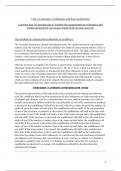
Introduction to treatment methods
Table of Contents
Introduction to treatment methods....................................................................................1
Lecture 1.......................................................................................................................................2
1. What is treatment?.....................................................................................................................................2
2. Cognitive behavioural therapy – CBT..........................................................................................................2
3. Anxiety disorders........................................................................................................................................5
4. Mood disorder: MDD..................................................................................................................................9
Lecture 2: Common factors (CF) in psychotherapy......................................................................13
1. General......................................................................................................................................................13
2. Contextual model for common factors....................................................................................................13
3. Introspection and self-knowledge............................................................................................................16
4. Summary...................................................................................................................................................17
Lecture 3: Cognitive behaviour therapy in the elderly................................................................19
Lecture 4: Schema therapy.........................................................................................................25
1. What is schema therapy?.........................................................................................................................25
2. What are EMS (=early maladaptive schemas)?........................................................................................25
3. Core needs and temperament..................................................................................................................25
4. Schema domains and EMS........................................................................................................................26
5. Schema operations...................................................................................................................................27
6. Assessment and change............................................................................................................................28
7. How to become a schema therapist?.......................................................................................................29
Lecture 5: How does EMDR work?..............................................................................................30
1. PTSD..........................................................................................................................................................30
2. What is EMDR?.........................................................................................................................................30
3. Working mechanism.................................................................................................................................31
4. EMDR for other mental disorders.............................................................................................................32
5. Effectiveness.............................................................................................................................................32
6. Treatment protocol...................................................................................................................................33
Lecture 6: Acceptance and Commitment therapy.......................................................................36
Lecture 7: Psychodynamic psychotherapy..................................................................................40
1. History.......................................................................................................................................................40
2. The unconscious.......................................................................................................................................40
3. Interventions of psychoanalysis...............................................................................................................40
4. Main defences...........................................................................................................................................40
5. Comparison to psychodynamic psychotherapy........................................................................................41
6. Summary...................................................................................................................................................45
Lecture 8: Client-centred psychotherapy (CCP) & Emotion-focused therapy...............................46
1. Carl Rogers and development of CCP.......................................................................................................46
2. Basic principles of CCP..............................................................................................................................46
3. Emotion-focused therapy (EFT)................................................................................................................48
1
,Lecture 1
1. What is treatment?
Similarities with coaching, but therapy has confidentiality and ethical rules
o Coaching not about mental health problems, but about improvement of
working attitude etc.
Aims:
o Symptom relief (mental and physical) increase of happiness
o Targeting underlying deficits/conflicts
o Acceptance
Types
o Short-term vs. Long-term
o Individual vs. group
o Symptom-focused vs. person-cantered
o Types of Psychotherapy vs. other treatments (psychotropics, deep brain
stimulation, art/dance therapy)
Psychoanalysis (Freud)
Psychodynamic therapies
Transference focused
Mentalization based treatment (MBT)
Behavioural (Skinner)
Humanistic (Rogers)
Client/Person-centred self-actualization
Emotion focused therapy
Gestalt (Perls)
Experiential
Existential (Yalom)
System (family, couple)
Cognitive therapy (Beck)
o CBT
o 2nd wave
o 3rd wave (EMDR, ACT, MBCT)
Schema focused therapy (Young) integrated CBT, existential
and Gestalt
Eclectic therapies = approach that incorporates principles from
various systems
2. Cognitive behavioural therapy – CBT
History
o 1st generation: Behaviour therapy (1950-1960)
Objective scientific approach to understand psych. problems by
looking at behaviour
Focus: modification of problematic behaviour (conditioning)
nd
o 2 generation: CBT (1960-1990)
Emphasis on cognitive processes
Focus on modification of maladaptive thoughts, schemas or info
processing styles
Rational emotive therapy
2
, Cognitive therapy
rd
o 3 generation: Acceptance based model of CBT
(since 1990s)
Deviates from traditional CBT approaches
Integrating new concepts into traditional
behavioural interventions: metacognition,
acceptance, mindfulness, personal values,
spirituality
E.g.: ACT, CMT, MBCT, DBT, metacognitive
therapy (MCT), solution focused therapy,
schema focused therapy (SFT), EMDR
Alternative cognitive-behavioural approaches
o MBT
Distancing oneself from negative thinking and recognizing that
thoughts don’t have to determine behaviours
Mindfulness = state of awareness, openness and receptiveness
Teaching through meditation
Skills
Defusion = distancing oneself from and letting go of unhelpful
thoughts
Acceptance
Contact in present moment
o ACT
Simply noticing and accepting thoughts and feelings in present
moment
Psych. suffering bc of avoiding and thoughts
Handling pain and stress
o DBT
For mood swings, self-blaming behaviour and expression of anger
Individual + group component
o Mindfulness-based cognitive therapy (MBCT)
Group intervention
Combines CBT with meditation techniques
Teaching to relate to depressive thoughts as mental events, rather
than as accurate reflections of reality in order to prevent relapse as a
result of dysphoric mood
What is CBT?
o The way ppl feel is linked to the way they think
about a situation
o Patients reframe negative thinking patterns into
positive thoughts transforming thoughts will
result in positive actions and behaviour in difficult
moments
o Homework assignments
o Beck institute: time-sensitive, structured, problem-
focused, goal-and present-oriented therapy
3
, directed toward solving current problems and teaching client skills to modify
behaviour
o Reviewing childhood experiences (but not in focus)
What happens in CBT?
o Monitoring and recording thought during emotionally upsetting situations
o Learning that the way one’s thinks can contribute to emotional problems
(e.g. depression, anxiety)
o Reducing emotional problems
Identifying distortions in your thinking
Seeing thoughts as ideas about what is going on rather than as facts
"standing back" from your thinking to consider situations from
different viewpoints
o Basics
Feeling in response to a situation is determined how you perceive the
situation
Automatic thoughts (AT) “pop” into mind and shape the particular
emotion experienced and the resulting behaviour
Learning to evaluate ATs clarifying the nature of resulting emotion
and understanding why the situation was e.g. upsetting
Distorted thinking patterns of oneself, the world and the future
cognitive triad of depression
All-or-nothing
Disqualifying the positive
Mental fit
Questioning the rules and assumptions learned in childhood
More negative Core beliefs
Cognitive change
Examining (dis-)
advantages of
holding such beliefs
Examining evidence that supports and doesn’t support
assumptions
Trying to find less extreme, more middle-ground views of
oneself
Performing behavioural experiments
Clinical case formulation
o Individual overview of the problems that a patient is dealing with, pointing
out the interconnectedness or causal relationship between them and the
patient’s history and personality
o “One-case study”
o Made together with patient
o After/during first session
o Goals
Getting an overview of problems of patient
Discovering causal relationships between these problems
4
Table of Contents
Introduction to treatment methods....................................................................................1
Lecture 1.......................................................................................................................................2
1. What is treatment?.....................................................................................................................................2
2. Cognitive behavioural therapy – CBT..........................................................................................................2
3. Anxiety disorders........................................................................................................................................5
4. Mood disorder: MDD..................................................................................................................................9
Lecture 2: Common factors (CF) in psychotherapy......................................................................13
1. General......................................................................................................................................................13
2. Contextual model for common factors....................................................................................................13
3. Introspection and self-knowledge............................................................................................................16
4. Summary...................................................................................................................................................17
Lecture 3: Cognitive behaviour therapy in the elderly................................................................19
Lecture 4: Schema therapy.........................................................................................................25
1. What is schema therapy?.........................................................................................................................25
2. What are EMS (=early maladaptive schemas)?........................................................................................25
3. Core needs and temperament..................................................................................................................25
4. Schema domains and EMS........................................................................................................................26
5. Schema operations...................................................................................................................................27
6. Assessment and change............................................................................................................................28
7. How to become a schema therapist?.......................................................................................................29
Lecture 5: How does EMDR work?..............................................................................................30
1. PTSD..........................................................................................................................................................30
2. What is EMDR?.........................................................................................................................................30
3. Working mechanism.................................................................................................................................31
4. EMDR for other mental disorders.............................................................................................................32
5. Effectiveness.............................................................................................................................................32
6. Treatment protocol...................................................................................................................................33
Lecture 6: Acceptance and Commitment therapy.......................................................................36
Lecture 7: Psychodynamic psychotherapy..................................................................................40
1. History.......................................................................................................................................................40
2. The unconscious.......................................................................................................................................40
3. Interventions of psychoanalysis...............................................................................................................40
4. Main defences...........................................................................................................................................40
5. Comparison to psychodynamic psychotherapy........................................................................................41
6. Summary...................................................................................................................................................45
Lecture 8: Client-centred psychotherapy (CCP) & Emotion-focused therapy...............................46
1. Carl Rogers and development of CCP.......................................................................................................46
2. Basic principles of CCP..............................................................................................................................46
3. Emotion-focused therapy (EFT)................................................................................................................48
1
,Lecture 1
1. What is treatment?
Similarities with coaching, but therapy has confidentiality and ethical rules
o Coaching not about mental health problems, but about improvement of
working attitude etc.
Aims:
o Symptom relief (mental and physical) increase of happiness
o Targeting underlying deficits/conflicts
o Acceptance
Types
o Short-term vs. Long-term
o Individual vs. group
o Symptom-focused vs. person-cantered
o Types of Psychotherapy vs. other treatments (psychotropics, deep brain
stimulation, art/dance therapy)
Psychoanalysis (Freud)
Psychodynamic therapies
Transference focused
Mentalization based treatment (MBT)
Behavioural (Skinner)
Humanistic (Rogers)
Client/Person-centred self-actualization
Emotion focused therapy
Gestalt (Perls)
Experiential
Existential (Yalom)
System (family, couple)
Cognitive therapy (Beck)
o CBT
o 2nd wave
o 3rd wave (EMDR, ACT, MBCT)
Schema focused therapy (Young) integrated CBT, existential
and Gestalt
Eclectic therapies = approach that incorporates principles from
various systems
2. Cognitive behavioural therapy – CBT
History
o 1st generation: Behaviour therapy (1950-1960)
Objective scientific approach to understand psych. problems by
looking at behaviour
Focus: modification of problematic behaviour (conditioning)
nd
o 2 generation: CBT (1960-1990)
Emphasis on cognitive processes
Focus on modification of maladaptive thoughts, schemas or info
processing styles
Rational emotive therapy
2
, Cognitive therapy
rd
o 3 generation: Acceptance based model of CBT
(since 1990s)
Deviates from traditional CBT approaches
Integrating new concepts into traditional
behavioural interventions: metacognition,
acceptance, mindfulness, personal values,
spirituality
E.g.: ACT, CMT, MBCT, DBT, metacognitive
therapy (MCT), solution focused therapy,
schema focused therapy (SFT), EMDR
Alternative cognitive-behavioural approaches
o MBT
Distancing oneself from negative thinking and recognizing that
thoughts don’t have to determine behaviours
Mindfulness = state of awareness, openness and receptiveness
Teaching through meditation
Skills
Defusion = distancing oneself from and letting go of unhelpful
thoughts
Acceptance
Contact in present moment
o ACT
Simply noticing and accepting thoughts and feelings in present
moment
Psych. suffering bc of avoiding and thoughts
Handling pain and stress
o DBT
For mood swings, self-blaming behaviour and expression of anger
Individual + group component
o Mindfulness-based cognitive therapy (MBCT)
Group intervention
Combines CBT with meditation techniques
Teaching to relate to depressive thoughts as mental events, rather
than as accurate reflections of reality in order to prevent relapse as a
result of dysphoric mood
What is CBT?
o The way ppl feel is linked to the way they think
about a situation
o Patients reframe negative thinking patterns into
positive thoughts transforming thoughts will
result in positive actions and behaviour in difficult
moments
o Homework assignments
o Beck institute: time-sensitive, structured, problem-
focused, goal-and present-oriented therapy
3
, directed toward solving current problems and teaching client skills to modify
behaviour
o Reviewing childhood experiences (but not in focus)
What happens in CBT?
o Monitoring and recording thought during emotionally upsetting situations
o Learning that the way one’s thinks can contribute to emotional problems
(e.g. depression, anxiety)
o Reducing emotional problems
Identifying distortions in your thinking
Seeing thoughts as ideas about what is going on rather than as facts
"standing back" from your thinking to consider situations from
different viewpoints
o Basics
Feeling in response to a situation is determined how you perceive the
situation
Automatic thoughts (AT) “pop” into mind and shape the particular
emotion experienced and the resulting behaviour
Learning to evaluate ATs clarifying the nature of resulting emotion
and understanding why the situation was e.g. upsetting
Distorted thinking patterns of oneself, the world and the future
cognitive triad of depression
All-or-nothing
Disqualifying the positive
Mental fit
Questioning the rules and assumptions learned in childhood
More negative Core beliefs
Cognitive change
Examining (dis-)
advantages of
holding such beliefs
Examining evidence that supports and doesn’t support
assumptions
Trying to find less extreme, more middle-ground views of
oneself
Performing behavioural experiments
Clinical case formulation
o Individual overview of the problems that a patient is dealing with, pointing
out the interconnectedness or causal relationship between them and the
patient’s history and personality
o “One-case study”
o Made together with patient
o After/during first session
o Goals
Getting an overview of problems of patient
Discovering causal relationships between these problems
4