
DIFFRACTION
FIG 1
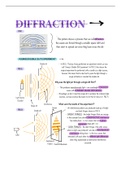
This picture shows a process that we call diffraction
the waves are forced through a smaller space (slit) and
then start to spread out once they have cross the slit.
YOUNGS DOUBLE SLIT EXPERIMENT
Double slit • In 1801, Thomas Young performed an experiment which we now
call ‘Young’s Double Slit Experiment’. In FIG 2 this shows the
FIG 2
original experiment he performed with a candle as a light source,
however this mean that he also had to pass the light through a
single slit before it reached the double slit.
Why was the light put through a single slit first?
• This produces monochromatic light = one wavelength COHERENT
waves with CONSTANT PHASE DIFFERENCE
• Nowadays we don’t need the single slit to produce the coherent light
Light Source sources, we have sources like lasers to do this for shown in FIG 3.
(Candle)
Interference What were the results of the experiment?
Single slit
Screen • An interference pattern was produced made up of bright
FIG 3
Double slit and dark fringes shown in FIG 3.
• BRIGHT FRINGES - the bright fringes (that are orange
in this example) are where CONSTRUCTIVE interference
has taken place - i.e two waves that are in phase
superposed. (Path diff = 0)
• DARK FRINGES - the dark fringes ( the white areas,
where no light was produced ) are due to DESTRUCTIVE
interference taking place - i.e the two waves that
Laser
interacted with each other had different path differences
when they superposed so destructive interference
Interference
occurred.
Pattern Central Maximum
FIG 1
This picture shows a process that we call diffraction
the waves are forced through a smaller space (slit) and
then start to spread out once they have cross the slit.
YOUNGS DOUBLE SLIT EXPERIMENT
Double slit • In 1801, Thomas Young performed an experiment which we now
call ‘Young’s Double Slit Experiment’. In FIG 2 this shows the
FIG 2
original experiment he performed with a candle as a light source,
however this mean that he also had to pass the light through a
single slit before it reached the double slit.
Why was the light put through a single slit first?
• This produces monochromatic light = one wavelength COHERENT
waves with CONSTANT PHASE DIFFERENCE
• Nowadays we don’t need the single slit to produce the coherent light
Light Source sources, we have sources like lasers to do this for shown in FIG 3.
(Candle)
Interference What were the results of the experiment?
Single slit
Screen • An interference pattern was produced made up of bright
FIG 3
Double slit and dark fringes shown in FIG 3.
• BRIGHT FRINGES - the bright fringes (that are orange
in this example) are where CONSTRUCTIVE interference
has taken place - i.e two waves that are in phase
superposed. (Path diff = 0)
• DARK FRINGES - the dark fringes ( the white areas,
where no light was produced ) are due to DESTRUCTIVE
interference taking place - i.e the two waves that
Laser
interacted with each other had different path differences
when they superposed so destructive interference
Interference
occurred.
Pattern Central Maximum


