

UNIT 4 AIM B
Making and testing an organic liquid
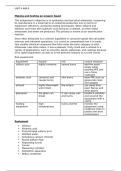
This assignment's objective is to synthesise and test ethyl ethanoate, comparing
its manufacture in a small lab to an industrial production line (in terms of
equipment, efficiency, and purity testing techniques). When ethanol and
ethanoic acid react with sulphuric acid acting as a catalyst, an ester (ethyl
ethanoate) and water are produced. This process is known as an esterification
reaction.
Since ethyl ethanoate is a common ingredient in consumer goods like nail polish
remover and industrial operations, it is crucial to comprehend how it is made.
One volatile chemical compound that falls under the ester category is ethyl
ethanoate. Like other esters, it has a pleasant, fruity smell and is utilised in a
variety of applications, such as solvents, paints, adhesives, and coatings because
of its rapid evaporation, as well as in the perfume industry as a scent carrier.
Risk assessment
Equipment hazard risk control measure
sulfuric acid highly corrosive severe burns add the asset
slowly while
wearing PPE and
use a fume
cupboard
ethanoic acid corrosive and skin burns wear PPE such as
causes burns gloves lab coats
and goggles
ethanol highly flammable fire irritant use away from
and irritant open flames and
wear gloves
glassware the glass can it can cause cuts handle it carefully
break and burns and secured the
equipment with a
clamp
heating high burns and fire monitor the
equipment temperatures equipment using
heatproof mats to
protect the work
environment
Equipment
ethanol
Ethanoic acid
Concentrated sulfuric acid.
Distilled water
Anhydrous calcium chloride
Round bottom flask
Separating funnel
Funnel
Measuring cylinders
Distillation apparatus
Reflux condenser
, UNIT 4 AIM B
Water bath
Retort stand and clamps.
Rubber tubing for condenser
Filter paper
Heatproof mat
Method
Reflux
To make sure the esterification reaction between ethanol and ethanoic acid
continued under regulated circumstances, reflux was employed. Reflux stops the
loss of volatile reactants and products, like ethanol and ethyl ethanoate, when
they condense and return to the reaction flask by heating the mixture to its
boiling point. By maintaining the reactant concentrations and reaction
temperature, this ongoing cycling speeds up the reaction and makes equilibrium
possible. This process minimises product loss while guaranteeing a greater
output of ethyl ethanoate.
1. Attach reflux condenser to round bottom flask.
2. Use clamps to secure the flask and condenser.
3. Using rubber tubing, connect the condenser to a water source, such as a
sink, ensuring the water inlet is at the bottom, and the outlet is at the top
to keep a steady flow.
4. Place the flask on a hot plate.
5. Add 5ml of ethanol, 25ml of ethanoic acid and a few drops of sulfuric acid
into the flask.
6. Turn on the source of water to allow flow though the condenser.
7. Boil the mixture, but do not allow it to spit.
8. The vapours will condense and drip back into the flask.
Making and testing an organic liquid
This assignment's objective is to synthesise and test ethyl ethanoate, comparing
its manufacture in a small lab to an industrial production line (in terms of
equipment, efficiency, and purity testing techniques). When ethanol and
ethanoic acid react with sulphuric acid acting as a catalyst, an ester (ethyl
ethanoate) and water are produced. This process is known as an esterification
reaction.
Since ethyl ethanoate is a common ingredient in consumer goods like nail polish
remover and industrial operations, it is crucial to comprehend how it is made.
One volatile chemical compound that falls under the ester category is ethyl
ethanoate. Like other esters, it has a pleasant, fruity smell and is utilised in a
variety of applications, such as solvents, paints, adhesives, and coatings because
of its rapid evaporation, as well as in the perfume industry as a scent carrier.
Risk assessment
Equipment hazard risk control measure
sulfuric acid highly corrosive severe burns add the asset
slowly while
wearing PPE and
use a fume
cupboard
ethanoic acid corrosive and skin burns wear PPE such as
causes burns gloves lab coats
and goggles
ethanol highly flammable fire irritant use away from
and irritant open flames and
wear gloves
glassware the glass can it can cause cuts handle it carefully
break and burns and secured the
equipment with a
clamp
heating high burns and fire monitor the
equipment temperatures equipment using
heatproof mats to
protect the work
environment
Equipment
ethanol
Ethanoic acid
Concentrated sulfuric acid.
Distilled water
Anhydrous calcium chloride
Round bottom flask
Separating funnel
Funnel
Measuring cylinders
Distillation apparatus
Reflux condenser
, UNIT 4 AIM B
Water bath
Retort stand and clamps.
Rubber tubing for condenser
Filter paper
Heatproof mat
Method
Reflux
To make sure the esterification reaction between ethanol and ethanoic acid
continued under regulated circumstances, reflux was employed. Reflux stops the
loss of volatile reactants and products, like ethanol and ethyl ethanoate, when
they condense and return to the reaction flask by heating the mixture to its
boiling point. By maintaining the reactant concentrations and reaction
temperature, this ongoing cycling speeds up the reaction and makes equilibrium
possible. This process minimises product loss while guaranteeing a greater
output of ethyl ethanoate.
1. Attach reflux condenser to round bottom flask.
2. Use clamps to secure the flask and condenser.
3. Using rubber tubing, connect the condenser to a water source, such as a
sink, ensuring the water inlet is at the bottom, and the outlet is at the top
to keep a steady flow.
4. Place the flask on a hot plate.
5. Add 5ml of ethanol, 25ml of ethanoic acid and a few drops of sulfuric acid
into the flask.
6. Turn on the source of water to allow flow though the condenser.
7. Boil the mixture, but do not allow it to spit.
8. The vapours will condense and drip back into the flask.


